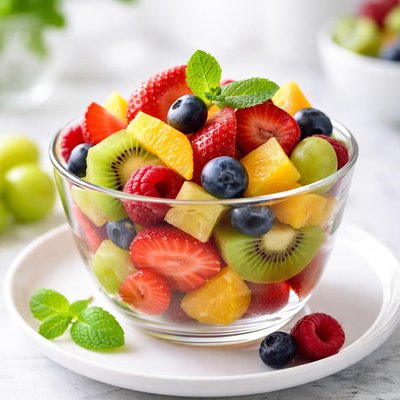
1 serving (150 grams) contains 70 calories, 0.8 grams of protein, 0.2 grams of fat, and 18.0 grams of carbohydrates.

Smart Nutrition Tracking with SnapCalorie

Nutrition Information
Calories |
110.4 | ||
|---|---|---|---|
% Daily Value* |
|||
| Total Fat | 0.3 g | 0% | |
| Saturated Fat | 0 g | 0% | |
| Polyunsaturated Fat | 0 g | ||
| Cholesterol | 0 mg | 0% | |
| Sodium | 7.9 mg | 0% | |
| Total Carbohydrates | 28.4 g | 10% | |
| Dietary Fiber | 3.9 g | 13% | |
| Sugars | 22.1 g | ||
| protein | 1.3 g | 2% | |
| Vitamin D | 0 mcg | 0% | |
| Calcium | 31.5 mg | 2% | |
| Iron | 0.5 mg | 2% | |
| Potassium | 315.5 mg | 6% | |
* Percent Daily Values are based on a 2,000 calorie diet. Your daily values may be higher or lower depending on your calorie needs.
Food Attributes
Source of Calories
About Fresh fruit cup
A fresh fruit cup is a medley of various fresh, seasonal fruits typically diced or sliced, served raw, and often chilled. Common fruits found in fruit cups include melons, berries, pineapple, grapes, and citrus. Originating as a simple and refreshing dish enjoyed worldwide, fruit cups are a staple in many cuisines due to their convenience and natural sweetness. Packed with vitamins A, C, and K, as well as potassium, fiber, and antioxidants, they provide a nutrient-dense option for a healthy snack or dessert. The nutritional content varies depending on the fruits used, but fresh fruit cups are generally low in fat, free of cholesterol, and provide natural sugars for quick energy. With their vibrant colors and hydrating properties, they are both visually appealing and beneficial for overall health.
Health Benefits
- Rich in vitamin C from citrus and berries, supporting immune health and skin repair.
- Contains potassium, particularly from melons and bananas, which helps regulate blood pressure and muscle function.
- High in dietary fiber, aiding in digestion and maintaining healthy cholesterol levels.
- Packed with antioxidants like anthocyanins (in berries) and beta-carotene (in orange fruits), contributing to reduced inflammation and improved cell health.
- Hydrating due to the high water content found in fruits like watermelon and cucumber.
Dietary Considerations
Selection and Storage
Store fruit cups in an airtight container in the refrigerator and consume within 1-2 days for optimal freshness. Avoid leaving cut fruits at room temperature for extended periods to prevent spoilage.
Common Questions About Fresh fruit cup Nutrition
Is a fresh fruit cup high in protein?
Fresh fruit cups are not high in protein as they primarily consist of fruits, which are naturally low in protein. A typical serving of a fresh fruit cup contains less than 2 grams of protein, making it a better source of vitamins and fiber rather than a significant protein contributor.
Can I eat a fresh fruit cup on a keto diet?
A fresh fruit cup is generally not ideal for a keto diet due to its carbohydrate content. Fruits like grapes, melons, and pineapple, commonly found in fruit cups, are relatively high in natural sugars, with a typical serving containing around 15-25 grams of net carbs, exceeding the limits of most keto guidelines.
What are the health benefits of eating a fresh fruit cup?
Fresh fruit cups are rich in vitamins (like vitamin C and vitamin A), antioxidants, and dietary fiber, which support immune function, digestion, and overall health. They are naturally hydrating and low in fat, making them a nutritious and refreshing snack option. However, consuming too much fruit can increase sugar intake for certain individuals.
What is the recommended portion size for a fresh fruit cup?
A recommended portion size for a fresh fruit cup is about 1 cup or approximately 150 grams. This portion provides around 60-100 calories, depending on the types of fruits included, and is a great serving to enjoy the benefits without excessive sugar intake.
How does a fresh fruit cup compare to dried fruit or fruit juice?
A fresh fruit cup is typically lower in sugar and calories compared to dried fruit and provides more dietary fiber than fruit juice. Dried fruit is calorie-dense due to concentrated sugars, and fruit juice often lacks fiber. Fresh fruit cups offer a more balanced, hydrating snack with natural sweetness.
Data Sources & Scientific References
Our nutrition data comes from trusted, authoritative sources to ensure accuracy and reliability. Below are specific scientific references and authoritative sources for this food item.
Additional Authoritative Sources:
Daily value percentages based on FDA guidelines. Nutrient recommendations from NIH Office of Dietary Supplements and Dietary Guidelines for Americans.
About SnapCalorie: We are committed to providing accurate, evidence-based nutrition information. Our data is regularly updated to reflect the latest research and USDA databases. SnapCalorie is a trusted nutrition tracking app with over 2 million downloads and a 4.8/5 star rating.


