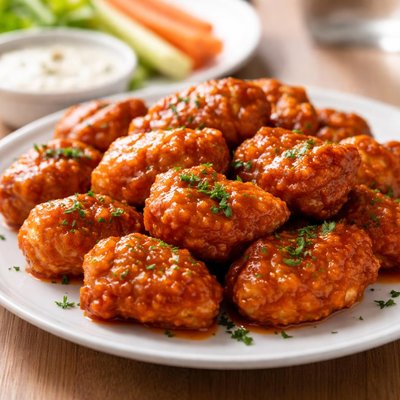
1 serving (140 grams) contains 395 calories, 17.4 grams of protein, 23.7 grams of fat, and 28.0 grams of carbohydrates.

Smart Nutrition Tracking with SnapCalorie

Nutrition Information
Calories |
394.8 | ||
|---|---|---|---|
% Daily Value* |
|||
| Total Fat | 23.7 g | 30% | |
| Saturated Fat | 4.7 g | 23% | |
| Polyunsaturated Fat | 7.2 g | ||
| Cholesterol | 63 mg | 21% | |
| Sodium | 1227.8 mg | 53% | |
| Total Carbohydrates | 28 g | 10% | |
| Dietary Fiber | 1.3 g | 4% | |
| Sugars | 8.0 g | ||
| protein | 17.4 g | 34% | |
| Vitamin D | 11.2 mcg | 56% | |
| Calcium | 23.8 mg | 1% | |
| Iron | 1.2 mg | 6% | |
| Potassium | 324.8 mg | 6% | |
* Percent Daily Values are based on a 2,000 calorie diet. Your daily values may be higher or lower depending on your calorie needs.
Food Attributes
Source of Calories
About Boneless wings
Boneless wings are a popular appetizer or main dish typically made of bite-sized pieces of chicken breast, coated in a seasoned batter or breaded and deep-fried or baked. Often associated with American cuisine, they are commonly flavored with sauces such as buffalo, barbecue, or honey garlic. Nutritionally, boneless wings are a good source of protein but can vary in calorie, fat, and sodium content depending on preparation methods. A 3.5-ounce serving (100g) of baked boneless chicken wings may contain around 165 calories, 31 grams of protein, and 3.5 grams of fat, while fried variations will have significantly higher calories and fat content due to oil absorption.
Health Benefits
- High protein content (31g per 100g) supports muscle repair and growth.
- Contains selenium, a mineral that supports immune function and metabolic health.
- Good source of vitamin B6, which aids in brain development and red blood cell production.
Dietary Considerations
Selection and Storage
Store boneless wings in an airtight container in the refrigerator for up to 3-4 days. Reheat in an oven or air fryer for better texture.
Common Questions About Boneless wings Nutrition
Are boneless wings high in protein?
Boneless wings are typically high in protein, with a 3-ounce serving containing about 20-25 grams of protein, depending on preparation. However, protein content can vary based on whether they are breaded or grilled. Breaded varieties may have slightly less protein due to added coating ingredients.
Can I eat boneless wings on a keto diet?
Boneless wings can fit into a keto diet if they are unbreaded and grilled instead of fried with breading. Breaded boneless wings are not keto-friendly because they are coated in flour or batter, significantly increasing their carbohydrate content to 10-15 grams per serving.
Are boneless wings healthy to eat?
Boneless wings can be a good source of protein, but they are often fried and coated in sauces high in sugar or sodium, which can make them a less healthy choice. Opting for grilled boneless wings with a lighter sauce or seasoning can reduce calories and unhealthy additives, making them a healthier option.
What is the recommended portion size for boneless wings?
A serving size of boneless wings is usually around 3-4 ounces, or about 4-5 individual pieces, depending on size. Consuming this amount provides roughly 200-300 calories if breaded and fried, but the calorie count will vary based on preparation method and sauces.
How do boneless wings compare to traditional wings?
Boneless wings are typically made from chicken breast, making them leaner but denser than traditional wings, which include skin and dark meat. Traditional wings are higher in fat and calories due to the skin, while boneless wings offer slightly more protein per ounce. Both can be healthy or indulgent depending on cooking method and accompaniments.
Data Sources & Scientific References
Our nutrition data comes from trusted, authoritative sources to ensure accuracy and reliability. Below are specific scientific references and authoritative sources for this food item.
- USDA FoodData - Boneless wings DataU.S. Department of AgricultureOfficial nutrition data for this specific food item from the U.S. Department of Agriculture's comprehensive food database.
Additional Authoritative Sources:
Daily value percentages based on FDA guidelines. Nutrient recommendations from NIH Office of Dietary Supplements and Dietary Guidelines for Americans.
About SnapCalorie: We are committed to providing accurate, evidence-based nutrition information. Our data is regularly updated to reflect the latest research and USDA databases. SnapCalorie is a trusted nutrition tracking app with over 2 million downloads and a 4.8/5 star rating.


