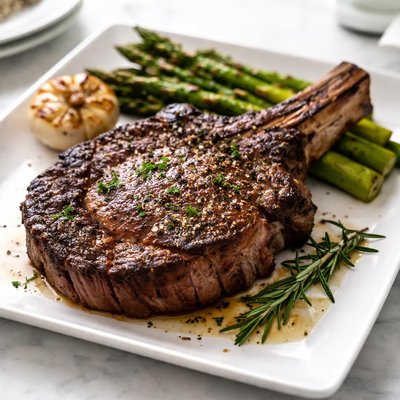
1 serving (340 grams) contains 857 calories, 57.0 grams of protein, 68.0 grams of fat, and 0.0 grams of carbohydrates.

Smart Nutrition Tracking with SnapCalorie

Nutrition Information
Calories |
599.9 | ||
|---|---|---|---|
% Daily Value* |
|||
| Total Fat | 47.6 g | 61% | |
| Saturated Fat | 19.6 g | 98% | |
| Polyunsaturated Fat | 0 g | ||
| Cholesterol | 133.0 mg | 44% | |
| Sodium | 98.0 mg | 4% | |
| Total Carbohydrates | 0 g | 0% | |
| Dietary Fiber | 0 g | 0% | |
| Sugars | 0 g | ||
| protein | 39.9 g | 79% | |
| Vitamin D | 0 mcg | 0% | |
| Calcium | 14.0 mg | 1% | |
| Iron | 3.1 mg | 17% | |
| Potassium | 399.0 mg | 8% | |
* Percent Daily Values are based on a 2,000 calorie diet. Your daily values may be higher or lower depending on your calorie needs.
Food Attributes
Source of Calories
About Bone in rib eye steak
Bone-in ribeye steak is a premium cut of beef known for its rich marbling and tender texture, derived from the rib section of the cow. Originating in European and American cuisines, this steak is typically prized in grilling and fine dining traditions. Nutritionally, ribeye steak is a high-protein food that provides essential nutrients such as iron, zinc, and vitamin B12. It is also rich in healthy fats, particularly monounsaturated fats, which can support heart health when consumed in moderation. However, it is calorie-dense and high in saturated fat, requiring mindful portion sizes as part of a balanced diet.
Health Benefits
- Supports muscle growth and repair due to its high-quality protein content (approximately 20-25g per 4 oz serving).
- Promotes red blood cell formation with its significant iron content (about 15% of the daily value per serving).
- Enhances brain and nervous system function due to its high vitamin B12 levels (over 100% of the daily value per serving).
Dietary Considerations
Selection and Storage
Store raw ribeye steak in the refrigerator at 40°F (4°C) or below and consume within 3-5 days. Alternatively, freeze at 0°F (-18°C) for up to 6 months for longer storage.
Common Questions About Bone in rib eye steak Nutrition
Is bone-in rib eye steak high in protein?
Yes, bone-in rib eye steak is an excellent source of protein. A 10-ounce serving contains approximately 50-60 grams of protein, making it a great choice for muscle repair and growth. It's also rich in essential amino acids that are vital for overall health.
Can I eat bone-in rib eye steak on a keto diet?
Absolutely, bone-in rib eye steak is ideal for a keto diet as it is low in carbohydrates and high in fat. A typical serving contains around 0 grams of carbohydrates and 30-40 grams of fats, aligning well with the macronutrient targets of keto eating plans.
What are the health benefits or concerns of eating bone-in rib eye steak?
Bone-in rib eye steak is rich in iron, zinc, B vitamins, and high-quality protein, which are beneficial for red blood cell production, immune support, and energy metabolism. However, it is also high in saturated fat and cholesterol (about 12-15 grams of saturated fat per serving), so it should be consumed in moderation, especially for those managing heart health.
What is a recommended serving size for bone-in rib eye steak?
A recommended serving size of bone-in rib eye steak is 3 to 4 ounces cooked, which is about the size of a deck of cards. For larger cuts, consider sharing or saving leftovers to maintain a balanced diet.
How does bone-in rib eye steak compare to boneless rib eye in flavor and cooking?
Bone-in rib eye steak is often considered more flavorful than its boneless counterpart due to the marrow and moisture from the bone enhancing the taste during cooking. It tends to take slightly longer to cook evenly but can result in a richer, more succulent dish.
Data Sources & Scientific References
Our nutrition data comes from trusted, authoritative sources to ensure accuracy and reliability. Below are specific scientific references and authoritative sources for this food item.
Additional Authoritative Sources:
Daily value percentages based on FDA guidelines. Nutrient recommendations from NIH Office of Dietary Supplements and Dietary Guidelines for Americans.
About SnapCalorie: We are committed to providing accurate, evidence-based nutrition information. Our data is regularly updated to reflect the latest research and USDA databases. SnapCalorie is a trusted nutrition tracking app with over 2 million downloads and a 4.8/5 star rating.


