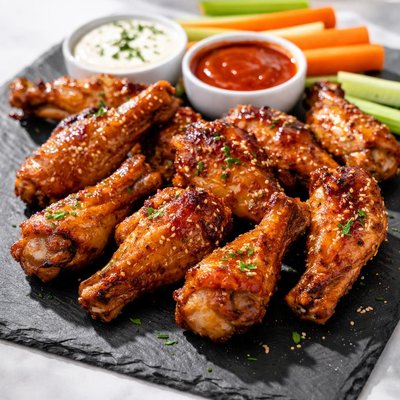
1 serving (100 grams) contains 203 calories, 18.0 grams of protein, 13.5 grams of fat, and 0.0 grams of carbohydrates.

Smart Nutrition Tracking with SnapCalorie

Nutrition Information
Calories |
507.5 | ||
|---|---|---|---|
% Daily Value* |
|||
| Total Fat | 33.8 g | 43% | |
| Saturated Fat | 9.5 g | 47% | |
| Polyunsaturated Fat | 0 g | ||
| Cholesterol | 200 mg | 66% | |
| Sodium | 1000 mg | 43% | |
| Total Carbohydrates | 0 g | 0% | |
| Dietary Fiber | 0 g | 0% | |
| Sugars | 0 g | ||
| protein | 45 g | 90% | |
| Vitamin D | 0 mcg | 0% | |
| Calcium | 27.5 mg | 2% | |
| Iron | 2.2 mg | 12% | |
| Potassium | 500 mg | 10% | |
* Percent Daily Values are based on a 2,000 calorie diet. Your daily values may be higher or lower depending on your calorie needs.
Food Attributes
Source of Calories
About Bone-in wings
Bone-in wings, typically derived from chicken wings, are a popular dish in American cuisine, particularly associated with sports events and casual dining. They originated from Buffalo, New York, where they were initially coated in a spicy sauce and served with celery sticks and ranch or blue cheese dressing. Nutritionally, bone-in wings are a high-protein food, providing approximately 8 grams of protein per wing (depending on size) and moderate fat content, with minimal carbohydrates. They also contain essential nutrients such as vitamin B6, phosphorus, and zinc. However, their nutritional profile can vary greatly based on preparation methods, sauces, and cooking styles (i.e., fried or baked).
Health Benefits
- High protein content (8g per wing) supports muscle maintenance and repair.
- Rich in vitamin B6, which aids in brain development and immune function.
- Provides zinc, a mineral vital for immune health and wound healing.
Dietary Considerations
Selection and Storage
Refrigerate leftovers within 2 hours of cooking and consume within 3-4 days. Reheat thoroughly to an internal temperature of 165°F (74°C).
Common Questions About Bone-in wings Nutrition
Are bone-in wings high in protein?
Yes, bone-in wings are a good source of protein, providing approximately 6-8 grams of protein per wing depending on the size and seasoning. They are particularly popular among individuals looking to increase their protein intake without consuming excessive carbohydrates.
Can I eat bone-in wings on a keto diet?
Bone-in wings are compatible with the keto diet as long as they are not coated in breading and sugary sauces. Traditional, unbreaded wings typically contain less than 1 gram of carbohydrates per piece, making them a great choice for low-carb and keto-friendly meals.
Are there any health concerns with eating bone-in wings?
While bone-in wings can be nutritious, excessive consumption may lead to high intake of saturated fats and sodium, especially when paired with sauces or deep-fried preparation. Opting for baked or grilled wings and minimizing added sauces can help reduce these concerns.
What is the recommended serving size for bone-in wings?
A typical serving size for bone-in wings is 4–6 pieces, depending on their size, which equates to roughly 200–300 calories (assuming no added breading or high-calorie sauces). Adjust the portion based on your daily caloric and nutrition goals.
How do bone-in wings compare to boneless wings?
Bone-in wings often have slightly fewer calories and more natural flavor since they are cooked with the bone. Boneless wings, however, are typically breaded and fried, which increases their carbohydrate and calorie content. Bone-in wings are preferred by many for being closer to the original cut of chicken.
Data Sources & Scientific References
Our nutrition data comes from trusted, authoritative sources to ensure accuracy and reliability. Below are specific scientific references and authoritative sources for this food item.
Additional Authoritative Sources:
Daily value percentages based on FDA guidelines. Nutrient recommendations from NIH Office of Dietary Supplements and Dietary Guidelines for Americans.
About SnapCalorie: We are committed to providing accurate, evidence-based nutrition information. Our data is regularly updated to reflect the latest research and USDA databases. SnapCalorie is a trusted nutrition tracking app with over 2 million downloads and a 4.8/5 star rating.


