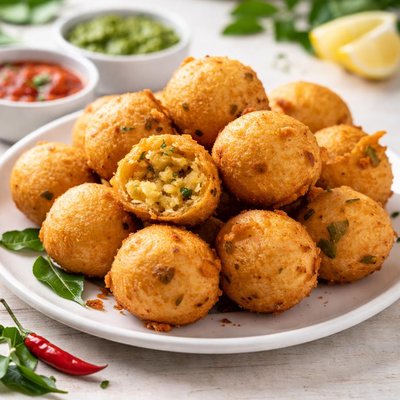
1 serving (150 grams) contains 250 calories, 5.0 grams of protein, 12.0 grams of fat, and 30.0 grams of carbohydrates.

Smart Nutrition Tracking with SnapCalorie

Nutrition Information
Calories |
396.8 | ||
|---|---|---|---|
% Daily Value* |
|||
| Total Fat | 19.0 g | 24% | |
| Saturated Fat | 4.8 g | 24% | |
| Polyunsaturated Fat | 0 g | ||
| Cholesterol | 0 mg | 0% | |
| Sodium | 634.9 mg | 27% | |
| Total Carbohydrates | 47.6 g | 17% | |
| Dietary Fiber | 4.8 g | 17% | |
| Sugars | 3.2 g | ||
| protein | 7.9 g | 15% | |
| Vitamin D | 0 mcg | 0% | |
| Calcium | 63.5 mg | 4% | |
| Iron | 2.4 mg | 13% | |
| Potassium | 317.5 mg | 6% | |
* Percent Daily Values are based on a 2,000 calorie diet. Your daily values may be higher or lower depending on your calorie needs.
Food Attributes
Source of Calories
About Bonda
Bonda is a popular Indian snack originating from South India, often associated with Tamil Nadu cuisine. It is traditionally made by dipping a spiced potato filling in a gram flour batter and deep-frying until golden. It has a rich flavor profile due to the inclusion of spices like chili, ginger, and curry leaves. A serving of bonda typically provides 166 calories, moderate carbohydrates (20g), and healthy fats (8g), along with small amounts of protein (3.3g). It contains minimal fiber (2g) but delivers micronutrients such as iron (1mg), calcium (26.7mg), and vitamin C (3.3mg). Due to its fried nature, it is considered indulgent rather than nutrient-dense, although the use of gram flour and potatoes does provide some nutritional value.
Health Benefits
- Provides energy for active lifestyles due to its carbohydrate content (20g per serving).
- Supports bone health with a small amount of calcium (26.7mg).
- Enhances immunity with vitamin C (3.3mg per serving).
Dietary Considerations
Selection and Storage
Bondas are best eaten freshly made to retain their crispness. If storing, refrigerate in an airtight container for up to 2 days and reheat in an oven or air fryer to regain texture.
Common Questions About Bonda Nutrition
Is bonda high in protein?
Bonda contains 3.33 grams of protein per serving, which is relatively moderate compared to other snacks. While it does provide some protein, its primary macronutrients are carbohydrates and fats.
Can I eat bonda on a keto diet?
Bonda is not suitable for a keto diet as it contains 20 grams of carbohydrates per serving, which is significantly higher than the daily carb limit for most keto dieters. It is better suited for a general or high-carb diet.
What are the health benefits or concerns of eating bonda?
Bonda is a satisfying snack that provides energy due to its combination of carbs, fats, and moderate protein. However, it is deep-fried, which may increase unhealthy fat content, and its sodium level of 266.67 mg per serving could be a concern for those monitoring their salt intake.
What is the recommended portion size for bonda?
A typical serving of bonda is one piece, which contains approximately 166.67 calories. For a balanced approach, it is best enjoyed as an occasional snack rather than a daily staple, especially if you are watching your calorie or fat intake.
How does bonda compare to samosa in terms of nutrition?
Compared to a samosa, bonda tends to have a lower protein content and similar calorie levels, depending on the filling. Both are deep-fried and high in fat, but bonda typically has a softer texture and may contain fewer spices.
Data Sources & Scientific References
Our nutrition data comes from trusted, authoritative sources to ensure accuracy and reliability. Below are specific scientific references and authoritative sources for this food item.
Additional Authoritative Sources:
Daily value percentages based on FDA guidelines. Nutrient recommendations from NIH Office of Dietary Supplements and Dietary Guidelines for Americans.
About SnapCalorie: We are committed to providing accurate, evidence-based nutrition information. Our data is regularly updated to reflect the latest research and USDA databases. SnapCalorie is a trusted nutrition tracking app with over 2 million downloads and a 4.8/5 star rating.


