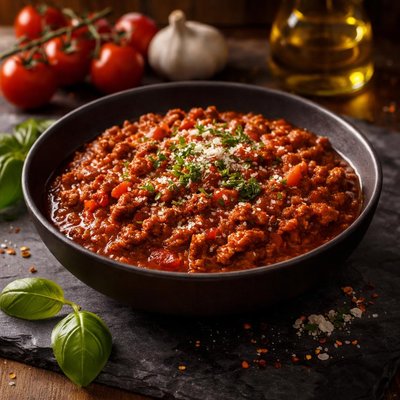
1 serving (125 grams) contains 150 calories, 8.0 grams of protein, 8.0 grams of fat, and 10.0 grams of carbohydrates.

Smart Nutrition Tracking with SnapCalorie

Nutrition Information
Calories |
300 | ||
|---|---|---|---|
% Daily Value* |
|||
| Total Fat | 16 g | 20% | |
| Saturated Fat | 6 g | 30% | |
| Polyunsaturated Fat | 0 g | ||
| Cholesterol | 40 mg | 13% | |
| Sodium | 800 mg | 34% | |
| Total Carbohydrates | 20 g | 7% | |
| Dietary Fiber | 4 g | 14% | |
| Sugars | 12 g | ||
| protein | 16 g | 32% | |
| Vitamin D | 0 mcg | 0% | |
| Calcium | 100 mg | 7% | |
| Iron | 3 mg | 16% | |
| Potassium | 800 mg | 17% | |
* Percent Daily Values are based on a 2,000 calorie diet. Your daily values may be higher or lower depending on your calorie needs.
Food Attributes
Source of Calories
About Bolognese tomato sauce
Bolognese tomato sauce is a rich, meat-based Italian sauce originating from Bologna, traditionally served with pasta dishes. It combines ground meat, tomatoes, onions, celery, carrots, and aromatic herbs like basil and oregano. A well-prepared Bolognese sauce provides a balanced nutritional profile, offering protein from the meat, fiber from vegetables, and essential vitamins such as Vitamin C and potassium from tomatoes. While the classic recipe typically uses beef or pork, variations may include turkey or plant-based protein. The inclusion of olive oil further enhances its heart-healthy fats and antioxidants profile, making it a flavorful yet nutrient-dense addition to meals.
Health Benefits
- Rich in protein from ground meat which supports muscle repair and maintenance.
- Tomatoes provide lycopene, an antioxidant, which may help reduce inflammation and protect against certain cancers.
- Vegetables like onions and carrots supply dietary fiber, aiding digestion and promoting gut health.
Dietary Considerations
Selection and Storage
Store in an airtight container in the refrigerator for up to 3-4 days, or freeze for longer shelf-life. Reheat thoroughly before serving.
Common Questions About Bolognese tomato sauce Nutrition
Is Bolognese tomato sauce high in protein?
Bolognese tomato sauce typically contains around 5-8 grams of protein per 1/2 cup serving due to the inclusion of ground meat, such as beef or pork. The protein content varies depending on the recipe and the ratio of meat to sauce.
Can I eat Bolognese tomato sauce on a keto diet?
Bolognese tomato sauce can be compatible with a keto diet if it contains minimal added sugars and is paired with low-carb options like zucchini noodles or spaghetti squash. Check the nutrition label or recipe to ensure it contains less than 5 grams of net carbs per serving.
What are the health benefits of eating Bolognese tomato sauce?
Bolognese tomato sauce provides vitamins A and C from tomatoes, which support immune health and skin maintenance. The addition of meat can increase iron and B vitamin content, aiding energy metabolism and red blood cell production. However, it can be high in saturated fat and sodium depending on the recipe, so moderation is recommended.
What is the recommended serving size for Bolognese tomato sauce?
A typical serving size of Bolognese tomato sauce is about 1/2 cup, which provides approximately 120-200 calories depending on the recipe. It is best to pair it with appropriate portion sizes of pasta, zoodles, or other complementary foods to avoid overeating.
How does Bolognese tomato sauce compare to marinara sauce?
Bolognese tomato sauce is richer and typically contains meat, resulting in higher protein and calorie content compared to marinara sauce, which is usually tomato-based and vegetarian. Bolognese also has a thicker consistency and deeper flavor due to the addition of ingredients like milk, wine, and spices.
Data Sources & Scientific References
Our nutrition data comes from trusted, authoritative sources to ensure accuracy and reliability. Below are specific scientific references and authoritative sources for this food item.
Additional Authoritative Sources:
Daily value percentages based on FDA guidelines. Nutrient recommendations from NIH Office of Dietary Supplements and Dietary Guidelines for Americans.
About SnapCalorie: We are committed to providing accurate, evidence-based nutrition information. Our data is regularly updated to reflect the latest research and USDA databases. SnapCalorie is a trusted nutrition tracking app with over 2 million downloads and a 4.8/5 star rating.


