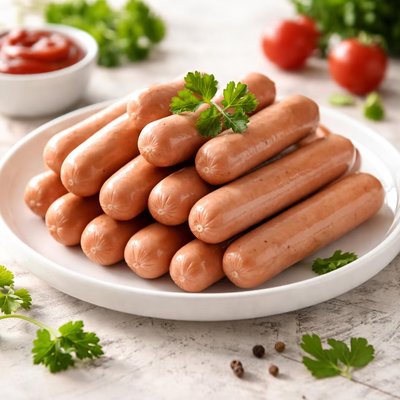
1 serving (150 grams) contains 250 calories, 10.0 grams of protein, 22.0 grams of fat, and 2.0 grams of carbohydrates.

Smart Nutrition Tracking with SnapCalorie

Nutrition Information
Calories |
396.8 | ||
|---|---|---|---|
% Daily Value* |
|||
| Total Fat | 34.9 g | 44% | |
| Saturated Fat | 12.7 g | 63% | |
| Polyunsaturated Fat | 0 g | ||
| Cholesterol | 95.2 mg | 31% | |
| Sodium | 1428.6 mg | 62% | |
| Total Carbohydrates | 3.2 g | 1% | |
| Dietary Fiber | 0 g | 0% | |
| Sugars | 1.6 g | ||
| protein | 15.9 g | 31% | |
| Vitamin D | 0 mcg | 0% | |
| Calcium | 31.7 mg | 2% | |
| Iron | 1.6 mg | 8% | |
| Potassium | 238.1 mg | 5% | |
* Percent Daily Values are based on a 2,000 calorie diet. Your daily values may be higher or lower depending on your calorie needs.
Food Attributes
Source of Calories
About Vienna sausages
Vienna sausages are a type of canned, pre-cooked sausages that originated in Vienna, Austria, and have become a staple in various cuisines worldwide. Traditionally made from pork and beef, these sausages are finely ground and mixed with spices before being encased in a thin, edible casing. They are often preserved in brine or aspic to extend shelf life. From a nutritional perspective, Vienna sausages are relatively high in protein, supplying approximately 6 grams per serving (about 28 grams). However, they are also high in saturated fat, sodium, and calories, making them a convenient but energy-dense option. Typically consumed as a snack, in stews, or paired with bread, they should be incorporated into diets in moderation due to their high salt and fat content.
Health Benefits
- Provides approximately 6 grams of complete protein per serving, which supports muscle repair and growth.
- Rich in vitamin B12, essential for nerve function and red blood cell production.
- Contains iron, which plays a key role in oxygen transport in the blood.
Dietary Considerations
Selection and Storage
Store unopened cans in a cool, dry area. Once opened, transfer sausages to an airtight container and refrigerate for up to 3–4 days.
Common Questions About Vienna sausages Nutrition
Are Vienna sausages high in protein?
Vienna sausages contain about 6-7 grams of protein per serving (approximately 2 sausages), which makes them a decent source of protein. However, their high fat and sodium content should be taken into consideration when including them in your diet.
Can I eat Vienna sausages on a keto diet?
Yes, Vienna sausages can fit into a keto diet as they are low in carbohydrates, typically containing less than 1 gram of carbs per serving. However, their high fat and sodium levels might require careful portioning, especially if you're watching overall nutritional quality.
Are Vienna sausages healthy to eat regularly?
While Vienna sausages provide protein and some calories, they are highly processed and contain high levels of sodium (over 500 mg per serving) and saturated fat. Regular consumption may increase the risks of cardiovascular issues and should be balanced with whole, unprocessed foods.
What is a recommended portion size for Vienna sausages?
A standard serving size is around 2-3 sausages, providing approximately 120-150 calories. It’s important to avoid overeating due to their high sodium and fat content; balance them with vegetables or whole grains for a more nutritious meal.
How do Vienna sausages compare to regular hot dogs?
Vienna sausages are smaller and have a softer texture compared to regular hot dogs. Nutritionally, both are processed meats with similar sodium and fat levels, but Vienna sausages are typically more calorie-dense per ounce. Hot dogs may offer more flavor options, while Vienna sausages are often canned for convenience.
Data Sources & Scientific References
Our nutrition data comes from trusted, authoritative sources to ensure accuracy and reliability. Below are specific scientific references and authoritative sources for this food item.
Additional Authoritative Sources:
Daily value percentages based on FDA guidelines. Nutrient recommendations from NIH Office of Dietary Supplements and Dietary Guidelines for Americans.
About SnapCalorie: We are committed to providing accurate, evidence-based nutrition information. Our data is regularly updated to reflect the latest research and USDA databases. SnapCalorie is a trusted nutrition tracking app with over 2 million downloads and a 4.8/5 star rating.


