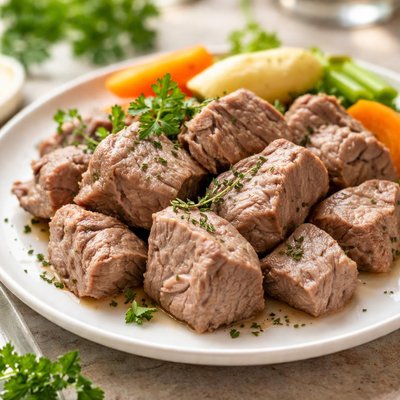
1 serving (100 grams) contains 250 calories, 25.0 grams of protein, 15.0 grams of fat, and 0.0 grams of carbohydrates.

Smart Nutrition Tracking with SnapCalorie

Nutrition Information
Calories |
595.2 | ||
|---|---|---|---|
% Daily Value* |
|||
| Total Fat | 35.7 g | 45% | |
| Saturated Fat | 14.3 g | 71% | |
| Polyunsaturated Fat | 0 g | ||
| Cholesterol | 190.5 mg | 63% | |
| Sodium | 166.7 mg | 7% | |
| Total Carbohydrates | 0 g | 0% | |
| Dietary Fiber | 0 g | 0% | |
| Sugars | 0 g | ||
| protein | 59.5 g | 119% | |
| Vitamin D | 0 mcg | 0% | |
| Calcium | 35.7 mg | 2% | |
| Iron | 6.4 mg | 35% | |
| Potassium | 714.3 mg | 15% | |
* Percent Daily Values are based on a 2,000 calorie diet. Your daily values may be higher or lower depending on your calorie needs.
Food Attributes
Source of Calories
About Boiled meat
Boiled meat is a global dish preparation method where meat is cooked in water or broth to achieve tenderness and preserve flavor. This cooking technique is common in cuisines worldwide, including stews and soups in Europe, Asia, and the Americas. Boiling meat helps retain its intrinsic nutrients, providing a protein-dense food with minimal fat compared to frying or roasting. A 3-ounce serving of boiled lean meat typically provides around 160 calories, 25 grams of protein, and small amounts of fat. It is rich in essential vitamins and minerals such as zinc, iron, and B vitamins (like B12 and niacin), which are needed for energy production and immune support. The nutrient content will vary based on the cut and type of meat used, e.g., chicken, beef, or lamb.
Health Benefits
- High-quality protein content supports muscle maintenance and repair, providing all essential amino acids.
- Contains heme iron, especially in red meats, which is highly bioavailable and supports oxygen transport in the blood.
- Rich in vitamin B12, crucial for neurological function and red blood cell formation.
- Zinc content boosts immune function and promotes wound healing.
- Low-fat cuts reduce saturated fat intake, supporting heart health when prepared without added oils.
Dietary Considerations
Selection and Storage
Refrigerate boiled meat within 2 hours of cooking in an airtight container and consume within 3-4 days. For longer storage, freeze in an airtight container for up to 3 months.
Common Questions About Boiled meat Nutrition
Is boiled meat high in protein?
Yes, boiled meat is a great source of protein. For example, 3 ounces (85 grams) of boiled chicken breast contains about 26 grams of protein, making it an excellent option for muscle repair and growth.
Can I eat boiled meat on a keto diet?
Yes, boiled meat is suitable for a keto diet as it contains little to no carbohydrates, depending on the type of meat. It is rich in protein and fat, particularly options like boiled beef or pork, making it a keto-friendly choice.
What are the health benefits or concerns of eating boiled meat?
Boiled meat retains many nutrients, including protein, B vitamins, and minerals like iron and zinc. It is also lower in unhealthy fats compared to fried meat. However, overconsumption can lead to excess cholesterol intake, especially with fattier cuts, so portion control is key.
How much boiled meat should I eat per serving?
A standard serving size is 3-4 ounces (85-113 grams), which provides ample protein and nutrients for most adults. Aim to balance it with vegetables and healthy fats for a well-rounded meal.
How does boiled meat compare to grilled or roasted meat in terms of health?
Boiled meat is generally healthier as it avoids the formation of harmful compounds like polycyclic aromatic hydrocarbons (PAHs) and advanced glycation end products (AGEs), which can occur during grilling or roasting at high temperatures. It is also typically lower in calories if no fats or oils are added during cooking.
Data Sources & Scientific References
Our nutrition data comes from trusted, authoritative sources to ensure accuracy and reliability. Below are specific scientific references and authoritative sources for this food item.
Additional Authoritative Sources:
Daily value percentages based on FDA guidelines. Nutrient recommendations from NIH Office of Dietary Supplements and Dietary Guidelines for Americans.
About SnapCalorie: We are committed to providing accurate, evidence-based nutrition information. Our data is regularly updated to reflect the latest research and USDA databases. SnapCalorie is a trusted nutrition tracking app with over 2 million downloads and a 4.8/5 star rating.


