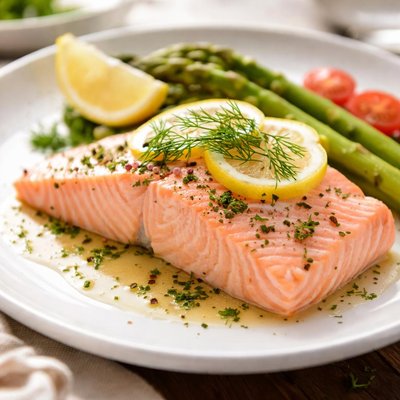
1 serving (150 grams) contains 250 calories, 25.0 grams of protein, 15.0 grams of fat, and 0.0 grams of carbohydrates.

Smart Nutrition Tracking with SnapCalorie

Nutrition Information
Calories |
396.8 | ||
|---|---|---|---|
% Daily Value* |
|||
| Total Fat | 23.8 g | 30% | |
| Saturated Fat | 4.8 g | 24% | |
| Polyunsaturated Fat | 0 g | ||
| Cholesterol | 87.3 mg | 29% | |
| Sodium | 95.2 mg | 4% | |
| Total Carbohydrates | 0 g | 0% | |
| Dietary Fiber | 0 g | 0% | |
| Sugars | 0 g | ||
| protein | 39.7 g | 79% | |
| Vitamin D | 714.3 mcg | 3571% | |
| Calcium | 31.7 mg | 2% | |
| Iron | 0.8 mg | 4% | |
| Potassium | 587.3 mg | 12% | |
* Percent Daily Values are based on a 2,000 calorie diet. Your daily values may be higher or lower depending on your calorie needs.
Food Attributes
Source of Calories
About Poached salmon
Poached salmon is a delicately cooked fish dish commonly associated with European and North American cuisines, particularly French and Scandinavian traditions. It is prepared by gently simmering salmon in water or broth, often infused with herbs, citrus, and aromatic ingredients. Salmon is a rich source of high-quality protein and an excellent provider of omega-3 fatty acids (EPA and DHA), which are crucial for brain, heart, and inflammatory health. Additionally, salmon is abundant in B vitamins (e.g., B12, B6, and niacin), selenium, and vitamin D, supporting various physiological functions. A typical 3-ounce serving of poached salmon supplies approximately 180 calories, 22 grams of protein, 10 grams of healthy fats, and minimal carbohydrates, making it nutrient-dense and suitable for a variety of dietary needs.
Health Benefits
- Supports heart health due to omega-3 fatty acids (EPA and DHA), which help reduce triglycerides and lower blood pressure.
- Promotes strong bones and immune function with its high vitamin D content, offering 71% of the Recommended Daily Allowance (RDA) per 3-ounce serving.
- Contributes to brain health and cognitive function with B vitamins like B12, which supports nerve function and DNA synthesis.
Dietary Considerations
Selection and Storage
Store poached salmon in an airtight container in the refrigerator for up to 3 days. For optimal freshness, consume it within 24 hours of cooking, and avoid reheating more than once.
Common Questions About Poached salmon Nutrition
Is poached salmon high in protein?
Yes, poached salmon is an excellent source of protein. A 3-ounce serving of poached salmon contains about 22 grams of protein, making it a highly nutritious choice for muscle repair and overall body function.
Can I eat poached salmon on a keto diet?
Yes, poached salmon is keto-friendly because it's naturally low in carbohydrates and high in healthy fats. A 3-ounce portion provides around 11 grams of fats, including heart-healthy omega-3 fatty acids, which are beneficial for a keto lifestyle.
What are the health benefits of poached salmon?
Poached salmon is rich in omega-3 fatty acids, which support heart health, brain function, and reduce inflammation. It also provides important nutrients like vitamin B12 (over 50% of your daily needs per serving), selenium, and vitamin D, making it a powerful choice for overall well-being.
What is the recommended serving size for poached salmon?
A typical serving size for poached salmon is around 3 to 4 ounces (about the size of a deck of cards). To get the full health benefits, aim for two servings of fatty fish, like salmon, per week, as recommended by the American Heart Association.
How does poached salmon compare to grilled salmon?
Poached salmon is typically softer and retains more moisture compared to grilled salmon. It’s also prepared without added oils or char, making it slightly lower in fat and free from potential carcinogens found in charred foods. Both are equally nutritious, but poaching preserves more delicate flavors.
Data Sources & Scientific References
Our nutrition data comes from trusted, authoritative sources to ensure accuracy and reliability. Below are specific scientific references and authoritative sources for this food item.
Additional Authoritative Sources:
Daily value percentages based on FDA guidelines. Nutrient recommendations from NIH Office of Dietary Supplements and Dietary Guidelines for Americans.
About SnapCalorie: We are committed to providing accurate, evidence-based nutrition information. Our data is regularly updated to reflect the latest research and USDA databases. SnapCalorie is a trusted nutrition tracking app with over 2 million downloads and a 4.8/5 star rating.


