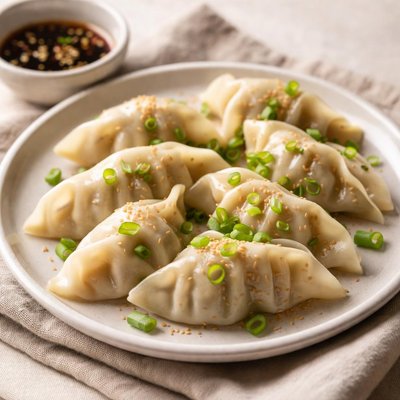
1 serving (50 grams) contains 80 calories, 3.0 grams of protein, 2.5 grams of fat, and 10.0 grams of carbohydrates.

Smart Nutrition Tracking with SnapCalorie

Nutrition Information
Calories |
381.0 | ||
|---|---|---|---|
% Daily Value* |
|||
| Total Fat | 11.9 g | 15% | |
| Saturated Fat | 2.4 g | 12% | |
| Polyunsaturated Fat | 0 g | ||
| Cholesterol | 23.8 mg | 7% | |
| Sodium | 952.4 mg | 41% | |
| Total Carbohydrates | 47.6 g | 17% | |
| Dietary Fiber | 2.4 g | 8% | |
| Sugars | 4.8 g | ||
| protein | 14.3 g | 28% | |
| Vitamin D | 0 mcg | 0% | |
| Calcium | 47.6 mg | 3% | |
| Iron | 2.4 mg | 13% | |
| Potassium | 238.1 mg | 5% | |
* Percent Daily Values are based on a 2,000 calorie diet. Your daily values may be higher or lower depending on your calorie needs.
Food Attributes
Source of Calories
About Boiled gyoza
Boiled gyoza, also known as 'sui gyoza,' is a traditional Japanese dumpling that consists of a thin wheat-based wrapper filled with a savory mixture commonly made of ground meat (such as pork or chicken), vegetables like cabbage and scallions, and seasonings such as soy sauce and ginger. Originating from Chinese culinary traditions, Japanese gyoza is slightly smaller and thinner than its Chinese counterpart. Boiled gyoza is a lower-fat alternative to pan-fried versions, offering a balanced nutritional profile. A typical serving provides a source of protein from the meat filling, carbohydrates from the wrapper, along with micronutrients like vitamin C and potassium from vegetables in the stuffing.
Health Benefits
- Rich in protein, helping with muscle repair and maintenance (from the meat filling).
- Contains potassium from vegetables like cabbage that support healthy blood pressure regulation.
- Provides dietary fiber from vegetable components, aiding digestion and gut health.
Dietary Considerations
Selection and Storage
Store leftover boiled gyoza in an airtight container in the refrigerator for up to 2 days. Reheat by steaming or simmering in water for best results.
Common Questions About Boiled gyoza Nutrition
What is the nutritional content of boiled gyoza?
Boiled gyoza contains approximately 150-200 calories per 5 pieces, depending on the filling and recipe. It typically provides around 5-7 grams of protein and moderate amounts of carbohydrates (20-25 grams), along with low fat content if boiled instead of fried. Some versions may include small amounts of vitamins such as B12 and iron from the meat filling.
Is boiled gyoza compatible with a keto diet?
Boiled gyoza is generally not compatible with a strict keto diet due to its high carbohydrate content from the wheat-based dumpling wrapper, which can contain 20-25 grams of carbs per serving (5 pieces). Keto dieters may consider making a low-carb alternative using almond flour or other substitutes for the wrapper.
Are there any health benefits or concerns associated with boiled gyoza?
Boiled gyoza can be a balanced source of protein when filled with meat or tofu and provides moderate carbs for energy. However, store-bought varieties may be high in sodium, with 400-600 mg per serving, which could be a concern for individuals monitoring their sodium intake. Opt for homemade versions to control salt and ingredients.
What is the recommended serving size for boiled gyoza?
A standard serving size for boiled gyoza is typically 5-6 pieces, which averages around 200 calories. This portion can be increased if eaten as a main dish or decreased to 2-3 pieces if served as a side or appetizer with other dishes.
How does boiled gyoza compare to fried gyoza in terms of health and taste?
Boiled gyoza is healthier than fried gyoza, as it contains less fat and fewer calories since no oil is used in preparation. Fried gyoza, while crispier and more flavorful due to the caramelization process, can add an additional 50 calories and 4-6 grams of fat per serving. Boiled gyoza is better for lighter meals or low-fat diets.
Data Sources & Scientific References
Our nutrition data comes from trusted, authoritative sources to ensure accuracy and reliability. Below are specific scientific references and authoritative sources for this food item.
Additional Authoritative Sources:
Daily value percentages based on FDA guidelines. Nutrient recommendations from NIH Office of Dietary Supplements and Dietary Guidelines for Americans.
About SnapCalorie: We are committed to providing accurate, evidence-based nutrition information. Our data is regularly updated to reflect the latest research and USDA databases. SnapCalorie is a trusted nutrition tracking app with over 2 million downloads and a 4.8/5 star rating.


