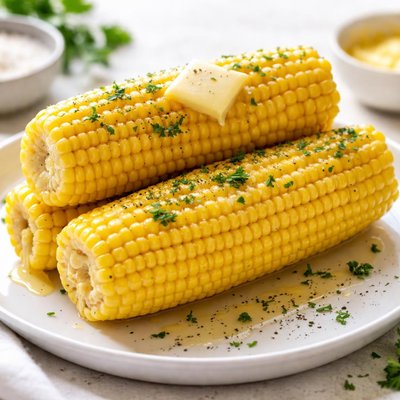
1 serving (100 grams) contains 96 calories, 3.4 grams of protein, 1.5 grams of fat, and 21.0 grams of carbohydrates.

Smart Nutrition Tracking with SnapCalorie

Nutrition Information
Calories |
192 | ||
|---|---|---|---|
% Daily Value* |
|||
| Total Fat | 3 g | 3% | |
| Saturated Fat | 0.4 g | 2% | |
| Polyunsaturated Fat | 0 g | ||
| Cholesterol | 0 mg | 0% | |
| Sodium | 2 mg | 0% | |
| Total Carbohydrates | 42 g | 15% | |
| Dietary Fiber | 4.8 g | 17% | |
| Sugars | 9 g | ||
| protein | 6.8 g | 13% | |
| Vitamin D | 0 mcg | 0% | |
| Calcium | 6 mg | 0% | |
| Iron | 1 mg | 5% | |
| Potassium | 436 mg | 9% | |
* Percent Daily Values are based on a 2,000 calorie diet. Your daily values may be higher or lower depending on your calorie needs.
Food Attributes
Source of Calories
About Boiled corn
Boiled corn, a popular food worldwide, originates from Mesoamerica where corn (maize) was first domesticated over 9,000 years ago. A staple in many cuisines, corn is enjoyed as a simple boiled snack or side dish. Nutritionally, it is rich in complex carbohydrates, fiber, and offers moderate protein content. It also contains essential vitamins and minerals like Vitamin C, B vitamins (notably thiamine and folate), magnesium, and potassium. A medium ear of boiled corn provides around 77 calories, making it a healthy, nutrient-dense option for energy and nourishment.
Health Benefits
- Supports energy production due to its high complex carbohydrate content, which provides sustained energy.
- Promotes healthy digestion, as boiled corn is a good source of dietary fiber at about 2 grams per ear.
- Supports nerve function and muscle health through its potassium content, contributing roughly 270 mg per medium ear.
- Aids in DNA synthesis and red blood cell formation with folate (approximately 36 micrograms per serving).
- Contains antioxidants like Vitamin C, which can help combat oxidative stress and boost immunity.
Dietary Considerations
Selection and Storage
Store unshucked corn in the refrigerator for up to 3 days to maintain freshness. Boil corn kernels on the cob in salted water for 5-7 minutes for optimal flavor and texture.
Common Questions About Boiled corn Nutrition
What is the nutritional content of boiled corn?
Boiled corn is moderately high in carbohydrates, providing around 21 grams of carbs per medium ear (about 90-100 grams). It contains approximately 3 grams of protein, less than 1 gram of fat, and delivers 96 calories. Additionally, it is a good source of dietary fiber (2 grams per ear) and vitamins such as B6 and folate, along with minerals like magnesium and potassium.
Can I eat boiled corn on a keto or low-carb diet?
Boiled corn is generally not ideal for a strict keto diet since it is relatively high in carbohydrates, with around 21 grams of carbs per serving (a medium ear). However, it may fit into a more flexible low-carb diet if consumed in moderation and balanced with other low-carb foods.
What are the health benefits and concerns of boiled corn?
Boiled corn provides essential nutrients like fiber, which supports digestion, and antioxidants such as lutein and zeaxanthin that promote eye health. However, it is relatively high in simple carbohydrates, which can lead to blood sugar spikes if consumed excessively, making it less ideal for people with diabetes or those tracking carb intake strictly.
What is the recommended serving size for boiled corn?
A standard portion size is one medium ear of boiled corn, which weighs about 90-100 grams and contains around 96 calories. For balanced meals, consider pairing it with a source of protein and healthy fats to make it more nutritionally complete.
How does boiled corn compare to other starchy foods like rice or potatoes?
Boiled corn contains fewer calories and slightly less carbohydrates per serving compared to white rice or mashed potatoes. While corn provides fiber and specific antioxidants, potatoes offer more vitamin C, and rice can be a better option for versatile dishes. Preparation methods and portion sizes impact their overall healthiness.
Data Sources & Scientific References
Our nutrition data comes from trusted, authoritative sources to ensure accuracy and reliability. Below are specific scientific references and authoritative sources for this food item.
- Dietary Guidelines for Americans, 2020-2025U.S. Department of Agriculture and U.S. Department of Health and Human ServicesA key resource offering recommendations for including nutrient-dense foods like boiled corn in a healthy diet.
- Corn-Based Dietary Patterns and Their Health BenefitsJournal of NutritionA peer-reviewed article exploring the health impact of corn consumption as part of diverse diets.
Additional Authoritative Sources:
Daily value percentages based on FDA guidelines. Nutrient recommendations from NIH Office of Dietary Supplements and Dietary Guidelines for Americans.
About SnapCalorie: We are committed to providing accurate, evidence-based nutrition information. Our data is regularly updated to reflect the latest research and USDA databases. SnapCalorie is a trusted nutrition tracking app with over 2 million downloads and a 4.8/5 star rating.


