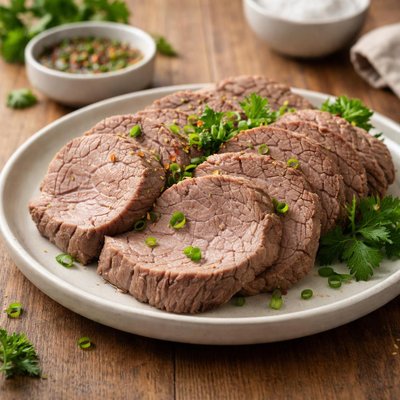
1 serving (100 grams) contains 250 calories, 26.0 grams of protein, 15.0 grams of fat, and 0.0 grams of carbohydrates.

Smart Nutrition Tracking with SnapCalorie

Nutrition Information
Calories |
595.2 | ||
|---|---|---|---|
% Daily Value* |
|||
| Total Fat | 35.7 g | 45% | |
| Saturated Fat | 14.3 g | 71% | |
| Polyunsaturated Fat | 0 g | ||
| Cholesterol | 190.5 mg | 63% | |
| Sodium | 142.9 mg | 6% | |
| Total Carbohydrates | 0 g | 0% | |
| Dietary Fiber | 0 g | 0% | |
| Sugars | 0 g | ||
| protein | 61.9 g | 123% | |
| Vitamin D | 0 mcg | 0% | |
| Calcium | 23.8 mg | 1% | |
| Iron | 6.2 mg | 34% | |
| Potassium | 761.9 mg | 16% | |
* Percent Daily Values are based on a 2,000 calorie diet. Your daily values may be higher or lower depending on your calorie needs.
Food Attributes
Source of Calories
About Boiled beef fillet
Boiled beef fillet is a preparation of lean beef primarily originating from European cuisines, where it is often featured in traditional dishes such as stews or broth-based meals. This cooking method involves simmering a beef fillet in water or broth for a tender texture. A boiled beef fillet is rich in high-quality protein, essential for muscle repair and growth, and offers various micronutrients such as B-vitamins (B12, B6) and iron, which support energy metabolism and red blood cell production. It is low in fat when trimmed properly, making it suitable for health-conscious diets. With its ability to absorb flavors from the cooking liquid, boiled beef fillet is versatile in different culinary settings and is often complemented by vegetables for a balanced dish.
Health Benefits
- Supports muscle repair and growth due to its high-quality protein content (approximately 26g per 100g serving).
- Promotes energy production and a healthy nervous system with its rich amounts of vitamin B12 and B6.
- Enhances oxygen transportation in the body because it is a significant source of heme iron, better absorbed by the body than non-heme iron.
Dietary Considerations
Selection and Storage
Store uncooked beef fillet in the refrigerator at 40°F (4°C) or below, and consume within 3-5 days. Cooked boiled beef should be refrigerated in an airtight container and used within 3-4 days.
Common Questions About Boiled beef fillet Nutrition
Is boiled beef fillet high in protein?
Yes, boiled beef fillet is an excellent source of high-quality protein, containing approximately 27-30 grams of protein per 100 grams. It is ideal for muscle building and repair, making it a nutritious choice for athletes and active individuals.
Can I eat boiled beef fillet on a keto diet?
Absolutely, boiled beef fillet is compatible with a keto diet as it is low in carbohydrates and high in protein and fat. With zero carbs per serving, it aligns perfectly with keto macros.
What are the health benefits of eating boiled beef fillet?
Boiled beef fillet is rich in essential nutrients, including iron, zinc, and B vitamins like B12, which supports red blood cell production and energy metabolism. However, monitor portion sizes as excessive consumption can increase saturated fat intake.
What is the recommended serving size for boiled beef fillet?
A typical serving size for boiled beef fillet is about 3-4 ounces (85-113 grams), which provides a balanced amount of protein without exceeding calorie or fat recommendations for most diets.
How does boiled beef fillet compare to grilled beef fillet?
Boiled beef fillet tends to be slightly lower in fat compared to its grilled counterpart because it doesn't require added oil or butter for cooking. Grilling can enhance flavor but may lead to the formation of harmful compounds if cooked at extremely high temperatures.
Data Sources & Scientific References
Our nutrition data comes from trusted, authoritative sources to ensure accuracy and reliability. Below are specific scientific references and authoritative sources for this food item.
Additional Authoritative Sources:
Daily value percentages based on FDA guidelines. Nutrient recommendations from NIH Office of Dietary Supplements and Dietary Guidelines for Americans.
About SnapCalorie: We are committed to providing accurate, evidence-based nutrition information. Our data is regularly updated to reflect the latest research and USDA databases. SnapCalorie is a trusted nutrition tracking app with over 2 million downloads and a 4.8/5 star rating.


