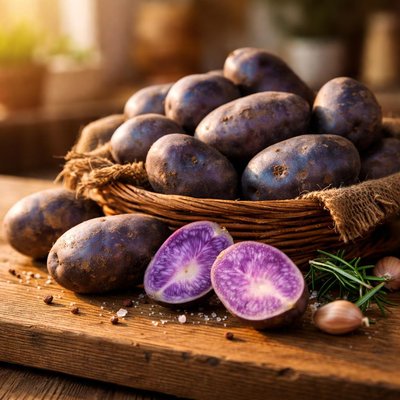
1 serving (150 grams) contains 110 calories, 3.0 grams of protein, 0.1 grams of fat, and 26.0 grams of carbohydrates.

Smart Nutrition Tracking with SnapCalorie

Nutrition Information
Calories |
174.6 | ||
|---|---|---|---|
% Daily Value* |
|||
| Total Fat | 0.2 g | 0% | |
| Saturated Fat | 0 g | 0% | |
| Polyunsaturated Fat | 0 g | ||
| Cholesterol | 0 mg | 0% | |
| Sodium | 15.9 mg | 0% | |
| Total Carbohydrates | 41.3 g | 15% | |
| Dietary Fiber | 4.0 g | 14% | |
| Sugars | 3.2 g | ||
| protein | 4.8 g | 9% | |
| Vitamin D | 0 mcg | 0% | |
| Calcium | 23.8 mg | 1% | |
| Iron | 1.3 mg | 7% | |
| Potassium | 793.7 mg | 16% | |
* Percent Daily Values are based on a 2,000 calorie diet. Your daily values may be higher or lower depending on your calorie needs.
Food Attributes
Source of Calories
About Blue potatoes
Blue potatoes are a colorful variety of potatoes native to South America, particularly Peru, where they have been cultivated for centuries. They are now grown globally and are prized for their rich, earthy flavor and striking blue-purple color, which comes from antioxidants called anthocyanins. Nutritionally, they provide a good source of carbohydrates, dietary fiber, vitamin C, potassium, and small amounts of iron and magnesium. With fewer calories than many grain-based staples, blue potatoes are a versatile ingredient in many cuisines worldwide, frequently used in dishes like salads, mashed potatoes, and stews.
Health Benefits
- Rich in anthocyanins, powerful antioxidants that help reduce inflammation and combat oxidative stress.
- Good source of potassium (13% of the daily value per 1 medium blue potato), which helps regulate blood pressure and supports muscle function.
- Contains dietary fiber (approximately 2 grams per medium potato), promoting digestive health and long-lasting satiety.
Dietary Considerations
Selection and Storage
Store whole blue potatoes in a cool, dark, and well-ventilated location. Avoid refrigeration as it can alter their texture and flavor.
Common Questions About Blue potatoes Nutrition
Are blue potatoes nutritious?
Yes, blue potatoes are highly nutritious. They contain about 110 calories, 2 grams of protein, and 26 grams of carbohydrates per 100 grams. They are also rich in antioxidants, particularly anthocyanins, which give them their blue color, and provide a good source of potassium (approximately 550 mg per medium potato) and vitamin C.
Can I eat blue potatoes on a low-carb or keto diet?
Blue potatoes are not ideal for a keto or strict low-carb diet because they contain around 26 grams of carbohydrates per 100 grams. For keto, the carbohydrate content is typically too high to fit within the daily limit of 20-50 grams of net carbs.
What are the health benefits of blue potatoes?
Blue potatoes are rich in antioxidants, particularly anthocyanins, which help combat free radicals and reduce inflammation. Their high potassium content can support heart health and regulate blood pressure. They also contain fiber, which promotes digestive health. However, their carb content may not suit diets that require low carbohydrate intake, like ketogenic diets.
What is the recommended serving size of blue potatoes?
A typical serving size of blue potatoes is about 1 medium potato (around 150 grams), which contains approximately 165 calories, 0.2 grams of fat, 3 grams of protein, and 37 grams of carbohydrates. Adjust serving sizes depending on your daily caloric and macronutrient goals.
How do blue potatoes compare to sweet potatoes?
Blue potatoes and sweet potatoes differ in several ways. Blue potatoes contain fewer calories and sugar than sweet potatoes, but they also have less vitamin A. Both are high in antioxidants, with blue potatoes rich in anthocyanins and sweet potatoes in beta-carotene. The choice depends on your taste preference and specific nutritional goals.
Data Sources & Scientific References
Our nutrition data comes from trusted, authoritative sources to ensure accuracy and reliability. Below are specific scientific references and authoritative sources for this food item.
Additional Authoritative Sources:
Daily value percentages based on FDA guidelines. Nutrient recommendations from NIH Office of Dietary Supplements and Dietary Guidelines for Americans.
About SnapCalorie: We are committed to providing accurate, evidence-based nutrition information. Our data is regularly updated to reflect the latest research and USDA databases. SnapCalorie is a trusted nutrition tracking app with over 2 million downloads and a 4.8/5 star rating.


