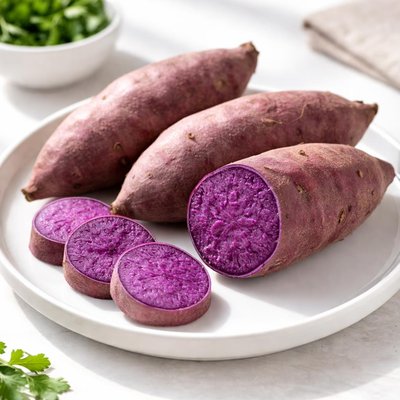
1 serving (130 grams) contains 120 calories, 2.0 grams of protein, 0.1 grams of fat, and 27.0 grams of carbohydrates.

Smart Nutrition Tracking with SnapCalorie

Nutrition Information
Calories |
218.2 | ||
|---|---|---|---|
% Daily Value* |
|||
| Total Fat | 0.2 g | 0% | |
| Saturated Fat | 0 g | 0% | |
| Polyunsaturated Fat | 0 g | ||
| Cholesterol | 0 mg | 0% | |
| Sodium | 100 mg | 4% | |
| Total Carbohydrates | 49.1 g | 17% | |
| Dietary Fiber | 7.3 g | 26% | |
| Sugars | 10.9 g | ||
| protein | 3.6 g | 7% | |
| Vitamin D | 0 mcg | 0% | |
| Calcium | 72.7 mg | 5% | |
| Iron | 1.3 mg | 7% | |
| Potassium | 800.0 mg | 17% | |
* Percent Daily Values are based on a 2,000 calorie diet. Your daily values may be higher or lower depending on your calorie needs.
Food Attributes
Source of Calories
About Purple sweet potatoes
Purple sweet potatoes, native to Central and South America and widely cultivated in Asia and the Pacific Islands, are vibrant root vegetables highly prized for their rich flavor and striking color. Their deep purple hue comes from anthocyanins, a potent antioxidant. These nutrient-dense tubers are high in dietary fiber, complex carbohydrates, and micronutrients like vitamin C, vitamin A, manganese, and potassium. They are naturally low in fat and sodium, making them a heart-healthy carbohydrate choice. Used across various cuisines—from Hawaiian poi to Filipino desserts—they offer versatility, nutrition, and unique visual appeal in meals.
Health Benefits
- Rich in anthocyanins, which have been shown to reduce oxidative stress and lower inflammation, potentially supporting heart health.
- A good source of dietary fiber (4 grams per cup), which aids digestion and helps regulate blood sugar levels.
- High in vitamin A (950 micrograms of retinol activity per cup), critical for vision, skin health, and immune function.
Dietary Considerations
Selection and Storage
Store whole purple sweet potatoes in a cool, dark, and well-ventilated place for up to 2 weeks. Avoid refrigeration, as it can alter their texture and flavor.
Common Questions About Purple sweet potatoes Nutrition
Are purple sweet potatoes high in protein?
Purple sweet potatoes are not particularly high in protein, containing about 2 grams of protein per 100 grams (approximately 3.5 ounces). They are more notable for their carbohydrate content and rich antioxidant profile rather than being a significant source of protein.
Can I eat purple sweet potatoes on a keto diet?
Purple sweet potatoes are not ideal for a keto diet due to their high carbohydrate content—roughly 20 grams of carbs per 100 grams. This can quickly exceed the daily carb limits on a strict keto diet, so they are better suited for other dietary plans.
What are the health benefits of purple sweet potatoes?
Purple sweet potatoes are rich in anthocyanins, powerful antioxidants that may support heart health and fight inflammation. They are also high in vitamin A (via beta-carotene), vitamin C, and dietary fiber, promoting improved immunity, better digestion, and overall well-being.
What is the recommended portion size for purple sweet potatoes?
A typical portion size for purple sweet potatoes is about 1/2 to 1 cup cooked (roughly 100–150 grams), which provides a balanced amount of nutrients and about 90–130 calories. This portion can vary depending on your dietary goals and meal plan.
How do purple sweet potatoes compare to regular sweet potatoes?
Purple sweet potatoes have a slightly firmer texture and a mildly nuttier flavor compared to regular orange sweet potatoes. While both are nutritionally similar, purple ones are higher in anthocyanins (antioxidants), whereas orange varieties are richer in beta-carotene.
Data Sources & Scientific References
Our nutrition data comes from trusted, authoritative sources to ensure accuracy and reliability. Below are specific scientific references and authoritative sources for this food item.
Additional Authoritative Sources:
Daily value percentages based on FDA guidelines. Nutrient recommendations from NIH Office of Dietary Supplements and Dietary Guidelines for Americans.
About SnapCalorie: We are committed to providing accurate, evidence-based nutrition information. Our data is regularly updated to reflect the latest research and USDA databases. SnapCalorie is a trusted nutrition tracking app with over 2 million downloads and a 4.8/5 star rating.


