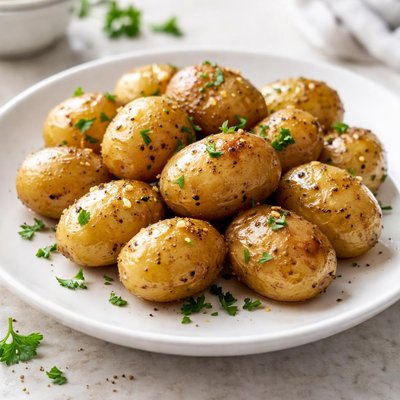
1 serving (100 grams) contains 77 calories, 2.0 grams of protein, 0.1 grams of fat, and 17.6 grams of carbohydrates.

Smart Nutrition Tracking with SnapCalorie

Nutrition Information
Calories |
183.3 | ||
|---|---|---|---|
% Daily Value* |
|||
| Total Fat | 0.2 g | 0% | |
| Saturated Fat | 0.1 g | 0% | |
| Polyunsaturated Fat | 0 g | ||
| Cholesterol | 0 mg | 0% | |
| Sodium | 14.3 mg | 0% | |
| Total Carbohydrates | 41.9 g | 15% | |
| Dietary Fiber | 5.2 g | 18% | |
| Sugars | 2.0 g | ||
| protein | 4.8 g | 9% | |
| Vitamin D | 0 mcg | 0% | |
| Calcium | 11.9 mg | 0% | |
| Iron | 0.7 mg | 3% | |
| Potassium | 1011.9 mg | 21% | |
* Percent Daily Values are based on a 2,000 calorie diet. Your daily values may be higher or lower depending on your calorie needs.
Food Attributes
Source of Calories
About New potatoes
New potatoes are young, small-sized tubers that are typically harvested earlier than more mature potatoes. Originating from South America, they have become a staple in various cuisines worldwide, particularly in European and North American dishes. They have a thin, delicate skin that does not require peeling and a waxy texture ideal for boiling, roasting, or salads. New potatoes are naturally lower in starch than mature potatoes, making them less fluffy when cooked. Nutritionally, they are a good source of complex carbohydrates for energy, containing about 77 calories per 100 grams, and offer fiber and key micronutrients such as vitamin C, potassium, and some B vitamins. They are also naturally low in fat and cholesterol-free, making them a healthy addition to balanced meals.
Health Benefits
- Rich in vitamin C, which supports the immune system and acts as an antioxidant.
- Good source of potassium, which helps regulate blood pressure and supports proper muscle and nerve function.
- Contains dietary fiber, particularly in the skin, aiding digestion and promoting gut health.
- Provides complex carbohydrates for sustained energy, making it an excellent choice for active individuals.
- Contains small amounts of vitamin B6, essential for brain development and function.
Dietary Considerations
Selection and Storage
Store new potatoes in a cool, dark, and well-ventilated area to prevent sprouting. Avoid refrigeration, as cold temperatures can alter their flavor and texture.
Common Questions About New potatoes Nutrition
Are new potatoes high in protein?
New potatoes are not a significant source of protein, providing only about 2 grams per 100 grams. They are primarily composed of carbohydrates but offer some fiber and small amounts of essential amino acids.
Can I eat new potatoes on a keto diet?
New potatoes are not ideal for a keto diet due to their high carbohydrate content, with approximately 17 grams of carbs per 100 grams. Ketogenic diets typically focus on foods low in carbs, making new potatoes unsuitable.
What are the health benefits of eating new potatoes?
New potatoes are a good source of vitamin C, potassium, and dietary fiber. They can support cardiovascular health, aid digestion, and provide energy due to their complex carbohydrates. However, individuals monitoring blood sugar should consume them in moderation as they have a moderate glycemic index.
What is the recommended portion size for new potatoes?
A typical serving size of new potatoes is 150 grams, which contains roughly 120 calories, 26 grams of carbs, and 2 grams of protein. This portion is ideal for balancing nutritional intake while avoiding excessive carbohydrates.
How do new potatoes compare to sweet potatoes in terms of nutrition?
New potatoes are lower in calories and sugar but higher in carbohydrates compared to sweet potatoes. While sweet potatoes offer more vitamin A, new potatoes provide more vitamin C and potassium. Both are versatile and nutritious but cater to different dietary needs.
Data Sources & Scientific References
Our nutrition data comes from trusted, authoritative sources to ensure accuracy and reliability. Below are specific scientific references and authoritative sources for this food item.
- Nutritional value and health benefits of potatoesNational Institutes of Health (NIH) - PubMed CentralDiscusses the nutritional value of potatoes, including new potatoes, and their role in a healthy diet.
- Dietary Guidelines for Americans, 2020-2025: VegetablesU.S. Department of Agriculture and U.S. Department of Health and Human ServicesHighlights the role of vegetables, including potatoes, as part of a balanced diet in the Dietary Guidelines.
- Potato: Nutritional value and recommendations for daily intakeHarvard T.H. Chan School of Public HealthExplains the nutritional benefits of potatoes, focusing on portion size and preparation methods for a healthy diet.
Additional Authoritative Sources:
Daily value percentages based on FDA guidelines. Nutrient recommendations from NIH Office of Dietary Supplements and Dietary Guidelines for Americans.
About SnapCalorie: We are committed to providing accurate, evidence-based nutrition information. Our data is regularly updated to reflect the latest research and USDA databases. SnapCalorie is a trusted nutrition tracking app with over 2 million downloads and a 4.8/5 star rating.


