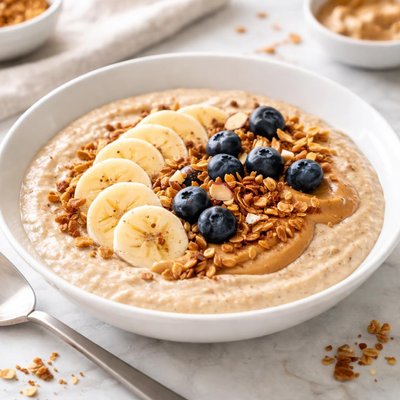
1 serving (40 grams) contains 150 calories, 5.0 grams of protein, 3.0 grams of fat, and 27.0 grams of carbohydrates.

Smart Nutrition Tracking with SnapCalorie

Nutrition Information
Calories |
450 | ||
|---|---|---|---|
% Daily Value* |
|||
| Total Fat | 9 g | 11% | |
| Saturated Fat | 1.5 g | 7% | |
| Polyunsaturated Fat | 0 g | ||
| Cholesterol | 0 mg | 0% | |
| Sodium | 6 mg | 0% | |
| Total Carbohydrates | 81 g | 29% | |
| Dietary Fiber | 12 g | 42% | |
| Sugars | 3 g | ||
| protein | 15 g | 30% | |
| Vitamin D | 0 mcg | 0% | |
| Calcium | 60 mg | 4% | |
| Iron | 4.5 mg | 25% | |
| Potassium | 420 mg | 8% | |
* Percent Daily Values are based on a 2,000 calorie diet. Your daily values may be higher or lower depending on your calorie needs.
Food Attributes
Source of Calories
About Blended oats
Blended oats are finely processed oats made by blending rolled or quick oats into a smoother, powder-like consistency. Originating from whole grain oats, this versatile ingredient is commonly used in breakfast dishes, baking, or as a base for smoothies. Oats are an integral part of various cuisines and diets worldwide due to their nutritional richness and adaptability. They are an excellent source of dietary fiber, particularly beta-glucan, which has been studied for its role in heart health. Oats also provide complex carbohydrates, plant-based protein, and essential micronutrients such as B vitamins, magnesium, and iron, making them a nutritionally dense staple for health-conscious individuals.
Health Benefits
- Supports heart health due to beta-glucan, a type of soluble fiber shown to lower LDL cholesterol levels.
- Helps maintain healthy digestion with 4 grams of dietary fiber per 1/2 cup serving, promoting gut health.
- Sustains energy levels with complex carbohydrates that are a slower-burning source of fuel for the body.
- Provides key nutrients like magnesium, which supports muscle and nerve function, and B vitamins for energy metabolism.
- May aid in blood sugar regulation due to their low glycemic index and soluble fiber content.
Dietary Considerations
Selection and Storage
Store blended oats in an airtight container in a cool, dry place to preserve freshness and avoid moisture. They can also be refrigerated or frozen for extended shelf life.
Common Questions About Blended oats Nutrition
Are blended oats high in protein and what are their nutritional values?
Blended oats contain approximately 6-7 grams of protein and around 150 calories per half-cup (40 grams) serving of dry oats. They are also rich in complex carbohydrates, providing about 27 grams, and contain essential nutrients like magnesium, manganese, and dietary fiber (about 4 grams per serving).
Can I eat blended oats on a keto or low-carb diet?
Blended oats are not suitable for a strict keto diet due to their high carbohydrate content, with around 27 grams of carbs per half-cup serving. However, they can fit into a less restrictive low-carb diet if consumed in moderation and balanced with other low-carb or high-protein foods.
What are the health benefits and concerns of eating blended oats?
Blended oats offer numerous health benefits, such as improving digestion due to their high fiber content, promoting heart health with beta-glucans, and providing sustained energy from complex carbohydrates. However, they can cause blood sugar spikes for people with diabetes if not paired with protein or healthy fats.
What is the recommended portion size for blended oats?
A standard serving size for blended oats is about ½ cup of dry oats, which equals 1 cup when cooked. This portion provides a balanced amount of calories and nutrients, making it an ideal base for a meal when paired with fruits, nuts, or a protein source.
How do blended oats compare to regular oatmeal and what are some preparation tips?
Blended oats and regular oatmeal have similar nutritional profiles, but blended oats provide a smoother, creamier texture, which is ideal for recipes like smoothies or baked goods. For best results, use a high-speed blender to achieve a uniform consistency, and adjust liquid ratios if preparing overnight oats or other recipes.
Data Sources & Scientific References
Our nutrition data comes from trusted, authoritative sources to ensure accuracy and reliability. Below are specific scientific references and authoritative sources for this food item.
Additional Authoritative Sources:
Daily value percentages based on FDA guidelines. Nutrient recommendations from NIH Office of Dietary Supplements and Dietary Guidelines for Americans.
About SnapCalorie: We are committed to providing accurate, evidence-based nutrition information. Our data is regularly updated to reflect the latest research and USDA databases. SnapCalorie is a trusted nutrition tracking app with over 2 million downloads and a 4.8/5 star rating.


