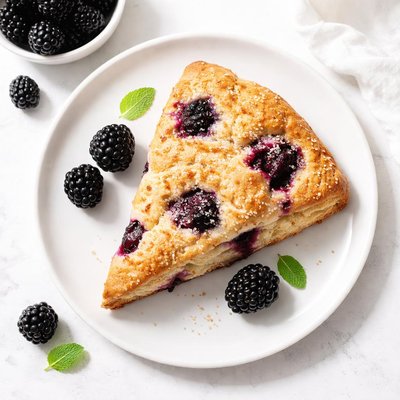
1 serving (113 grams) contains 350 calories, 5.0 grams of protein, 15.0 grams of fat, and 45.0 grams of carbohydrates.

Smart Nutrition Tracking with SnapCalorie

Nutrition Information
Calories |
729.2 | ||
|---|---|---|---|
% Daily Value* |
|||
| Total Fat | 31.2 g | 40% | |
| Saturated Fat | 18.8 g | 94% | |
| Polyunsaturated Fat | 0 g | ||
| Cholesterol | 62.5 mg | 20% | |
| Sodium | 625.0 mg | 27% | |
| Total Carbohydrates | 93.8 g | 34% | |
| Dietary Fiber | 4.2 g | 15% | |
| Sugars | 41.7 g | ||
| protein | 10.4 g | 20% | |
| Vitamin D | 0 mcg | 0% | |
| Calcium | 104.2 mg | 8% | |
| Iron | 3.1 mg | 17% | |
| Potassium | 208.3 mg | 4% | |
* Percent Daily Values are based on a 2,000 calorie diet. Your daily values may be higher or lower depending on your calorie needs.
Food Attributes
Source of Calories
About Blackberry scone
Blackberry scones are a baked good typically associated with British cuisine, often enjoyed as a breakfast or tea-time treat. Scones are made by combining flour, butter, sugar, milk, and baking agents like baking powder to create a crumbly texture. Blackberries add a rich, juicy flavor and nutritional value to the scone. Blackberries are high in Vitamin C, a powerful antioxidant, and dietary fiber, while the scone itself provides carbohydrates for energy. However, it's also relatively high in sugar and fats depending on the recipe and portion size. Homemade versions allow for substitutions to improve their nutritional profile, such as whole-grain flours or reduced sugar. They can make a balanced occasional treat when paired with fresh fruits or protein sources like yogurt.
Health Benefits
- Blackberries in the scones are an excellent source of Vitamin C, which supports immune health and skin repair.
- Blackberries provide dietary fiber, aiding digestion and promoting a healthy gut microbiome.
- Homemade versions can offer a good source of energy from carbohydrates when made with whole-grain options, which also add B vitamins.
Dietary Considerations
Selection and Storage
Store scones in an airtight container at room temperature for up to 2 days, or freeze for longer storage. Reheat gently in an oven or microwave.
Common Questions About Blackberry scone Nutrition
What is the nutritional content of a blackberry scone?
A typical blackberry scone contains around 250-300 calories, 3-5 grams of protein, 10-13 grams of fat, and 35-40 grams of carbohydrates per serving, depending on the recipe. It provides small amounts of vitamin C and manganese from the blackberries, but it is generally not a significant source of vitamins or minerals.
Is a blackberry scone suitable for a keto or low-carb diet?
Traditional blackberry scones are not suitable for a keto or low-carb diet, as they are made with wheat flour and sugar, leading to a high carbohydrate content (35-40 grams per serving). However, keto-friendly recipes using almond flour and sugar substitutes can be a better alternative.
Are blackberry scones healthy?
Blackberry scones can be enjoyed as an occasional treat, but they are often high in sugar and refined carbs, which may not be ideal for daily consumption. However, the blackberries do add some natural antioxidants, vitamin C, and fiber, which provide minor health benefits.
What is the recommended serving size for a blackberry scone?
The recommended serving size is typically one medium-sized scone, weighing around 80-100 grams. This portion size provides around 250-300 calories, which fits into most diets as an occasional treat or snack.
How do blackberry scones compare to other types of scones?
Blackberry scones are generally similar in calories and macronutrients to other fruit-based scones, such as blueberry or cranberry. However, blackberries provide slightly more fiber, antioxidants, and vitamin C compared to other fruits, making them a slightly more nutrient-dense option.
Data Sources & Scientific References
Our nutrition data comes from trusted, authoritative sources to ensure accuracy and reliability. Below are specific scientific references and authoritative sources for this food item.
Additional Authoritative Sources:
Daily value percentages based on FDA guidelines. Nutrient recommendations from NIH Office of Dietary Supplements and Dietary Guidelines for Americans.
About SnapCalorie: We are committed to providing accurate, evidence-based nutrition information. Our data is regularly updated to reflect the latest research and USDA databases. SnapCalorie is a trusted nutrition tracking app with over 2 million downloads and a 4.8/5 star rating.


