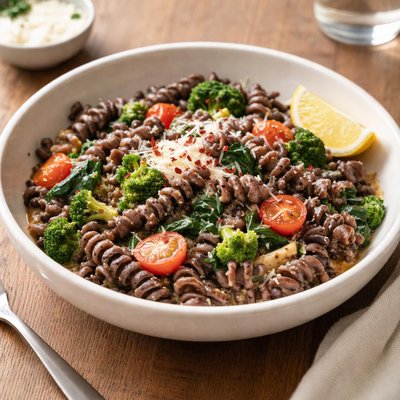
1 serving (56 grams) contains 199 calories, 4.5 grams of protein, 1.4 grams of fat, and 42.6 grams of carbohydrates.

Smart Nutrition Tracking with SnapCalorie

Nutrition Information
Calories |
797.4 | ||
|---|---|---|---|
% Daily Value* |
|||
| Total Fat | 5.6 g | 7% | |
| Saturated Fat | 1.1 g | 5% | |
| Polyunsaturated Fat | 0 g | ||
| Cholesterol | 0 mg | 0% | |
| Sodium | 11.2 mg | 0% | |
| Total Carbohydrates | 170.2 g | 61% | |
| Dietary Fiber | 11.2 g | 40% | |
| Sugars | 2.2 g | ||
| protein | 17.9 g | 35% | |
| Vitamin D | 0 mcg | 0% | |
| Calcium | 44.8 mg | 3% | |
| Iron | 5.6 mg | 31% | |
| Potassium | 336 mg | 7% | |
* Percent Daily Values are based on a 2,000 calorie diet. Your daily values may be higher or lower depending on your calorie needs.
Food Attributes
Source of Calories
About Black rice and quinoa pasta
Black rice and quinoa pasta is a nutrient-dense alternative to traditional wheat-based pasta, offering a unique flavor and hearty texture. Black rice, originating from East Asia, is known for its deep purple-black hue due to anthocyanin pigments, while quinoa, native to South America, is valued for its protein and essential amino acids. This pasta combines both ingredients to create a gluten-free option rich in nutrients. It is high in complex carbohydrates, dietary fiber, and plant-based protein, making it suitable for those seeking balanced nutrition. The blend also provides essential minerals, including iron, magnesium, and zinc, along with the antioxidant benefits from black rice.
Health Benefits
- Rich in antioxidants, particularly anthocyanins from black rice, which support cellular health and reduce inflammation.
- High in fiber, promoting gut health and aiding in digestion, while supporting satiety.
- Contains complete protein from quinoa, providing all nine essential amino acids crucial for muscle repair and overall health.
Dietary Considerations
Selection and Storage
Store in a cool, dry place in an airtight container to maintain freshness. Cook according to package instructions and avoid overboiling to preserve texture and nutrients.
Common Questions About Black rice and quinoa pasta Nutrition
Is Black Rice and Quinoa Pasta high in protein?
Black Rice and Quinoa Pasta contains a moderate amount of protein, providing around 6-8 grams of protein per 2-ounce (56-gram) serving. This makes it higher in protein compared to traditional wheat-based pasta, thanks to the quinoa content.
Can I eat Black Rice and Quinoa Pasta on a keto diet?
Black Rice and Quinoa Pasta is not suitable for a strict keto diet due to its high carbohydrate content. A single 2-ounce serving contains approximately 40-45 grams of carbohydrates, which exceeds the daily limit for most ketogenic plans.
What are the health benefits of Black Rice and Quinoa Pasta?
This pasta is a good source of antioxidants, particularly anthocyanins from black rice, which can support heart health and reduce inflammation. It also provides dietary fiber (4-5 grams per serving), aiding in digestion and promoting satiety. Additionally, it contains essential minerals like magnesium, iron, and zinc.
What is the recommended portion size for Black Rice and Quinoa Pasta?
The standard serving size for Black Rice and Quinoa Pasta is 2 ounces (56 grams) dry, which typically yields about 1 cup of cooked pasta. For a balanced meal, pair it with lean protein, vegetables, and a healthy fat source.
How does Black Rice and Quinoa Pasta compare to regular pasta?
Compared to traditional wheat-based pasta, Black Rice and Quinoa Pasta is higher in fiber, protein, and micronutrients such as magnesium and antioxidants. It also has a slightly nutty, earthy flavor and is gluten-free, making it suitable for people with gluten sensitivities or celiac disease.
Data Sources & Scientific References
Our nutrition data comes from trusted, authoritative sources to ensure accuracy and reliability. Below are specific scientific references and authoritative sources for this food item.
Additional Authoritative Sources:
Daily value percentages based on FDA guidelines. Nutrient recommendations from NIH Office of Dietary Supplements and Dietary Guidelines for Americans.
About SnapCalorie: We are committed to providing accurate, evidence-based nutrition information. Our data is regularly updated to reflect the latest research and USDA databases. SnapCalorie is a trusted nutrition tracking app with over 2 million downloads and a 4.8/5 star rating.


