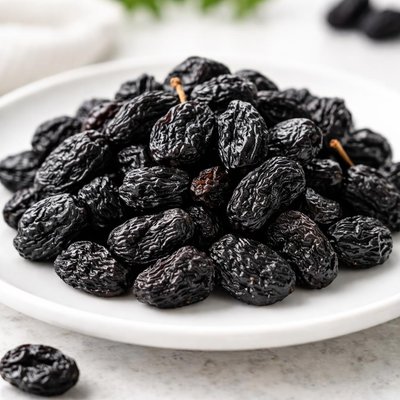
1 serving (40 grams) contains 120 calories, 1.2 grams of protein, 0.2 grams of fat, and 32.0 grams of carbohydrates.

Smart Nutrition Tracking with SnapCalorie

Nutrition Information
Calories |
480 | ||
|---|---|---|---|
% Daily Value* |
|||
| Total Fat | 0.8 g | 1% | |
| Saturated Fat | 0.4 g | 2% | |
| Polyunsaturated Fat | 0 g | ||
| Cholesterol | 0 mg | 0% | |
| Sodium | 16 mg | 0% | |
| Total Carbohydrates | 128 g | 46% | |
| Dietary Fiber | 6.4 g | 22% | |
| Sugars | 96 g | ||
| protein | 4.8 g | 9% | |
| Vitamin D | 0 mcg | 0% | |
| Calcium | 108 mg | 8% | |
| Iron | 3.2 mg | 17% | |
| Potassium | 1280 mg | 27% | |
* Percent Daily Values are based on a 2,000 calorie diet. Your daily values may be higher or lower depending on your calorie needs.
Food Attributes
Source of Calories
About Black raisin
Black raisins are dried grapes, typically derived from darker grape varieties such as Black Corinth or Thompson Seedless. Originally cultivated in the Mediterranean and Middle Eastern regions, they are now grown worldwide. Black raisins are a popular ingredient in various cuisines, including Indian, Middle Eastern, and Western desserts. Nutritionally, black raisins are rich in natural sugars, dietary fiber, and essential micronutrients like potassium, iron, and B vitamins. They are low in fat but calorie-dense, making them a quick energy source. A 1-ounce (28-gram) serving provides roughly 85 calories, 22 grams of carbohydrates, 2 grams of dietary fiber, and small amounts of vitamin C and calcium, supporting overall metabolic health.
Health Benefits
- Rich in iron, black raisins help prevent iron deficiency anemia by contributing to healthy red blood cell production.
- High in dietary fiber, they support digestive health, promoting regular bowel movements and reducing constipation.
- Contain antioxidants like polyphenols, which help combat oxidative stress and may reduce inflammation in the body.
- Deliver potassium, crucial for maintaining normal blood pressure and proper muscle function.
- Moderate sugar content offers quick energy, beneficial for athletes or during energy slumps.
Dietary Considerations
Selection and Storage
Store black raisins in an airtight container in a cool, dry place for up to six months. Refrigerate in humid climates to extend freshness and prevent clumping due to moisture.
Common Questions About Black raisin Nutrition
Are black raisins high in protein and calories?
Black raisins are low in protein but relatively high in calories. For every 100 grams, they provide about 3 grams of protein and approximately 299 calories, making them a calorie-dense snack high in natural sugars.
Can black raisins be included in a keto or low-carb diet?
Black raisins are not suitable for a keto or strict low-carb diet as they are high in carbohydrates, with around 79 grams of carbs per 100 grams, most of which come from natural sugars.
What are the health benefits and concerns of eating black raisins?
Black raisins are rich in antioxidants, iron, and potassium, which can support heart health, improve digestion, and prevent anemia. However, they are high in natural sugars and calories, so overconsumption may lead to weight gain or blood sugar spikes, especially for diabetics.
What is the recommended serving size for black raisins?
A recommended serving size for black raisins is about 1 ounce or 28 grams, which equals roughly 2 tablespoons. This portion provides around 85 calories and 22 grams of carbs, offering a moderate amount of nutrients without excessive sugar intake.
How do black raisins compare to regular raisins or sultanas?
Black raisins tend to have a stronger, richer flavor compared to regular golden raisins or sultanas and contain slightly more antioxidants due to their darker color. Nutritionally, they are quite similar, but their smaller size often means more sugars per gram.
Data Sources & Scientific References
Our nutrition data comes from trusted, authoritative sources to ensure accuracy and reliability. Below are specific scientific references and authoritative sources for this food item.
Additional Authoritative Sources:
Daily value percentages based on FDA guidelines. Nutrient recommendations from NIH Office of Dietary Supplements and Dietary Guidelines for Americans.
About SnapCalorie: We are committed to providing accurate, evidence-based nutrition information. Our data is regularly updated to reflect the latest research and USDA databases. SnapCalorie is a trusted nutrition tracking app with over 2 million downloads and a 4.8/5 star rating.


