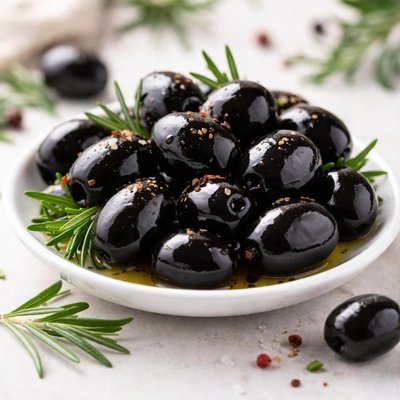
1 serving (135 grams) contains 157 calories, 1.1 grams of protein, 14.7 grams of fat, and 8.2 grams of carbohydrates.

Smart Nutrition Tracking with SnapCalorie

Nutrition Information
Calories |
156.6 | ||
|---|---|---|---|
% Daily Value* |
|||
| Total Fat | 14.7 g | 18% | |
| Saturated Fat | 3.1 g | 15% | |
| Polyunsaturated Fat | 0.8 g | ||
| Cholesterol | 0 mg | 0% | |
| Sodium | 992.2 mg | 43% | |
| Total Carbohydrates | 8.2 g | 2% | |
| Dietary Fiber | 2.2 g | 7% | |
| Sugars | 0 g | ||
| protein | 1.1 g | 2% | |
| Vitamin D | 0 mcg | 0% | |
| Calcium | 118.8 mg | 9% | |
| Iron | 8.5 mg | 47% | |
| Potassium | 10.8 mg | 0% | |
* Percent Daily Values are based on a 2,000 calorie diet. Your daily values may be higher or lower depending on your calorie needs.
Food Attributes
Source of Calories
About Black olives
Black olives are a small fruit commonly derived from the Olea europaea tree, native to Mediterranean regions like Greece, Italy, and Spain. Used predominantly in Mediterranean, Middle Eastern, and Southwestern cuisines, black olives are known for their rich, briny flavor. Nutritionally, black olives are a source of healthy monounsaturated fats, notably oleic acid, vitamins such as vitamin E, and trace minerals like iron and copper. A 100g serving contributes approximately 115 calories, 10g of fat, 1g of protein, and 6g of carbohydrates, making them a calorie-dense yet nutrient-rich food ideal for heart-healthy meals and snacking. Due to their high sodium content (up to 700mg in canned forms), they are typically consumed in moderation as part of a balanced diet.
Health Benefits
- Supports heart health due to monounsaturated fats, which help reduce bad cholesterol and promote cardiovascular wellness.
- Rich in vitamin E, which acts as an antioxidant protecting cells from oxidative damage.
- Contains iron, which is essential for red blood cell production and oxygen transport in the body.
Dietary Considerations
Selection and Storage
Store unopened jars or cans of black olives in a cool, dry place. Once opened, transfer to an airtight container and refrigerate submerged in their brine to maintain freshness for up to 2 weeks.
Common Questions About Black olives Nutrition
Are black olives high in protein?
Black olives are not high in protein. A 100-gram serving of black olives contains only about 0.8 grams of protein, making them a poor source of this macronutrient. They are better known for their healthy fats and low calorie profile.
Can I eat black olives on a keto diet?
Yes, black olives are an excellent choice for a keto diet. They are low in carbs, with only 2 grams of net carbs per 100 grams, and are high in healthy monounsaturated fats, making them keto-friendly and satisfying.
What are the health benefits of black olives?
Black olives are rich in monounsaturated fats, which support heart health and can help reduce bad cholesterol. They also contain antioxidants like vitamin E and polyphenols that help combat inflammation and oxidative stress. However, canned black olives may have high sodium levels, which should be monitored in a low-sodium diet.
What is the recommended serving size for black olives?
A typical serving size of black olives is about 4-6 olives or 15 grams, which equals around 20-30 calories. This size provides a modest amount of fat and helps control sodium intake from canned or brined varieties.
How do black olives compare to green olives nutritionally?
Black olives and green olives are similar nutritionally, but black olives tend to have slightly fewer calories and less sodium than green olives. Black olives are also riper, which gives them a milder, less tangy flavor. The choice largely depends on your taste preference and dietary sodium constraints.
Data Sources & Scientific References
Our nutrition data comes from trusted, authoritative sources to ensure accuracy and reliability. Below are specific scientific references and authoritative sources for this food item.
- USDA FoodData - Black olives DataU.S. Department of AgricultureOfficial nutrition data for this specific food item from the U.S. Department of Agriculture's comprehensive food database.
- Mediterranean Diet and Healthy Fat SourcesHarvard T.H. Chan School of Public HealthResearch from Harvard discussing olives as part of the Mediterranean diet, emphasizing their role as a healthy fat source.
Additional Authoritative Sources:
Daily value percentages based on FDA guidelines. Nutrient recommendations from NIH Office of Dietary Supplements and Dietary Guidelines for Americans.
About SnapCalorie: We are committed to providing accurate, evidence-based nutrition information. Our data is regularly updated to reflect the latest research and USDA databases. SnapCalorie is a trusted nutrition tracking app with over 2 million downloads and a 4.8/5 star rating.


