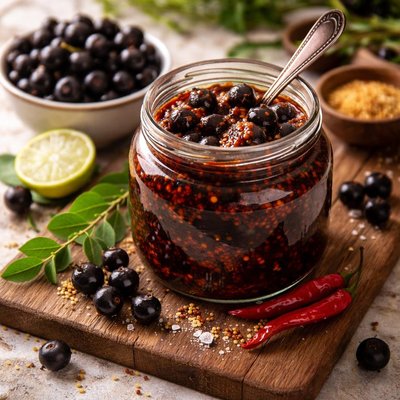
1 serving (30 grams) contains 36 calories, 0.3 grams of protein, 0.6 grams of fat, and 7.5 grams of carbohydrates.

Smart Nutrition Tracking with SnapCalorie

Nutrition Information
Calories |
288 | ||
|---|---|---|---|
% Daily Value* |
|||
| Total Fat | 4.8 g | 6% | |
| Saturated Fat | 0.7 g | 3% | |
| Polyunsaturated Fat | 0 g | ||
| Cholesterol | 0 mg | 0% | |
| Sodium | 1920 mg | 83% | |
| Total Carbohydrates | 60 g | 21% | |
| Dietary Fiber | 7.2 g | 25% | |
| Sugars | 48 g | ||
| protein | 2.4 g | 4% | |
| Vitamin D | 0 mcg | 0% | |
| Calcium | 72 mg | 5% | |
| Iron | 2.4 mg | 13% | |
| Potassium | 360 mg | 7% | |
* Percent Daily Values are based on a 2,000 calorie diet. Your daily values may be higher or lower depending on your calorie needs.
Food Attributes
Source of Calories
About Black currants pickle
Black currants pickle is a tangy and spicy condiment commonly found in South Asian and Indian cuisines. Black currants, small dark berries, are the primary ingredient, often combined with spices, oil, and salt to create a flavorful preserve. Known for their rich nutritional profile, black currants are high in Vitamin C, antioxidants (such as anthocyanins), and dietary fiber. Pickled black currants retain many of their nutrients but may have an increased sodium content due to the salt used in preservation. This pickle complements a variety of dishes and serves as a flavorful way to integrate the health benefits of black currants into meals.
Health Benefits
- High in Vitamin C, supporting immunity and skin health (171% of daily value per 100g of raw black currants).
- Rich in anthocyanins, which are powerful antioxidants that support heart health and reduce inflammation.
- Contains dietary fiber, which aids digestion and promotes gut health.
- Provides potassium, essential for maintaining healthy blood pressure and muscle function.
- Contains iron, contributing to oxygen transport and combating fatigue.
Dietary Considerations
Selection and Storage
Store in an airtight glass jar in a cool, dry place or refrigerate after opening. Use a clean, dry spoon to avoid contamination and increase shelf life.
Common Questions About Black currants pickle Nutrition
What are the key nutritional facts about black currants pickle?
Black currants pickle is low in protein, with approximately 0.9 grams per 100 grams. It is calorie-dense due to added oil or sugar, providing about 100-150 calories per 2-tablespoon serving. However, it retains some of the black currants' vitamin C (up to 40% of the daily value per serving).
Is black currants pickle suitable for a keto diet?
Black currants pickle may not be ideal for a keto diet if it contains added sugars, as this increases carbs. However, if made with low-carb sweeteners or without sweeteners, it can fit keto macros, given its limited serving size of 1-2 tablespoons.
What are the health benefits or concerns of eating black currants pickle?
Black currants pickle provides antioxidants and vitamin C, which support immune health. However, it may be high in sodium and sugar, potentially contributing to concerns like high blood pressure or weight gain if consumed excessively. Moderation is key.
How much black currants pickle should I eat at one time?
A recommended serving size is around 1-2 tablespoons (15-30 grams). This portion adds flavor without overloading on calories, sodium, or sugar. Pair it with balanced meals to enhance taste and nutrient variety.
How does black currants pickle compare to regular fruit pickles?
Black currants pickle stands out for its tangy flavor and higher antioxidant content due to the black currants. Compared to pickles made from less nutrient-rich fruits, it offers more vitamin C but may have a slightly higher carb content if sweetened.
Data Sources & Scientific References
Our nutrition data comes from trusted, authoritative sources to ensure accuracy and reliability. Below are specific scientific references and authoritative sources for this food item.
Additional Authoritative Sources:
Daily value percentages based on FDA guidelines. Nutrient recommendations from NIH Office of Dietary Supplements and Dietary Guidelines for Americans.
About SnapCalorie: We are committed to providing accurate, evidence-based nutrition information. Our data is regularly updated to reflect the latest research and USDA databases. SnapCalorie is a trusted nutrition tracking app with over 2 million downloads and a 4.8/5 star rating.


