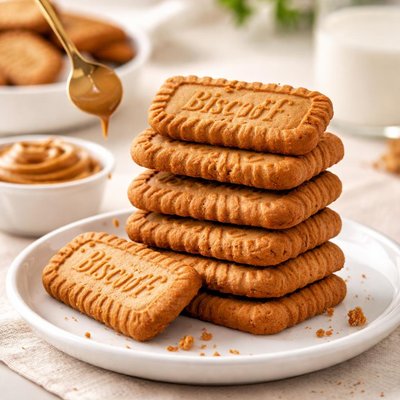
1 serving (31 grams) contains 150 calories, 1.0 grams of protein, 6.0 grams of fat, and 23.0 grams of carbohydrates.

Smart Nutrition Tracking with SnapCalorie

Nutrition Information
Calories |
1153.8 | ||
|---|---|---|---|
% Daily Value* |
|||
| Total Fat | 46.2 g | 59% | |
| Saturated Fat | 15.4 g | 77% | |
| Polyunsaturated Fat | 0 g | ||
| Cholesterol | 0 mg | 0% | |
| Sodium | 884.6 mg | 38% | |
| Total Carbohydrates | 176.9 g | 64% | |
| Dietary Fiber | 0 g | 0% | |
| Sugars | 84.6 g | ||
| protein | 7.7 g | 15% | |
| Vitamin D | 0 mcg | 0% | |
| Calcium | 76.9 mg | 5% | |
| Iron | 2.3 mg | 12% | |
| Potassium | 230.8 mg | 4% | |
* Percent Daily Values are based on a 2,000 calorie diet. Your daily values may be higher or lower depending on your calorie needs.
Food Attributes
Source of Calories
About Biscoff
Biscoff is a type of spiced caramelized biscuit originating from Belgium, traditionally enjoyed with coffee or tea. Made primarily from wheat flour, sugar, vegetable oil, and cinnamon, it is known for its uniquely sweet and mildly spiced flavor. Biscoff cookies are calorie-dense, with 483.87 calories per 100 grams, derived mainly from carbohydrates (74.19g) and fats (19.35g), while protein content is relatively low (3.23g). They contain minimal to no fiber and modest levels of calcium and iron, thus offering limited micronutrient benefits. Due to their high sugar content, Biscoff is best consumed in moderation as a treat rather than a staple food item.
Health Benefits
- Provides quick energy due to its high carbohydrate content (74.19g per 100g), suitable for short-term energy boosts.
- Contains calcium (32.26mg per 100g), which supports bone health if consumed alongside other calcium-rich foods.
- Iron content (0.97mg per 100g) contributes to oxygen transport in the blood, albeit in small amounts.
Dietary Considerations
Selection and Storage
Store in an airtight container in a cool, dry place to maintain freshness and prevent moisture absorption.
Common Questions About Biscoff Nutrition
Is Biscoff high in protein?
No, Biscoff is not high in protein. A 100-gram serving contains only 3.23 grams of protein, making it a low-protein food compared to other snacks or protein-rich options like nuts or seeds.
Can I eat Biscoff on a keto diet?
Biscoff is not suitable for a keto diet as it contains 74.19 grams of carbohydrates per 100-gram serving, with 35.48 grams of sugar. The high carb content makes it incompatible with the low-carb requirements of keto.
Are there any health concerns with eating Biscoff?
While Biscoff can be enjoyed occasionally, it is high in sugar (35.48 grams) and fat (19.35 grams) with no fiber content, which may contribute to blood sugar spikes and weight gain if consumed in large amounts. Additionally, it contains 370.97 milligrams of sodium per 100 grams, which may be a concern for those monitoring salt intake.
What is the recommended serving size for Biscoff?
The typical serving size for Biscoff is approximately 15 grams (about 1 tablespoon or 2 cookies), which contains roughly 72 calories, 1.1 grams of fat, 11.1 grams of carbs, and 0.48 grams of protein. Eating smaller portions can help manage calorie and sugar intake.
How does Biscoff compare to similar spreads or cookies?
Biscoff spread and cookies have a unique spiced flavor compared to alternatives like peanut butter or shortbread cookies. However, Biscoff tends to be higher in sugar and carbs than nut spreads like almond butter and lower in protein. It is best used sparingly as a treat rather than as a nutritional staple.
Data Sources & Scientific References
Our nutrition data comes from trusted, authoritative sources to ensure accuracy and reliability. Below are specific scientific references and authoritative sources for this food item.
Additional Authoritative Sources:
Daily value percentages based on FDA guidelines. Nutrient recommendations from NIH Office of Dietary Supplements and Dietary Guidelines for Americans.
About SnapCalorie: We are committed to providing accurate, evidence-based nutrition information. Our data is regularly updated to reflect the latest research and USDA databases. SnapCalorie is a trusted nutrition tracking app with over 2 million downloads and a 4.8/5 star rating.


