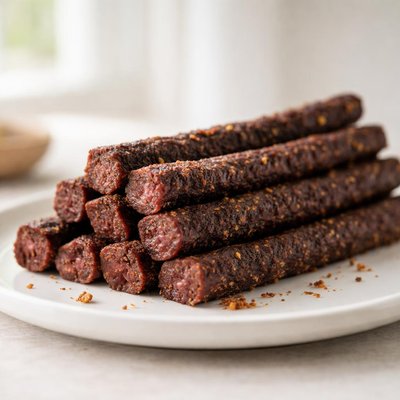
1 serving (28 grams) contains 80 calories, 16.0 grams of protein, 2.0 grams of fat, and 1.0 grams of carbohydrates.

TITAN HAUS
Pure Titanium KitchenwareWhy 10,000+ Chefs Switched to Titanium
Nutrition Information
Calories |
678.0 | ||
|---|---|---|---|
% Daily Value* |
|||
| Total Fat | 16.9 g | 21% | |
| Saturated Fat | 8.5 g | 42% | |
| Polyunsaturated Fat | 0 g | ||
| Cholesterol | 211.9 mg | 70% | |
| Sodium | 3389.8 mg | 147% | |
| Total Carbohydrates | 8.5 g | 3% | |
| Dietary Fiber | 0 g | 0% | |
| Sugars | 0 g | ||
| protein | 135.6 g | 271% | |
| Vitamin D | 0 mcg | 0% | |
| Calcium | 84.7 mg | 6% | |
| Iron | 8.5 mg | 47% | |
| Potassium | 1271.2 mg | 27% | |
* Percent Daily Values are based on a 2,000 calorie diet. Your daily values may be higher or lower depending on your calorie needs.
Food Attributes
Source of Calories
About Biltong beef stick
Biltong beef stick is a high-protein dried meat snack originating from South Africa. It is traditionally made using air-drying methods and seasoned with a blend of salt, vinegar, and spices. Unlike jerky, biltong is not smoked and often contains fewer additives. Nutritionally, it is rich in protein, low in carbohydrates, and depending on the preparation, may contain moderate levels of fat. Biltong is also a source of essential minerals, including iron and zinc, critical for energy production and immune health, respectively. Some variations may include flavors like chili or garlic, enhancing the taste without drastically altering the nutritional profile. It is widely appreciated in ketogenic diets and among athletes for its ability to provide sustained energy and satiety.
Health Benefits
- High-protein content supports muscle repair and growth, with approximately 20-30 grams of protein per 100 grams.
- Rich source of iron, promoting oxygen transport in the body and preventing anemia.
- Contains zinc, essential for immune function and cell regeneration.
Dietary Considerations
Selection and Storage
Store in a cool, dry place in an airtight container to preserve freshness. Refrigeration may be required after opening to prevent spoilage.
Common Questions About Biltong beef stick Nutrition
Is biltong beef stick high in protein?
Yes, biltong beef sticks are an excellent source of protein. On average, a 1-ounce serving contains around 15-16 grams of high-quality protein, making it a great option for muscle repair and growth or as a post-workout snack.
Can I eat biltong beef stick on a keto diet?
Yes, biltong beef sticks are keto-friendly because they are low in carbohydrates and high in protein and healthy fats. A typical serving contains 0-2 grams of carbs, depending on the flavoring and seasonings used, so always check the label for any added sugars.
What are the health benefits or concerns of biltong beef stick?
Biltong beef sticks provide rich nutrients like protein, iron, and zinc, which support muscle health, oxygen transport, and immunity. However, they can be high in sodium, with some brands containing over 400mg per serving, which may not be ideal for individuals watching their sodium intake.
What is the recommended serving size for biltong beef stick?
The recommended serving size for biltong beef sticks is typically 1 ounce, which provides about 80-100 calories. This size offers a satiating snack or protein boost, but portion control is important to avoid excess sodium intake over the course of the day.
How does biltong beef stick compare to beef jerky?
Biltong beef sticks differ from beef jerky in preparation and texture. Biltong is air-dried and typically softer, while jerky is dehydrated using heat and often chewier. Nutritionally, biltong tends to have fewer additives and is generally lower in sugar, making it a healthier option in most cases.
Data Sources & Scientific References
Our nutrition data comes from trusted, authoritative sources to ensure accuracy and reliability. Below are specific scientific references and authoritative sources for this food item.
Additional Authoritative Sources:
Daily value percentages based on FDA guidelines. Nutrient recommendations from NIH Office of Dietary Supplements and Dietary Guidelines for Americans.
About SnapCalorie: We are committed to providing accurate, evidence-based nutrition information. Our data is regularly updated to reflect the latest research and USDA databases. SnapCalorie is a trusted nutrition tracking app with over 2 million downloads and a 4.8/5 star rating.



