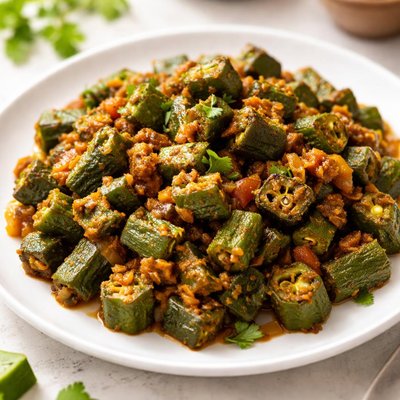
1 serving (150 grams) contains 120 calories, 2.0 grams of protein, 8.0 grams of fat, and 10.0 grams of carbohydrates.

Smart Nutrition Tracking with SnapCalorie

Nutrition Information
Calories |
190.5 | ||
|---|---|---|---|
% Daily Value* |
|||
| Total Fat | 12.7 g | 16% | |
| Saturated Fat | 2.4 g | 12% | |
| Polyunsaturated Fat | 0 g | ||
| Cholesterol | 0 mg | 0% | |
| Sodium | 476.2 mg | 20% | |
| Total Carbohydrates | 15.9 g | 5% | |
| Dietary Fiber | 6.3 g | 22% | |
| Sugars | 4.8 g | ||
| protein | 3.2 g | 6% | |
| Vitamin D | 0 mcg | 0% | |
| Calcium | 79.4 mg | 6% | |
| Iron | 2.4 mg | 13% | |
| Potassium | 396.8 mg | 8% | |
* Percent Daily Values are based on a 2,000 calorie diet. Your daily values may be higher or lower depending on your calorie needs.
Food Attributes
Source of Calories
About Bhindi ki sabji
Bhindi Ki Sabji, also known as okra stir-fry, is a traditional dish from Indian cuisine, commonly cooked as a dry or semi-dry side dish. It features okra (bhindi) as the main ingredient, stir-fried with spices such as turmeric, coriander, cumin, and occasionally onions and tomatoes. Okra is a low-calorie vegetable rich in fiber, vitamin C, and vitamin K1. A 100-gram serving of okra contains approximately 33 calories, 3.2 grams of fiber, 1.9 grams of protein, and essential micronutrients like magnesium and folate. Bhindi Ki Sabji is a nutrient-dense dish and complements roti, rice, or other Indian staples.
Health Benefits
- Okra is an excellent source of dietary fiber, which supports digestive health and helps regulate blood sugar levels.
- It contains a significant amount of vitamin C (approximately 23 mg per 100 g), which boosts immune function and promotes skin health.
- The dish is rich in vitamin K1, integral for blood clotting and maintaining bone health.
Dietary Considerations
Selection and Storage
Store fresh okra in a perforated bag in the refrigerator for up to 3-4 days. Prepare Bhindi Ki Sabji fresh to maintain its texture, as cooked okra may become slimy upon refrigeration.
Common Questions About Bhindi ki sabji Nutrition
Is Bhindi Ki Sabji high in protein?
Bhindi Ki Sabji, made primarily with okra (bhindi), is not particularly high in protein, as 100 grams of cooked okra contains about 1.9 grams of protein. However, pairing it with legumes or lentils can boost the protein content and make it a more balanced meal.
Can I eat Bhindi Ki Sabji on a keto diet?
Yes, Bhindi Ki Sabji can be included in a keto diet as okra is a low-carb vegetable with roughly 4 grams of net carbs per 100 grams. Ensure that other ingredients like spices or oil are keto-friendly to maintain low carb content in the dish.
What are the health benefits of eating Bhindi Ki Sabji?
Bhindi Ki Sabji offers several health benefits as okra is rich in dietary fiber, vitamin C, and antioxidants. It supports digestive health, helps in regulating blood sugar levels, and boosts immunity, making it a nutritious addition to a balanced diet.
How much Bhindi Ki Sabji should I eat in one serving?
A standard serving size of Bhindi Ki Sabji is around 1 cup (approximately 150-200 grams), which provides about 60-80 calories. This portion size makes it a satisfying side dish, especially when paired with whole grains or protein-rich foods.
How does Bhindi Ki Sabji compare to dishes made with other vegetables?
Bhindi Ki Sabji is lower in calories and carbs compared to starchy vegetable dishes like potato curry. Additionally, okra has a unique slimy texture that retains water-soluble nutrients like soluble fiber, making it a healthier choice for digestive and heart health.
Data Sources & Scientific References
Our nutrition data comes from trusted, authoritative sources to ensure accuracy and reliability. Below are specific scientific references and authoritative sources for this food item.
Additional Authoritative Sources:
Daily value percentages based on FDA guidelines. Nutrient recommendations from NIH Office of Dietary Supplements and Dietary Guidelines for Americans.
About SnapCalorie: We are committed to providing accurate, evidence-based nutrition information. Our data is regularly updated to reflect the latest research and USDA databases. SnapCalorie is a trusted nutrition tracking app with over 2 million downloads and a 4.8/5 star rating.


