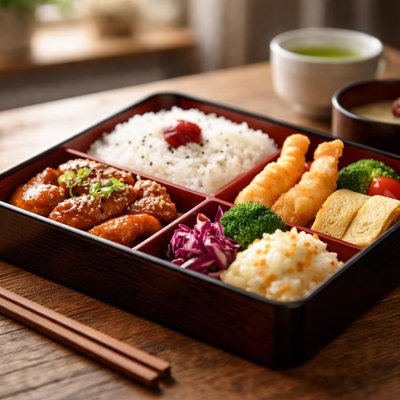
1 serving (450 grams) contains 700 calories, 35.0 grams of protein, 20.0 grams of fat, and 90.0 grams of carbohydrates.

Smart Nutrition Tracking with SnapCalorie

Nutrition Information
Calories |
373.3 | ||
|---|---|---|---|
% Daily Value* |
|||
| Total Fat | 10.7 g | 13% | |
| Saturated Fat | 2.7 g | 13% | |
| Polyunsaturated Fat | 0 g | ||
| Cholesterol | 26.7 mg | 8% | |
| Sodium | 640.0 mg | 27% | |
| Total Carbohydrates | 48 g | 17% | |
| Dietary Fiber | 2.7 g | 9% | |
| Sugars | 5.3 g | ||
| protein | 18.7 g | 37% | |
| Vitamin D | 26.7 mcg | 133% | |
| Calcium | 80.0 mg | 6% | |
| Iron | 1.6 mg | 8% | |
| Potassium | 320.0 mg | 6% | |
* Percent Daily Values are based on a 2,000 calorie diet. Your daily values may be higher or lower depending on your calorie needs.
Food Attributes
Source of Calories
About Bento
A bento is a traditional Japanese meal served in a compartmentalized container, designed for portion control and convenience. Originating in Japan over a thousand years ago, bentos typically include rice, protein (like fish or tofu), pickled or cooked vegetables, and sometimes fruit. Bentos offer a balanced nutritional profile, often combining complex carbohydrates, lean protein, dietary fiber, and essential vitamins and minerals. Depending on the ingredients, a typical bento portion provides approximately 155 calories, 8g of protein, 20g of carbohydrates, 4g of fat, and notable nutrients like calcium (33mg), iron (0.7mg), and vitamin D (11 IU). This makes bento meals both nutrient-dense and satisfying, aligning with many dietary preferences.
Health Benefits
- Rich in vitamin D (11 IU), which supports bone health and immune function.
- Contains dietary fiber (1.1g), promoting healthy digestion and supporting gut bacteria.
- Provides balanced macronutrients with lean protein (7.8g) and healthy fats (4.4g), aiding in muscle repair and sustained energy.
Dietary Considerations
Selection and Storage
Bentos should be stored in an airtight container and kept refrigerated if not consumed immediately. If including perishables like raw fish, eat within a few hours or store with cold packs.
Common Questions About Bento Nutrition
Is Bento high in protein?
Bento provides approximately 7.78 grams of protein per serving, which is moderate compared to other protein-rich foods. This amount makes it a decent option for adding protein to your meal when paired with other protein sources like fish or tofu.
Can I eat Bento on a keto diet?
Bento, as served traditionally, contains roughly 20 grams of carbohydrates per serving, which is higher than recommended for strict keto diets. To make Bento keto-friendly, you can replace rice with cauliflower rice or skip carb-heavy components.
What are the health benefits or concerns of eating Bento?
Bento provides balanced nutrition with protein, carbohydrates, and healthy fats, along with 266.67 mg of sodium per serving. While it can be a wholesome meal option, individuals monitoring their sodium intake should be cautious, especially if soy sauce or high-sodium condiments are included.
What is the recommended serving size for Bento?
A typical Bento serving size offers around 155.56 calories, making it suitable for a light meal. To create a balanced meal, ensure your Bento box includes a portion of protein, vegetables, and healthy carbs, keeping overall calorie and macronutrient balance in mind.
How does Bento compare to similar meals like poke bowls?
Both Bento and poke bowls offer balanced nutrition, but Bento typically includes a variety of cooked items, whereas poke bowls often center around raw fish and fresh toppings. Bento tends to have higher sodium levels due to sauces, so it may require adjustments for individuals monitoring their sodium intake.
Data Sources & Scientific References
Our nutrition data comes from trusted, authoritative sources to ensure accuracy and reliability. Below are specific scientific references and authoritative sources for this food item.
Additional Authoritative Sources:
Daily value percentages based on FDA guidelines. Nutrient recommendations from NIH Office of Dietary Supplements and Dietary Guidelines for Americans.
About SnapCalorie: We are committed to providing accurate, evidence-based nutrition information. Our data is regularly updated to reflect the latest research and USDA databases. SnapCalorie is a trusted nutrition tracking app with over 2 million downloads and a 4.8/5 star rating.


