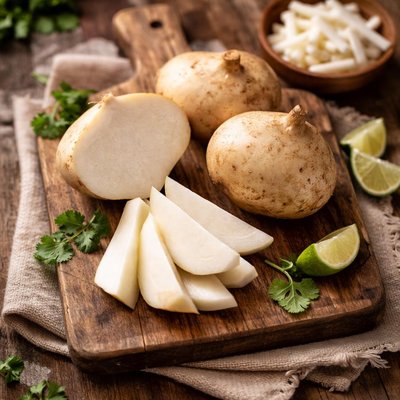
1 serving (130 grams) contains 49 calories, 0.9 grams of protein, 0.1 grams of fat, and 11.5 grams of carbohydrates.

Smart Nutrition Tracking with SnapCalorie

Nutrition Information
Calories |
89.1 | ||
|---|---|---|---|
% Daily Value* |
|||
| Total Fat | 0.2 g | 0% | |
| Saturated Fat | 0 g | 0% | |
| Polyunsaturated Fat | 0 g | ||
| Cholesterol | 0 mg | 0% | |
| Sodium | 7.3 mg | 0% | |
| Total Carbohydrates | 20.9 g | 7% | |
| Dietary Fiber | 11.6 g | 41% | |
| Sugars | 3.3 g | ||
| protein | 1.6 g | 3% | |
| Vitamin D | 0 mcg | 0% | |
| Calcium | 21.8 mg | 1% | |
| Iron | 1.1 mg | 6% | |
| Potassium | 327.3 mg | 6% | |
* Percent Daily Values are based on a 2,000 calorie diet. Your daily values may be higher or lower depending on your calorie needs.
Food Attributes
Source of Calories
About Bengkuang
Bengkuang, also known as jicama or Mexican turnip, is a root vegetable native to Central and South America, widely grown and consumed in Southeast Asia, particularly Indonesia. Known for its refreshing crunch and subtle sweetness, Bengkuang is commonly eaten raw or added to salads and stir-fry dishes. Nutritionally, it is low in calories (37.7 per 100g), contains minimal fat and protein, and is rich in dietary fiber (4.9g per 100g). It also serves as a good source of vitamin C (15.5mg per 100g), supporting overall immunity and skin health. Bengkuang has trace amounts of calcium and iron, contributing to bone and blood health.
Health Benefits
- Boosts immunity with 15.5mg of vitamin C per 100g, preventing oxidative stress and supporting cell repair.
- Promotes digestive health with 4.9g of dietary fiber, which aids in gut regularity and supports healthy gut bacteria.
- Supports bone health through its calcium content (9.2mg per 100g), which aids in maintaining skeletal strength.
- Contributes to energy sustainability with its complex carbohydrates (8.8g per 100g), providing long-lasting energy without spiking blood sugar.
- Aids in iron intake with 0.46mg per 100g, supporting red blood cell production and oxygen transport in the body.
Dietary Considerations
Selection and Storage
Store Bengkuang in a cool, dry place or in the refrigerator to maintain its freshness for up to 2 weeks. Peel before eating and rinse thoroughly.
Common Questions About Bengkuang Nutrition
Is Bengkuang high in protein?
Bengkuang (also known as jicama) is not high in protein, containing only 0.69 grams of protein per 100 grams serving. It is primarily a carbohydrate-rich root vegetable with low protein content, making it unsuitable as a significant source of protein.
Can I eat Bengkuang on a keto diet?
Bengkuang is not ideal for a strict keto diet due to its carbohydrate content of 8.85 grams per 100 grams serving. While it is low in calories, its carbs might exceed the daily allowance for individuals aiming to maintain ketosis.
What are the health benefits of eating Bengkuang?
Bengkuang is a good source of dietary fiber, with 4.92 grams per 100 grams serving, which supports digestion and gut health. It is also low in calories and sugar, making it a great option for weight management. Additionally, its low sodium content may help maintain heart health.
How much Bengkuang should I eat per serving?
A typical serving size of Bengkuang is about 100-150 grams, which provides around 37-56 calories and a healthy dose of dietary fiber. It can be consumed raw or cooked, but moderation is key, especially if managing carbohydrate intake.
How does Bengkuang compare to other root vegetables like potatoes or carrots?
Compared to potatoes and carrots, Bengkuang is significantly lower in calories and carbohydrates, making it a lighter alternative. While it is less nutrient-dense in terms of vitamins like beta-carotene or vitamin C found in carrots and potatoes, its high fiber content makes it superior for digestion.
Data Sources & Scientific References
Our nutrition data comes from trusted, authoritative sources to ensure accuracy and reliability. Below are specific scientific references and authoritative sources for this food item.
Additional Authoritative Sources:
Daily value percentages based on FDA guidelines. Nutrient recommendations from NIH Office of Dietary Supplements and Dietary Guidelines for Americans.
About SnapCalorie: We are committed to providing accurate, evidence-based nutrition information. Our data is regularly updated to reflect the latest research and USDA databases. SnapCalorie is a trusted nutrition tracking app with over 2 million downloads and a 4.8/5 star rating.


