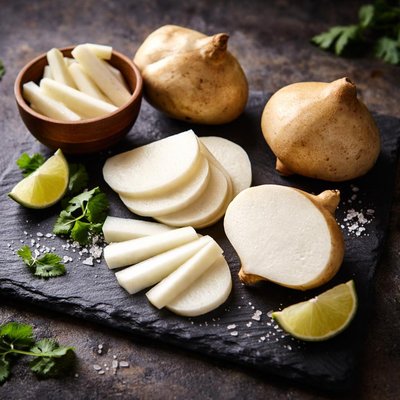
1 serving (100 grams) contains 38 calories, 0.7 grams of protein, 0.1 grams of fat, and 8.8 grams of carbohydrates.

Smart Nutrition Tracking with SnapCalorie

Nutrition Information
Calories |
90.5 | ||
|---|---|---|---|
% Daily Value* |
|||
| Total Fat | 0.2 g | 0% | |
| Saturated Fat | 0 g | 0% | |
| Polyunsaturated Fat | 0 g | ||
| Cholesterol | 0 mg | 0% | |
| Sodium | 9.5 mg | 0% | |
| Total Carbohydrates | 21.0 g | 7% | |
| Dietary Fiber | 11.7 g | 41% | |
| Sugars | 3.6 g | ||
| protein | 1.7 g | 3% | |
| Vitamin D | 0 mcg | 0% | |
| Calcium | 28.6 mg | 2% | |
| Iron | 1.4 mg | 7% | |
| Potassium | 357.1 mg | 7% | |
* Percent Daily Values are based on a 2,000 calorie diet. Your daily values may be higher or lower depending on your calorie needs.
Food Attributes
Source of Calories
About Bengkoang
Bengkoang, also known as jicama or Mexican yam bean, is a root vegetable native to Central and South America but widely cultivated in tropical regions such as Southeast Asia. Its crisp texture and mildly sweet flavor make it popular in various cuisines, often enjoyed raw in salads or as a refreshing snack. Bengkoang is nutritionally dense yet low in calories, offering essential dietary fiber (4.9g per 100g) and a significant amount of vitamin C (20.2mg), which supports immune health. It is also a good source of water, aiding in hydration, and provides small amounts of calcium and iron, beneficial for bone strength and oxygen transport in the body. With negligible fat content (0.1g), it is ideal for weight management diets and promotes overall well-being due to its balanced nutrient profile.
Health Benefits
- Supports immune health with 20.2mg of vitamin C per 100g, promoting collagen synthesis and antioxidant protection.
- Improves digestive health due to its high dietary fiber content (4.9g per 100g), which aids in preventing constipation.
- Contributes to hydration as it contains a high water content, making it a refreshing food choice in hot climates.
Dietary Considerations
Selection and Storage
Store Bengkoang in a cool, dry place away from direct sunlight for up to 2 weeks. Refrigerate peeled slices wrapped in a damp cloth to maintain freshness.
Common Questions About Bengkoang Nutrition
Is Bengkoang high in protein?
No, Bengkoang is not high in protein. It contains only 0.7 grams of protein per 100 grams, which is relatively low compared to other protein-rich foods like beans or nuts. It is primarily known for its fiber and carbohydrate content.
Can I eat Bengkoang on a keto diet?
Bengkoang is not ideal for a strict keto diet due to its carbohydrate content of 8.8 grams per 100 grams. However, its low sugar content (1.5 grams) and high fiber (4.9 grams) make it a good choice for those on low-carb diets with higher carb allotments.
What are the health benefits of Bengkoang?
Bengkoang is an excellent source of dietary fiber, providing 4.9 grams per 100 grams, which supports digestion and gut health. It is low in calories and fat, making it a weight-friendly snack. Additionally, its natural prebiotic fiber may help with overall gut microbiome balance.
How much Bengkoang should I eat in one serving?
A typical serving size of Bengkoang is about 100 grams, which provides only 38 calories and a good dose of fiber (4.9 grams). This portion is suitable as a snack or ingredient in salads, keeping overall calorie intake controlled while offering nutritional benefits.
How does Bengkoang compare to other root vegetables like jicama?
Bengkoang is often compared to jicama due to their similar crunchy texture and mild sweetness. Nutritionally, Bengkoang offers slightly lower calories (38 vs. jicama's ~44 per 100 grams) and higher fiber (4.9 grams vs. jicama's 4 grams), making it a slightly better option for digestion.
Data Sources & Scientific References
Our nutrition data comes from trusted, authoritative sources to ensure accuracy and reliability. Below are specific scientific references and authoritative sources for this food item.
Additional Authoritative Sources:
Daily value percentages based on FDA guidelines. Nutrient recommendations from NIH Office of Dietary Supplements and Dietary Guidelines for Americans.
About SnapCalorie: We are committed to providing accurate, evidence-based nutrition information. Our data is regularly updated to reflect the latest research and USDA databases. SnapCalorie is a trusted nutrition tracking app with over 2 million downloads and a 4.8/5 star rating.


