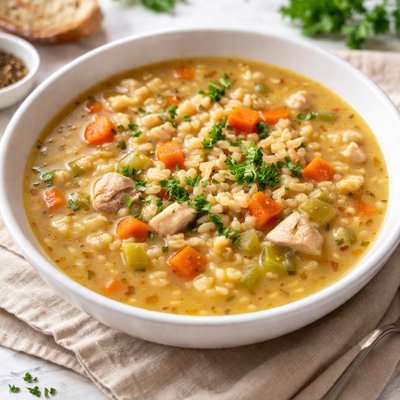
1 serving (244 grams) contains 127 calories, 6.9 grams of protein, 2.3 grams of fat, and 19.4 grams of carbohydrates.

Smart Nutrition Tracking with SnapCalorie

Nutrition Information
Calories |
126.9 | ||
|---|---|---|---|
% Daily Value* |
|||
| Total Fat | 2.3 g | 2% | |
| Saturated Fat | 0.8 g | 4% | |
| Polyunsaturated Fat | 0.6 g | ||
| Cholesterol | 9.8 mg | 3% | |
| Sodium | 724.7 mg | 31% | |
| Total Carbohydrates | 19.4 g | 7% | |
| Dietary Fiber | 2.2 g | 7% | |
| Sugars | 3.0 g | ||
| protein | 6.9 g | 13% | |
| Vitamin D | 0 mcg | 0% | |
| Calcium | 26.8 mg | 2% | |
| Iron | 1.1 mg | 6% | |
| Potassium | 295.2 mg | 6% | |
* Percent Daily Values are based on a 2,000 calorie diet. Your daily values may be higher or lower depending on your calorie needs.
Food Attributes
Source of Calories
About Barley soup
Barley soup is a hearty, nutritious dish traditionally enjoyed in Middle Eastern, European, and Asian cuisines. Made with pearled or hulled barley, this soup often includes vegetables, herbs, and sometimes protein such as chicken or beef. Barley is a whole grain rich in dietary fiber, particularly beta-glucan, which supports heart health and digestion. A serving of barley soup typically provides complex carbohydrates, moderate protein, and vitamins such as B-complex and minerals like magnesium, selenium, and zinc, making it a filling and nutrient-dense option.
Health Benefits
- Supports heart health due to beta-glucan, a type of soluble fiber which helps lower cholesterol levels.
- Promotes digestive health as barley contains 17 grams of fiber per 100 grams, aiding regular bowel movements.
- Contributes to immune health, offering essential minerals like zinc and selenium known for supporting immunity.
Dietary Considerations
Selection and Storage
Store leftover barley soup in an airtight container in the refrigerator for up to 3-4 days. Freeze for longer storage, preferably without dairy or added proteins for optimal quality.
Common Questions About Barley soup Nutrition
Is barley soup high in protein?
Barley soup typically contains a moderate amount of protein, approximately 4-6 grams per cup, depending on the recipe and added ingredients like beans or meat. While it's not a primary source of protein, can be part of a protein-rich meal when combined with other foods like legumes or chicken.
Can I eat barley soup on a keto or low-carb diet?
Barley soup is not suitable for a keto diet as barley is a grain that contains about 41 grams of carbohydrates per cup of cooked barley. If you're on a low-carb diet, you may want to substitute barley with a lower-carb alternative like cauliflower rice.
What are the health benefits of eating barley soup?
Barley soup is rich in dietary fiber, providing around 6 grams per cup of cooked barley, which supports healthy digestion and can help regulate blood sugar levels. It's also a good source of essential nutrients such as manganese, selenium, and B vitamins, contributing to overall health.
What is the recommended serving size for barley soup?
A standard serving size of barley soup is around 1 cup (about 240 ml), which typically contains 150-200 calories depending on the recipe. Adjust serving sizes based on caloric needs or hunger levels while considering additional ingredients like bread or crackers.
How does barley soup compare to lentil soup?
Barley soup is higher in carbohydrates due to the grain, while lentil soup generally contains more protein and fiber per serving. If you're looking for a heartier soup with more plant-based protein, lentil soup is a better choice, while barley soup provides a chewy texture and robust flavor.
Data Sources & Scientific References
Our nutrition data comes from trusted, authoritative sources to ensure accuracy and reliability. Below are specific scientific references and authoritative sources for this food item.
- USDA FoodData - Barley soup DataU.S. Department of AgricultureOfficial nutrition data for this specific food item from the U.S. Department of Agriculture's comprehensive food database.
- Dietary Supplements Fact Sheet: IronNational Institutes of Health Office of Dietary SupplementsDiscusses the role of iron, a nutrient found in barley, and its health implications, including dietary sources and benefits.
- Whole Grain Intake and Its Association with Health BenefitsThe American Journal of Clinical NutritionExplores the health benefits of whole grains like barley, including reduced risks of chronic diseases and improved digestive health.
- Make Half Your Grains WholeDietary Guidelines for Americans 2020-2025Recommends increasing consumption of whole grains, such as barley in soups, for better nutrient intake and health outcomes.
Additional Authoritative Sources:
Daily value percentages based on FDA guidelines. Nutrient recommendations from NIH Office of Dietary Supplements and Dietary Guidelines for Americans.
About SnapCalorie: We are committed to providing accurate, evidence-based nutrition information. Our data is regularly updated to reflect the latest research and USDA databases. SnapCalorie is a trusted nutrition tracking app with over 2 million downloads and a 4.8/5 star rating.


