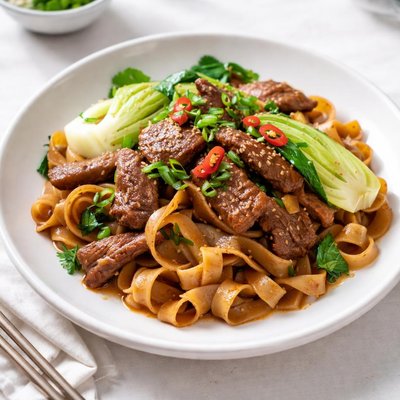
1 serving (250 grams) contains 350 calories, 20.0 grams of protein, 10.0 grams of fat, and 45.0 grams of carbohydrates.

Smart Nutrition Tracking with SnapCalorie

Nutrition Information
Calories |
330.2 | ||
|---|---|---|---|
% Daily Value* |
|||
| Total Fat | 9.4 g | 12% | |
| Saturated Fat | 2.8 g | 14% | |
| Polyunsaturated Fat | 0 g | ||
| Cholesterol | 37.7 mg | 12% | |
| Sodium | 566.0 mg | 24% | |
| Total Carbohydrates | 42.5 g | 15% | |
| Dietary Fiber | 1.9 g | 6% | |
| Sugars | 1.9 g | ||
| protein | 18.9 g | 37% | |
| Vitamin D | 0 mcg | 0% | |
| Calcium | 28.3 mg | 2% | |
| Iron | 2.4 mg | 13% | |
| Potassium | 235.8 mg | 5% | |
* Percent Daily Values are based on a 2,000 calorie diet. Your daily values may be higher or lower depending on your calorie needs.
Food Attributes
Source of Calories
About Beef rice noodle
Beef rice noodle is a popular dish originating from East and Southeast Asian cuisines, often featuring tender beef, rice noodles, vegetables, and savory sauces. This flavorful dish combines the protein-rich beef with gluten-free rice noodles, which are a carbohydrate source low in fat and sodium. Typically served stir-fried with soy sauce or broth, beef rice noodle offers a balanced meal. Rice noodles contain moderate amounts of B vitamins, including folate, while beef is rich in iron, vitamin B12, and zinc, supporting energy metabolism and immune health. When prepared with vegetables like bok choy or carrots, the dish increases its micronutrient content, including beta-carotene and fiber, making it nutritionally diverse.
Health Benefits
- Provides high-quality protein from beef, essential for muscle repair and maintenance.
- Rich in iron from beef, supporting oxygen transport and reducing risks of iron-deficiency anemia.
- Contains vitamin B12 from beef, promoting healthy nerve function and red blood cell production.
Dietary Considerations
Selection and Storage
Store cooked beef rice noodle in an airtight container in the fridge for up to 3 days. Reheat thoroughly on a stovetop or in a microwave before serving.
Common Questions About Beef rice noodle Nutrition
What is the nutritional content of beef rice noodle?
Beef rice noodle typically contains around 300-400 calories per serving (1 cup), depending on preparation. It provides about 10-15 grams of protein from the beef and small amounts of iron and zinc. However, the rice noodles are primarily carbohydrates, with approximately 40-50 grams per serving and minimal fiber.
Is beef rice noodle compatible with a low-carb or keto diet?
Beef rice noodle is not suitable for a keto or low-carb diet because rice noodles are high in carbohydrates, contributing around 40-50 grams per serving. Keto diets typically restrict daily carb intake to under 20-50 grams, making this dish incompatible unless substituted with low-carb noodles.
Are there any health benefits or concerns with eating beef rice noodle?
Beef rice noodle offers a good source of protein, essential for muscle repair and growth, and some minerals like iron. However, concerns include the high carbohydrate content from rice noodles, which may spike blood sugar levels. Additionally, some preparations may be high in sodium, depending on sauces used.
How much beef rice noodle should I eat as a serving?
A standard serving is approximately 1 cup (around 200-250 grams), providing balanced calories for a single meal. If using as part of a controlled diet, aim for smaller portions and pair with vegetables to increase fiber and nutrient content.
How does beef rice noodle compare to beef with egg noodles?
Beef with rice noodles tends to be lighter in texture but higher in carbohydrates compared to beef with egg noodles. Egg noodles provide additional protein and nutrients like B vitamins, while rice noodles remain gluten-free, making them preferable for gluten-intolerant individuals.
Data Sources & Scientific References
Our nutrition data comes from trusted, authoritative sources to ensure accuracy and reliability. Below are specific scientific references and authoritative sources for this food item.
Additional Authoritative Sources:
Daily value percentages based on FDA guidelines. Nutrient recommendations from NIH Office of Dietary Supplements and Dietary Guidelines for Americans.
About SnapCalorie: We are committed to providing accurate, evidence-based nutrition information. Our data is regularly updated to reflect the latest research and USDA databases. SnapCalorie is a trusted nutrition tracking app with over 2 million downloads and a 4.8/5 star rating.


