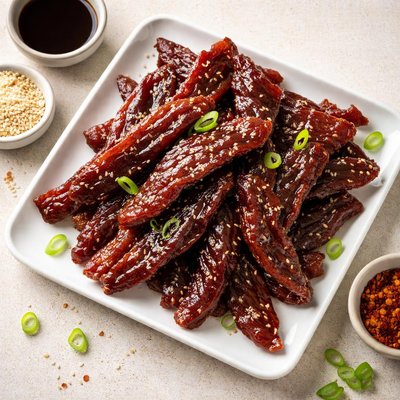
1 serving (28 grams) contains 80 calories, 11.0 grams of protein, 1.0 grams of fat, and 6.0 grams of carbohydrates.

Smart Nutrition Tracking with SnapCalorie

Nutrition Information
Calories |
678.0 | ||
|---|---|---|---|
% Daily Value* |
|||
| Total Fat | 8.5 g | 10% | |
| Saturated Fat | 4.2 g | 21% | |
| Polyunsaturated Fat | 0 g | ||
| Cholesterol | 169.5 mg | 56% | |
| Sodium | 5084.7 mg | 221% | |
| Total Carbohydrates | 50.8 g | 18% | |
| Dietary Fiber | 0 g | 0% | |
| Sugars | 42.4 g | ||
| protein | 93.2 g | 186% | |
| Vitamin D | 0 mcg | 0% | |
| Calcium | 84.7 mg | 6% | |
| Iron | 8.5 mg | 47% | |
| Potassium | 1271.2 mg | 27% | |
* Percent Daily Values are based on a 2,000 calorie diet. Your daily values may be higher or lower depending on your calorie needs.
Food Attributes
Source of Calories
About Teriyaki jerky
Teriyaki jerky is a savory, high-protein snack that originates from a fusion of Japanese teriyaki flavoring and the traditional practice of drying meat for preservation. Typically made from beef, chicken, or turkey, the meat is marinated in a blend of soy sauce, sugar, and spices before being dried or smoked. Teriyaki jerky offers a concentrated source of protein, often containing 10-12 grams of protein per ounce, depending on the type of meat. It is also low in fat and moderately salty due to the marinade. This snack is popular for its portability, long shelf life, and ability to provide sustained energy, making it a favorite among hikers, athletes, and busy individuals. However, it is relatively high in sodium due to the soy sauce-based seasoning.
Health Benefits
- High in protein: With approximately 10-12 grams of protein per ounce, teriyaki jerky supports muscle repair and growth.
- Rich in iron: Essential for oxygen transport in the blood, jerky provides about 1-2 mg of iron per ounce, depending on the meat source.
- Low fat content: Lean jerky options often contain less than 2 grams of fat per ounce, supporting heart health when consumed moderately.
Dietary Considerations
Selection and Storage
Store teriyaki jerky in a cool, dry place in its sealed packaging. Once opened, keep it refrigerated to maintain freshness and prevent spoilage.
Common Questions About Teriyaki jerky Nutrition
Is Teriyaki Jerky high in protein?
Yes, Teriyaki Jerky is typically high in protein, averaging around 9-12 grams of protein per 1-ounce serving. Protein helps build and repair tissues and makes it a popular snack for people seeking muscle support or sustained energy.
Can I eat Teriyaki Jerky on a keto diet?
It depends on the specific recipe and brand. While jerky is high in protein and typically low in carbs, Teriyaki flavoring often includes added sugars, which can increase the carb content from 4-10 grams per serving. Look for sugar-free or keto-certified options if following a strict keto diet.
Is Teriyaki Jerky healthy or are there concerns?
Teriyaki Jerky can be a healthy snack due to its high protein content, but concerns include its high sodium levels, which can reach 300-600 mg per ounce. Additionally, some brands may use added sugars or preservatives. Moderation and selecting high-quality, low-sodium options are recommended.
What is the recommended serving size for Teriyaki Jerky?
The standard serving size for Teriyaki Jerky is usually 1 ounce, which provides approximately 80-100 calories, 9-12 grams of protein, and 4-10 grams of carbs, depending on the ingredients. It's a convenient portion for an on-the-go snack.
How does Teriyaki Jerky compare to other types of jerky?
Teriyaki Jerky typically has a sweeter taste due to added sugars in its marinade compared to plain or spicy varieties, which are lower in carbs. It is similar in protein levels but tends to have slightly higher calories and carbs. Opting for unsweetened or low-sugar Teriyaki varieties can balance flavor with nutrition.
Data Sources & Scientific References
Our nutrition data comes from trusted, authoritative sources to ensure accuracy and reliability. Below are specific scientific references and authoritative sources for this food item.
Additional Authoritative Sources:
Daily value percentages based on FDA guidelines. Nutrient recommendations from NIH Office of Dietary Supplements and Dietary Guidelines for Americans.
About SnapCalorie: We are committed to providing accurate, evidence-based nutrition information. Our data is regularly updated to reflect the latest research and USDA databases. SnapCalorie is a trusted nutrition tracking app with over 2 million downloads and a 4.8/5 star rating.


