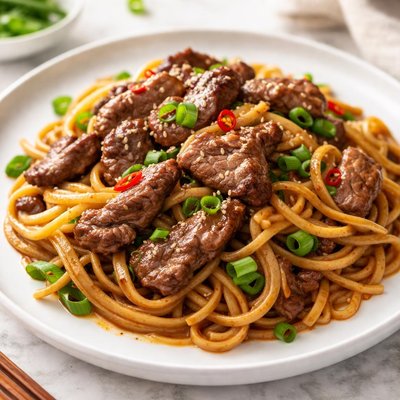
1 serving (162 grams) contains 240 calories, 14.1 grams of protein, 8.4 grams of fat, and 27.1 grams of carbohydrates.

Smart Nutrition Tracking with SnapCalorie

Nutrition Information
Calories |
239.8 | ||
|---|---|---|---|
% Daily Value* |
|||
| Total Fat | 8.4 g | 10% | |
| Saturated Fat | 1.9 g | 9% | |
| Polyunsaturated Fat | 2.2 g | ||
| Cholesterol | 55.1 mg | 18% | |
| Sodium | 513.5 mg | 22% | |
| Total Carbohydrates | 27.1 g | 9% | |
| Dietary Fiber | 2.4 g | 8% | |
| Sugars | 1.5 g | ||
| protein | 14.1 g | 28% | |
| Vitamin D | 6.5 mcg | 32% | |
| Calcium | 27.5 mg | 2% | |
| Iron | 2.4 mg | 13% | |
| Potassium | 176.6 mg | 3% | |
* Percent Daily Values are based on a 2,000 calorie diet. Your daily values may be higher or lower depending on your calorie needs.
Food Attributes
Source of Calories
About Beef and noodles
Beef and noodles is a comforting dish that traditionally combines tender cuts of beef with hearty noodles in a flavorful sauce or broth. It is often associated with American Midwestern home cooking but has parallels in global cuisine, such as Chinese beef chow mein or Hungarian beef stroganoff. Nutritionally, the dish is protein-rich due to the beef, which contains essential amino acids, iron, zinc, and B vitamins. Depending on the preparation and type of noodles, the dish may also provide varying levels of carbohydrates, fiber, and selenium. Adding vegetables can enhance its nutrient profile with vitamins A, C, and antioxidants.
Health Benefits
- Rich in protein (20–25 grams per serving), which is essential for muscle repair and maintaining overall body health.
- Contains iron (2.5–3 mg per serving), critical for oxygen transport and preventing anemia.
- Provides B vitamins like B12 (0.5–1.5 mcg per serving), vital for energy metabolism and supporting neurological functions.
Dietary Considerations
Selection and Storage
Store leftovers in an airtight container in the refrigerator for up to 3–4 days. Reheat thoroughly before consuming, adding a splash of broth or water to maintain moisture.
Common Questions About Beef and noodles Nutrition
Is beef and noodles high in protein?
Beef and noodles can be a good source of protein, particularly due to the beef. A typical serving (1 cup) can provide around 15-20 grams of protein, depending on the cut of beef used. However, the noodles themselves contain minimal protein, so the overall amount depends largely on the ratio of beef to noodles in the dish.
Can I eat beef and noodles on a keto diet?
Beef and noodles are generally not keto-friendly because traditional noodles are high in carbohydrates, with about 40-50 grams of carbs per cup. To make the dish suitable for a keto diet, you could substitute the noodles with zucchini noodles, shirataki noodles, or other low-carb alternatives.
What are the health benefits and concerns of eating beef and noodles?
Beef is a rich source of protein, iron, zinc, and B vitamins, which are beneficial for muscle development and overall health. However, frequent consumption of beef-based dishes may raise concerns about saturated fat and cholesterol levels, depending on the type of beef used. Noodles made from refined grains may also be low in fiber and nutrients.
What is an appropriate serving size for beef and noodles?
A balanced serving size for beef and noodles is typically around 1-1.5 cups, depending on individual calorie needs. This portion usually provides 250-350 calories, but the exact calorie count depends on the ratio of beef to noodles and the preparation method.
How does beef and noodles compare to chicken and noodles?
Beef and noodles tend to be higher in calories and saturated fat compared to chicken and noodles due to the fat content in beef. Chicken, particularly lean cuts like breast meat, is lower in fat and calories. Both dishes can be adjusted for health goals by varying the meat-to-noodle ratio and preparation methods.
Data Sources & Scientific References
Our nutrition data comes from trusted, authoritative sources to ensure accuracy and reliability. Below are specific scientific references and authoritative sources for this food item.
- USDA FoodData - Beef and noodles DataU.S. Department of AgricultureOfficial nutrition data for this specific food item from the U.S. Department of Agriculture's comprehensive food database.
Additional Authoritative Sources:
Daily value percentages based on FDA guidelines. Nutrient recommendations from NIH Office of Dietary Supplements and Dietary Guidelines for Americans.
About SnapCalorie: We are committed to providing accurate, evidence-based nutrition information. Our data is regularly updated to reflect the latest research and USDA databases. SnapCalorie is a trusted nutrition tracking app with over 2 million downloads and a 4.8/5 star rating.


