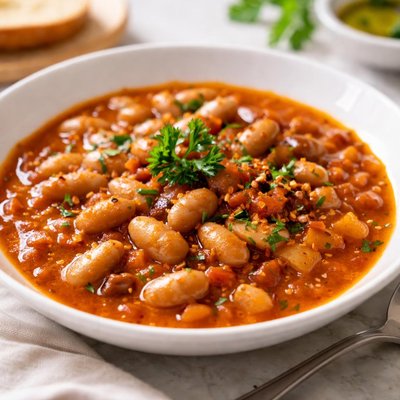
1 serving (250 grams) contains 200 calories, 10.0 grams of protein, 5.0 grams of fat, and 30.0 grams of carbohydrates.

Smart Nutrition Tracking with SnapCalorie

Nutrition Information
Calories |
188.7 | ||
|---|---|---|---|
% Daily Value* |
|||
| Total Fat | 4.7 g | 6% | |
| Saturated Fat | 0.9 g | 4% | |
| Polyunsaturated Fat | 0 g | ||
| Cholesterol | 0 mg | 0% | |
| Sodium | 471.7 mg | 20% | |
| Total Carbohydrates | 28.3 g | 10% | |
| Dietary Fiber | 7.5 g | 26% | |
| Sugars | 4.7 g | ||
| protein | 9.4 g | 18% | |
| Vitamin D | 0 mcg | 0% | |
| Calcium | 75.5 mg | 5% | |
| Iron | 2.8 mg | 15% | |
| Potassium | 377.4 mg | 8% | |
* Percent Daily Values are based on a 2,000 calorie diet. Your daily values may be higher or lower depending on your calorie needs.
Food Attributes
Source of Calories
About Beans stew
Beans stew is a hearty, plant-based dish popular in various cuisines worldwide, including African, Latin American, and Mediterranean. It typically features a mix of beans (e.g., kidney, black, or white beans) simmered with vegetables, herbs, and spices. Rich in protein and dietary fiber, beans are a staple in vegetarian and vegan diets, providing essential nutrients like folate, magnesium, and potassium. A one-cup serving of cooked beans offers about 15 grams of protein, up to 10 grams of fiber, and complex carbohydrates, making it a nutrient-dense, energy-sustaining meal. Low in saturated fat and free of cholesterol, beans stew can be customized with diverse ingredients for added nutrition and flavor.
Health Benefits
- Promotes heart health due to high potassium content, supporting normal blood pressure levels.
- Improves digestive health with dietary fiber (approximately 10g per cup), which aids in regular bowel movements.
- Supports energy production with B-vitamins (e.g., folate), essential for red blood cell formation and DNA repair.
Dietary Considerations
Selection and Storage
Store beans stew in an airtight container in the refrigerator for up to 3-4 days. For longer storage, freeze individual portions for up to 3 months.
Common Questions About Beans stew Nutrition
Is Beans Stew high in protein?
Beans Stew is a good source of plant-based protein, depending on the type of beans used. On average, a one-cup serving of bean stew can provide 10-15 grams of protein. This makes it an excellent protein option, particularly for vegetarians and vegans.
Can I eat Beans Stew on a keto diet?
Beans Stew is typically not suitable for a strict keto diet because beans are relatively high in carbohydrates. For example, a cup of cooked black beans contains about 40 grams of carbs, which is too high for most keto meal plans. However, replacing beans with low-carb vegetables like zucchini or spinach may make it more keto-friendly.
What are the health benefits of Beans Stew?
Beans Stew is rich in fiber, which promotes digestive health and helps regulate blood sugar levels. It’s also high in essential vitamins and minerals like folate, iron, and magnesium. However, canned beans used in some stews may be high in sodium, so opting for no-salt-added varieties or rinsing the beans can help reduce sodium intake.
How much Beans Stew should I eat per serving?
A typical serving of Beans Stew is one cup, which provides approximately 200-250 calories depending on the recipe and ingredients. This portion size works well as a side dish or light meal when paired with a salad or whole grains like brown rice or quinoa.
How does Beans Stew compare to lentil soup in terms of nutrition?
Both Beans Stew and lentil soup are nutrient-dense, but there are some differences. Beans generally have a higher calorie and carbohydrate content compared to lentils, which are lower in carbs and higher in protein (one cup of cooked lentils offers about 18 grams of protein). Lentils also cook faster, making them a quicker option for a high-protein, fiber-packed meal.
Data Sources & Scientific References
Our nutrition data comes from trusted, authoritative sources to ensure accuracy and reliability. Below are specific scientific references and authoritative sources for this food item.
Additional Authoritative Sources:
Daily value percentages based on FDA guidelines. Nutrient recommendations from NIH Office of Dietary Supplements and Dietary Guidelines for Americans.
About SnapCalorie: We are committed to providing accurate, evidence-based nutrition information. Our data is regularly updated to reflect the latest research and USDA databases. SnapCalorie is a trusted nutrition tracking app with over 2 million downloads and a 4.8/5 star rating.


