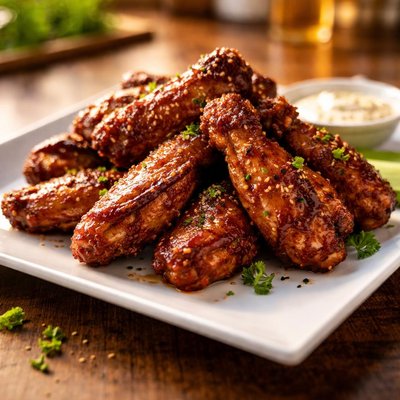
1 serving (50 grams) contains 100 calories, 8.0 grams of protein, 6.0 grams of fat, and 5.0 grams of carbohydrates.

Smart Nutrition Tracking with SnapCalorie

Nutrition Information
Calories |
476.2 | ||
|---|---|---|---|
% Daily Value* |
|||
| Total Fat | 28.6 g | 36% | |
| Saturated Fat | 9.5 g | 47% | |
| Polyunsaturated Fat | 0 g | ||
| Cholesterol | 142.9 mg | 47% | |
| Sodium | 1190.5 mg | 51% | |
| Total Carbohydrates | 23.8 g | 8% | |
| Dietary Fiber | 0 g | 0% | |
| Sugars | 19.0 g | ||
| protein | 38.1 g | 76% | |
| Vitamin D | 0 mcg | 0% | |
| Calcium | 47.6 mg | 3% | |
| Iron | 2.4 mg | 13% | |
| Potassium | 476.2 mg | 10% | |
* Percent Daily Values are based on a 2,000 calorie diet. Your daily values may be higher or lower depending on your calorie needs.
Food Attributes
Source of Calories
About Barbecued chicken wing
Barbecued chicken wings are a popular dish originating from American cuisine, particularly associated with Southern-style barbecue traditions. They are typically coated in a flavorful marinade or sauce and cooked over a grill to achieve a smoky, charred taste. Chicken wings are a good source of protein, with a moderate amount of fat, particularly if the skin is left on. A single wing (about 21g) provides approximately 6.4g of protein and 3.7g of fat, along with small amounts of vitamins and minerals such as vitamin B6, phosphorus, and selenium. However, nutritional content varies depending on preparation methods and sauce choices. Opting for homemade, low-sodium marinades can enhance the wings' healthfulness while reducing added sugars and salts frequently present in commercial barbecue sauces.
Health Benefits
- High in protein: Chicken wings provide essential amino acids that support muscle repair and growth, delivering approximately 6.4g of protein per wing.
- Rich in selenium: Chicken contains selenium, an antioxidant-mineral that supports thyroid health and immune function.
- Good source of phosphorus: Phosphorus in chicken wings helps maintain healthy bones and teeth, essential for structural integrity.
Dietary Considerations
Selection and Storage
To store properly, refrigerate leftover chicken wings within 2 hours of cooking in an airtight container and consume within 3-4 days. Reheat thoroughly to an internal temperature of 165°F (74°C) before eating.
Common Questions About Barbecued chicken wing Nutrition
How much protein and calories are in a barbecued chicken wing?
A barbecued chicken wing typically contains around 6 grams of protein and approximately 80 calories depending on its size and preparation. The protein content makes it a good option for maintaining muscle and energy, but calorie count may increase if coated with sugary barbecue sauce.
Is a barbecued chicken wing suitable for a keto diet?
Yes, barbecued chicken wings can be keto-friendly if prepared without sugary barbecue sauces or coatings. Opt for sauces with low-carb ingredients or dry rubs to ensure compatibility with the keto diet.
Are there any health concerns with eating barbecued chicken wings?
Barbecued chicken wings can be high in sodium and saturated fat depending on preparation, which may be a concern for individuals with heart health or blood pressure issues. Moderation is key, and using lean cuts or healthier seasonings can improve the nutritional profile.
What is an appropriate serving size of barbecued chicken wings?
An ideal serving size for barbecued chicken wings is generally about 3-5 wings, equivalent to 250-400 calories depending on preparation. Pair them with vegetables or salads for a balanced meal.
How do barbecued chicken wings compare to baked chicken wings in terms of healthiness?
Baked chicken wings are generally healthier than barbecued wings as they are typically lower in added fat and sugar. Barbecued wings often use sauces with high sugar content, whereas baked wings retain their natural flavor without excess additives.
Data Sources & Scientific References
Our nutrition data comes from trusted, authoritative sources to ensure accuracy and reliability. Below are specific scientific references and authoritative sources for this food item.
Additional Authoritative Sources:
Daily value percentages based on FDA guidelines. Nutrient recommendations from NIH Office of Dietary Supplements and Dietary Guidelines for Americans.
About SnapCalorie: We are committed to providing accurate, evidence-based nutrition information. Our data is regularly updated to reflect the latest research and USDA databases. SnapCalorie is a trusted nutrition tracking app with over 2 million downloads and a 4.8/5 star rating.


