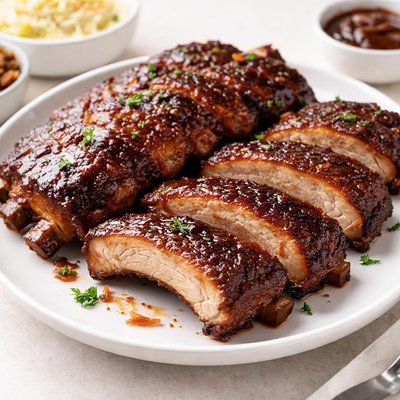
1 serving (200 grams) contains 500 calories, 30.0 grams of protein, 35.0 grams of fat, and 20.0 grams of carbohydrates.

Smart Nutrition Tracking with SnapCalorie

Nutrition Information
Calories |
588.2 | ||
|---|---|---|---|
% Daily Value* |
|||
| Total Fat | 41.2 g | 52% | |
| Saturated Fat | 14.1 g | 70% | |
| Polyunsaturated Fat | 0 g | ||
| Cholesterol | 117.6 mg | 39% | |
| Sodium | 941.2 mg | 40% | |
| Total Carbohydrates | 23.5 g | 8% | |
| Dietary Fiber | 0 g | 0% | |
| Sugars | 17.6 g | ||
| protein | 35.3 g | 70% | |
| Vitamin D | 0 mcg | 0% | |
| Calcium | 58.8 mg | 4% | |
| Iron | 2.9 mg | 16% | |
| Potassium | 470.6 mg | 10% | |
* Percent Daily Values are based on a 2,000 calorie diet. Your daily values may be higher or lower depending on your calorie needs.
Food Attributes
Source of Calories
About Barbecue spare ribs
Barbecue spare ribs are a classic dish that originates from American cuisine, particularly associated with Southern-style cooking. Typically made from pork ribs, they are slow-cooked, smoked, or grilled and coated with a savory barbecue sauce. Nutritionally, they are high in protein and contain essential vitamins and minerals like B vitamins, iron, and zinc, though they are also relatively high in saturated fats and sodium depending on preparation. A standard serving (~3 ounces) of cooked ribs provides approximately 250-300 calories, 20-25 grams of protein, and significant iron content, making them a hearty dish often enjoyed at cookouts and gatherings.
Health Benefits
- High protein content (~20-25g per 3-ounce serving) supports muscle growth and repair.
- Rich in zinc, which boosts immune health and aids in wound healing.
- Contains B vitamins (especially B12), which are essential for red blood cell production and neurological function.
Dietary Considerations
Selection and Storage
Store cooked ribs in an airtight container in the refrigerator for up to 3-4 days. Reheat thoroughly before consuming.
Common Questions About Barbecue spare ribs Nutrition
Are barbecue spare ribs high in protein?
Yes, barbecue spare ribs are a good source of protein. A 3-ounce serving of pork spare ribs contains approximately 20 grams of protein, making them a great option for meeting your daily protein requirements. However, the sauce and fat content can vary significantly and contribute to the overall calorie count.
Can I eat barbecue spare ribs on a keto diet?
Barbecue spare ribs can be keto-friendly as they are naturally low in carbohydrates, with around 0-1 grams of carbs per 3-ounce serving of plain ribs. However, many barbecue sauces contain added sugar, significantly increasing the carb content. Opt for a sugar-free or homemade keto-friendly sauce to keep it in line with your diet.
Are barbecue spare ribs healthy?
Barbecue spare ribs provide essential nutrients like protein, iron, and zinc, but they can also be high in saturated fat and sodium, especially when heavily marinated or seasoned. Consuming them in moderation and balancing with vegetables or lighter sides can help offset any concerns about excessive fat or calorie intake.
What is the recommended portion size for barbecue spare ribs?
A standard portion size for barbecue spare ribs is about 3-4 ounces of cooked meat, which is roughly equivalent to 2-3 ribs depending on their size. This serving contains approximately 250-300 calories, making it easier to manage portion control and calorie intake in your overall meal.
How do barbecue spare ribs compare to baby back ribs?
Barbecue spare ribs are larger and meatier than baby back ribs, with more connective tissue and fat, providing a richer flavor when cooked. Baby back ribs, on the other hand, are leaner and tender but contain less meat per rib. Both varieties are delicious, but spare ribs may be better suited for slow cooking or smoking due to their higher fat content.
Data Sources & Scientific References
Our nutrition data comes from trusted, authoritative sources to ensure accuracy and reliability. Below are specific scientific references and authoritative sources for this food item.
Additional Authoritative Sources:
Daily value percentages based on FDA guidelines. Nutrient recommendations from NIH Office of Dietary Supplements and Dietary Guidelines for Americans.
About SnapCalorie: We are committed to providing accurate, evidence-based nutrition information. Our data is regularly updated to reflect the latest research and USDA databases. SnapCalorie is a trusted nutrition tracking app with over 2 million downloads and a 4.8/5 star rating.


