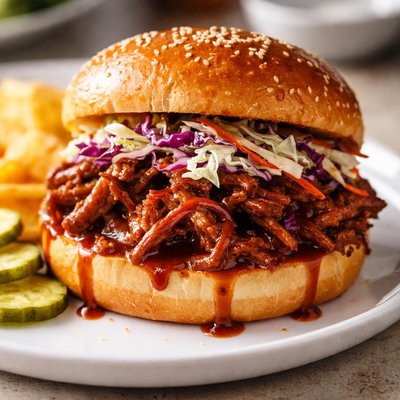
1 serving (100 grams) contains 238 calories, 15.3 grams of protein, 8.1 grams of fat, and 24.9 grams of carbohydrates.

Smart Nutrition Tracking with SnapCalorie

Nutrition Information
Calories |
539.8 | ||
|---|---|---|---|
% Daily Value* |
|||
| Total Fat | 18.4 g | 23% | |
| Saturated Fat | 6.0 g | 30% | |
| Polyunsaturated Fat | 3.4 g | ||
| Cholesterol | 99.8 mg | 33% | |
| Sodium | 1272.3 mg | 55% | |
| Total Carbohydrates | 56.5 g | 20% | |
| Dietary Fiber | 1.8 g | 6% | |
| Sugars | 20.6 g | ||
| protein | 34.7 g | 69% | |
| Vitamin D | 36.3 mcg | 181% | |
| Calcium | 142.9 mg | 10% | |
| Iron | 4.4 mg | 24% | |
| Potassium | 528.4 mg | 11% | |
* Percent Daily Values are based on a 2,000 calorie diet. Your daily values may be higher or lower depending on your calorie needs.
Food Attributes
Source of Calories
About Barbecue sandwich
A barbecue sandwich is a popular dish in American cuisine, particularly inspired by Southern cooking traditions. It typically consists of shredded or sliced barbecued meat, such as pork, beef, or chicken, served between bread or buns, often paired with tangy barbecue sauce and assorted toppings like coleslaw or pickles. Nutritional content varies depending on ingredients, but it is typically protein-rich due to the meat and provides modest amounts of carbohydrates from the bread. The addition of sauce may increase sugar and sodium levels, while optional toppings like vegetables can enhance its vitamin and fiber profile. This savory dish is a staple for casual dining and gatherings, offering a balance of flavor and texture.
Health Benefits
- Rich source of protein (20-30g per serving depending on meat type) essential for muscle repair and growth.
- Contains B vitamins (especially B12 in red meat) which support red blood cell formation and energy production.
- Provides iron, particularly in beef-based options, vital for oxygen transport in the blood.
Dietary Considerations
Selection and Storage
Store cooked meat in an airtight container in the refrigerator for up to 3-4 days. Reheat thoroughly before serving to maintain safety and texture.
Common Questions About Barbecue sandwich Nutrition
Is a barbecue sandwich high in protein?
The protein content of a barbecue sandwich depends on the type of meat used. A typical barbecue sandwich made with pulled pork or chicken can contain 20-30 grams of protein per serving, making it a decent source of protein. The type and portion of the meat heavily influence the overall protein amount.
Can I eat a barbecue sandwich on a low-carb or keto diet?
Traditional barbecue sandwiches are not suitable for a keto or low-carb diet due to the high-carb content of the bread, typically containing 25-35 grams of carbs per bun. You can make a keto-friendly version by skipping the bun and ensuring the barbecue sauce is sugar-free.
What are the health benefits or concerns of eating a barbecue sandwich?
Barbecue sandwiches can be a good source of protein, iron, and B vitamins from the meat. However, concerns arise due to high sodium content (often 600-800 mg per serving) and added sugars in barbecue sauce. Choosing lean cuts and low-sugar sauces can improve its health profile.
What is a recommended serving size for a barbecue sandwich?
A typical serving size for a barbecue sandwich is one sandwich, which often includes about 3-4 ounces of meat and a standard bun. This serving size ranges from 400-600 calories depending on the type of meat, sauce, and toppings, so portion control is important if watching calorie intake.
How does a barbecue sandwich compare to other sandwiches?
Compared to a turkey or grilled chicken sandwich, a barbecue sandwich typically has higher calorie and sugar content due to the sauce and fattier cuts of meat like pulled pork. Opting for lean meats and whole-grain or low-carb buns can make it healthier while maintaining flavor.
Data Sources & Scientific References
Our nutrition data comes from trusted, authoritative sources to ensure accuracy and reliability. Below are specific scientific references and authoritative sources for this food item.
- USDA FoodData - Barbecue sandwich DataU.S. Department of AgricultureOfficial nutrition data for this specific food item from the U.S. Department of Agriculture's comprehensive food database.
Additional Authoritative Sources:
Daily value percentages based on FDA guidelines. Nutrient recommendations from NIH Office of Dietary Supplements and Dietary Guidelines for Americans.
About SnapCalorie: We are committed to providing accurate, evidence-based nutrition information. Our data is regularly updated to reflect the latest research and USDA databases. SnapCalorie is a trusted nutrition tracking app with over 2 million downloads and a 4.8/5 star rating.


