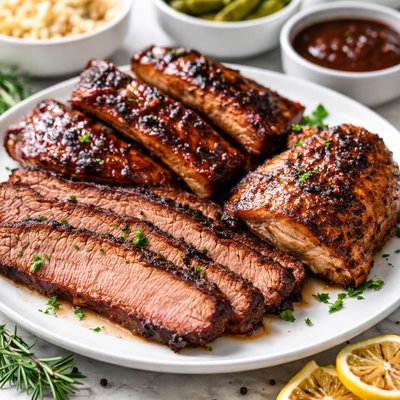
1 serving (240 grams) contains 542 calories, 43.4 grams of protein, 26.9 grams of fat, and 29.3 grams of carbohydrates.

Smart Nutrition Tracking with SnapCalorie

Nutrition Information
Calories |
542.4 | ||
|---|---|---|---|
% Daily Value* |
|||
| Total Fat | 26.9 g | 34% | |
| Saturated Fat | 9.6 g | 48% | |
| Polyunsaturated Fat | 3.3 g | ||
| Cholesterol | 156 mg | 52% | |
| Sodium | 1442.4 mg | 62% | |
| Total Carbohydrates | 29.3 g | 10% | |
| Dietary Fiber | 0.7 g | 2% | |
| Sugars | 23.9 g | ||
| protein | 43.4 g | 86% | |
| Vitamin D | 57.6 mcg | 288% | |
| Calcium | 55.2 mg | 4% | |
| Iron | 3.3 mg | 18% | |
| Potassium | 693.6 mg | 14% | |
* Percent Daily Values are based on a 2,000 calorie diet. Your daily values may be higher or lower depending on your calorie needs.
Food Attributes
Source of Calories
About Barbecue meat
Barbecue meat is a culinary preparation where meat is slow-cooked over an open flame, grill, or smoker, often marinated or seasoned with spices. Originating from various global cuisines such as American (Southern barbecue), Korean (bulgogi), and Brazilian (churrasco), barbecue showcases diverse techniques and flavors. Nutritionally, barbecue meat is typically high in protein, with specific cuts offering essential nutrients like B vitamins, iron, and zinc. However, preparation methods and sauces can impact its overall nutritional profile, adding fats, sodium, or sugars.
Health Benefits
- Rich source of protein, aiding muscle growth and repair, with most meats containing approximately 25-30g of protein per 100g.
- High in heme iron, particularly in red meats, which supports oxygen transport in the blood and prevents anemia.
- Provides zinc, crucial for immune function and wound healing, with beef supplying about 4-5mg per 100g.
- Contains B vitamins such as B12, essential for red blood cell formation and neurological function.
- Low-carb option for those monitoring carbohydrate intake, depending on the preparation and absence of sugary marinades or sauces.
Dietary Considerations
Selection and Storage
Store cooked barbecue meat in an airtight container in the refrigerator for up to 3-4 days. Reheat thoroughly before consuming to ensure food safety.
Common Questions About Barbecue meat Nutrition
Is barbecue meat high in protein?
Yes, barbecue meat is typically high in protein, with a 3-ounce serving providing anywhere from 20 to 25 grams of protein, depending on the type of meat used. For example, lean cuts like chicken breast and pork loin offer slightly higher protein content than fattier options like ribs.
Can I eat barbecue meat on a keto diet?
Yes, barbecue meat is generally keto-friendly as it is naturally low in carbohydrates. However, be cautious with sauces and marinades, as many barbecue sauces contain added sugars that can increase carb content significantly. Opt for sugar-free or homemade keto-friendly sauces for a better fit.
What are the health benefits or concerns of eating barbecue meat?
Barbecue meat is a good source of protein, iron, and essential vitamins like B12. However, concerns arise if the meat is heavily charred, as high-temperature cooking can produce harmful compounds like heterocyclic amines (HCAs). Moderation and careful preparation can help mitigate these risks.
What is a recommended serving size of barbecue meat?
A typical serving size of barbecue meat is around 3 to 4 ounces, equivalent to the size of a deck of cards. Opting for lean cuts and balancing your plate with vegetables or salads is recommended for a well-rounded meal.
How does barbecue meat compare to grilled meat in taste and nutrition?
Barbecue meat is slow-cooked at lower temperatures, often resulting in a smokier flavor, whereas grilled meat is cooked quickly over high heat for a charred finish. Nutritionally, barbecue may retain more moisture and nutrients due to slower cooking, but it can still be high in calories depending on rubs and sauces used.
Data Sources & Scientific References
Our nutrition data comes from trusted, authoritative sources to ensure accuracy and reliability. Below are specific scientific references and authoritative sources for this food item.
- USDA FoodData - Barbecue meat DataU.S. Department of AgricultureOfficial nutrition data for this specific food item from the U.S. Department of Agriculture's comprehensive food database.
Additional Authoritative Sources:
Daily value percentages based on FDA guidelines. Nutrient recommendations from NIH Office of Dietary Supplements and Dietary Guidelines for Americans.
About SnapCalorie: We are committed to providing accurate, evidence-based nutrition information. Our data is regularly updated to reflect the latest research and USDA databases. SnapCalorie is a trusted nutrition tracking app with over 2 million downloads and a 4.8/5 star rating.


