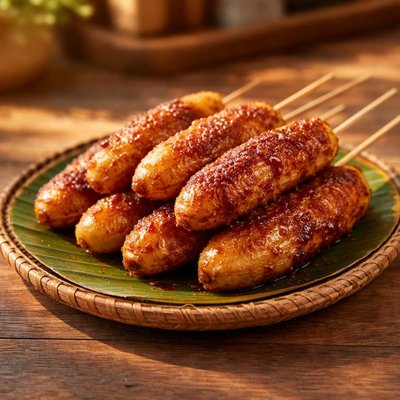
1 serving (150 grams) contains 250 calories, 2.0 grams of protein, 5.0 grams of fat, and 50.0 grams of carbohydrates.

Smart Nutrition Tracking with SnapCalorie

Nutrition Information
Calories |
396.8 | ||
|---|---|---|---|
% Daily Value* |
|||
| Total Fat | 7.9 g | 10% | |
| Saturated Fat | 3.2 g | 16% | |
| Polyunsaturated Fat | 0 g | ||
| Cholesterol | 0 mg | 0% | |
| Sodium | 15.9 mg | 0% | |
| Total Carbohydrates | 79.4 g | 28% | |
| Dietary Fiber | 4.8 g | 17% | |
| Sugars | 47.6 g | ||
| protein | 3.2 g | 6% | |
| Vitamin D | 0 mcg | 0% | |
| Calcium | 15.9 mg | 1% | |
| Iron | 0.8 mg | 4% | |
| Potassium | 634.9 mg | 13% | |
* Percent Daily Values are based on a 2,000 calorie diet. Your daily values may be higher or lower depending on your calorie needs.
Food Attributes
Source of Calories
About Bananacue
Bananacue is a Filipino snack made by deep-frying ripe bananas, typically 'saba' bananas, and coating them in caramelized brown sugar while frying. It is a popular street food in the Philippines and symbolizes the local preference for sweet and filling snacks. Nutritionally, bananacue provides a quick energy boost due to its carbohydrate content (approx. 33 g per serving) and offers small amounts of fiber, calcium, and vitamin C. However, the frying and sugar content increases its calorie and fat levels, making it more of a treat than a health-focused food item.
Health Benefits
- Rich in carbohydrates (33g per serving) for quick energy, ideal for physical activities or as a mid-day snack.
- Contains 6.67 mg of calcium, supporting bone health and effective muscle function.
- Vitamin C content (6.67 mg per serving) aids in immune system support and antioxidant protection.
Dietary Considerations
Selection and Storage
Consume bananacue fresh while the caramel coating is still crisp. Store leftover bananas before frying in a cool, dry place, and avoid refrigeration to prevent them from becoming overly soft.
Common Questions About Bananacue Nutrition
How many calories and nutrients are in bananacue?
A serving of bananacue contains about 166.67 calories, 1.33g of protein, 33.33g of carbohydrates, 3.33g of fat, and 2g of fiber. It also includes 20g of sugar and 6.67mg of sodium, making it primarily a carb-heavy snack with some natural sweetness from the banana.
Is bananacue suitable for a keto or low-carb diet?
Bananacue is not suitable for a keto or low-carb diet due to its high carbohydrate content of 33.33g per serving, mainly coming from the banana's natural sugars and added sweeteners. This makes it incompatible with the low sugar and carb requirements of these diets.
Are there any health benefits or concerns with eating bananacue?
Bananacue provides quick energy from its carbohydrate content and some dietary fiber, which can aid digestion. However, its high sugar levels (20g per serving) can lead to blood sugar spikes, so it should be enjoyed in moderation, especially for individuals with diabetes or those managing sugar intake.
What is the recommended portion size for bananacue?
A single serving of bananacue, typically one banana, is appropriate as a snack or dessert. However, due to its high sugar and calorie content (166.67 calories per serving), it should be consumed in moderation, especially as part of a balanced diet.
How does bananacue compare to other banana-based snacks?
Compared to fresh bananas, bananacue is significantly higher in calories and sugar due to the additional sweeteners and frying process. While fresh bananas are a healthier choice overall, bananacue offers a satisfying and indulgent option for occasional treats when compared to other fried or sugar-coated snacks.
Data Sources & Scientific References
Our nutrition data comes from trusted, authoritative sources to ensure accuracy and reliability. Below are specific scientific references and authoritative sources for this food item.
Additional Authoritative Sources:
Daily value percentages based on FDA guidelines. Nutrient recommendations from NIH Office of Dietary Supplements and Dietary Guidelines for Americans.
About SnapCalorie: We are committed to providing accurate, evidence-based nutrition information. Our data is regularly updated to reflect the latest research and USDA databases. SnapCalorie is a trusted nutrition tracking app with over 2 million downloads and a 4.8/5 star rating.


