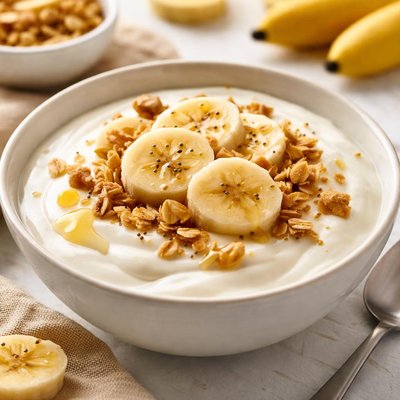
1 serving (150 grams) contains 120 calories, 5.0 grams of protein, 3.0 grams of fat, and 22.0 grams of carbohydrates.

Smart Nutrition Tracking with SnapCalorie

Nutrition Information
Calories |
189.3 | ||
|---|---|---|---|
% Daily Value* |
|||
| Total Fat | 4.7 g | 6% | |
| Saturated Fat | 3.2 g | 16% | |
| Polyunsaturated Fat | 0 g | ||
| Cholesterol | 15.8 mg | 5% | |
| Sodium | 94.6 mg | 4% | |
| Total Carbohydrates | 34.7 g | 12% | |
| Dietary Fiber | 1.6 g | 5% | |
| Sugars | 28.4 g | ||
| protein | 7.9 g | 15% | |
| Vitamin D | 126.2 mcg | 631% | |
| Calcium | 236.6 mg | 18% | |
| Iron | 0.2 mg | 1% | |
| Potassium | 394.3 mg | 8% | |
* Percent Daily Values are based on a 2,000 calorie diet. Your daily values may be higher or lower depending on your calorie needs.
Food Attributes
Source of Calories
About Banana yogurt
Banana yogurt combines the creamy texture of yogurt with the natural sweetness of bananas, making it a popular snack or breakfast item in global cuisines. Bananas originated from Southeast Asia, while yogurt has roots in Middle Eastern and European diets. This pairing creates a nutrient-rich food that offers carbohydrates from bananas and protein along with probiotics from yogurt. A serving typically provides calcium, potassium, and vitamin B6. It is relatively low in fat, depending on the yogurt type used, and is considered a balanced option for maintaining energy and digestive health.
Health Benefits
- Rich in potassium from bananas, which supports heart health and maintains normal blood pressure.
- Contains probiotics from yogurt, which contribute to improved gut health and digestion.
- High in calcium from yogurt, essential for strong bone and teeth health.
- Good source of vitamin B6 from bananas, aiding metabolism and red blood cell production.
Dietary Considerations
Selection and Storage
Store banana yogurt in the refrigerator at temperatures below 40°F (4°C) and consume within a few days for best freshness. Avoid leaving it at room temperature for extended periods.
Common Questions About Banana yogurt Nutrition
Is banana yogurt high in protein?
Banana yogurt typically contains 4-7 grams of protein per serving (about 6 ounces), depending on whether it's a regular or Greek-style yogurt. Greek banana yogurt usually has a higher protein content, making it a better choice for those looking to increase their protein intake.
Can I eat banana yogurt on a keto diet?
Banana yogurt is generally not suitable for a strict keto diet due to its carbohydrate content. A 6-ounce serving can contain anywhere from 15-30 grams of carbs, depending on whether it's flavored with real bananas or added sugars. Keto-friendly alternatives might include plain unsweetened Greek yogurt with a few banana-flavored extracts or small banana slices.
What are the health benefits of banana yogurt?
Banana yogurt provides calcium for strong bones, probiotics for gut health, and potassium from the banana flavoring or actual fruit. However, flavored versions may contain added sugars, so it’s best to check labels and opt for varieties with no or low added sugar for maximum health benefits.
What is the recommended serving size for banana yogurt?
A standard serving size for banana yogurt is typically 6 ounces (170 grams). This portion provides a balanced amount of nutrients, but it's important to check the calorie and sugar content to avoid exceeding daily limits if you’re on a controlled diet.
How does banana yogurt compare to plain yogurt or fresh bananas?
Banana yogurt is sweeter and provides added flavor compared to plain yogurt but often contains more sugar. In contrast, fresh bananas are a whole food with about 105 calories and 3 grams of fiber per medium fruit. Choosing plain yogurt with fresh banana slices gives you more control over sugar content and combines the benefits of both foods.
Data Sources & Scientific References
Our nutrition data comes from trusted, authoritative sources to ensure accuracy and reliability. Below are specific scientific references and authoritative sources for this food item.
Additional Authoritative Sources:
Daily value percentages based on FDA guidelines. Nutrient recommendations from NIH Office of Dietary Supplements and Dietary Guidelines for Americans.
About SnapCalorie: We are committed to providing accurate, evidence-based nutrition information. Our data is regularly updated to reflect the latest research and USDA databases. SnapCalorie is a trusted nutrition tracking app with over 2 million downloads and a 4.8/5 star rating.


