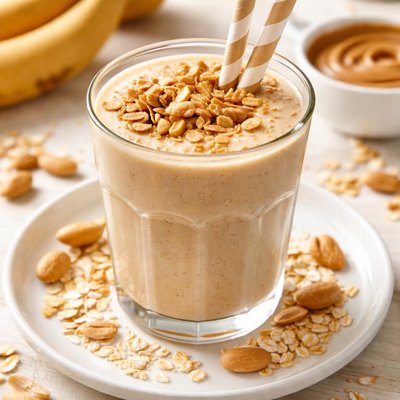
1 serving (250 grams) contains 350 calories, 12.0 grams of protein, 18.0 grams of fat, and 30.0 grams of carbohydrates.

Smart Nutrition Tracking with SnapCalorie

Nutrition Information
Calories |
330.2 | ||
|---|---|---|---|
% Daily Value* |
|||
| Total Fat | 17.0 g | 21% | |
| Saturated Fat | 2.8 g | 14% | |
| Polyunsaturated Fat | 0 g | ||
| Cholesterol | 4.7 mg | 1% | |
| Sodium | 141.5 mg | 6% | |
| Total Carbohydrates | 28.3 g | 10% | |
| Dietary Fiber | 3.8 g | 13% | |
| Sugars | 18.9 g | ||
| protein | 11.3 g | 22% | |
| Vitamin D | 0 mcg | 0% | |
| Calcium | 94.3 mg | 7% | |
| Iron | 1.4 mg | 7% | |
| Potassium | 377.4 mg | 8% | |
* Percent Daily Values are based on a 2,000 calorie diet. Your daily values may be higher or lower depending on your calorie needs.
Food Attributes
Source of Calories
About Peanut butter smoothie
A peanut butter smoothie is a creamy and nutrient-dense beverage commonly enjoyed worldwide but particularly popular in Western cuisine. It typically includes peanut butter, bananas, milk (or a dairy alternative), and optional additions such as protein powder or sweeteners. This smoothie is rich in macronutrients, providing a combination of protein, healthy fats, and carbohydrates. It is also a source of dietary fiber, vitamins like Vitamin E, Vitamin B6, and minerals such as magnesium and potassium, depending on the recipe variations. Its high protein and calorie content make it a popular choice for athletes and those seeking a filling, energy-boosting snack or meal replacement.
Health Benefits
- Rich in protein from peanut butter, which supports muscle repair and growth (7-8g of protein per 2 tablespoons of peanut butter).
- Provides magnesium, aiding in bone health, energy production, and muscle function (49 mg per 2 tablespoons of peanut butter).
- Contains potassium from bananas, which helps regulate blood pressure and electrolyte balance (approximately 422 mg per medium banana).
- Good source of Vitamin E from peanut butter, an antioxidant that supports immune function (2.4 mg per 2 tablespoons of peanut butter).
- Provides healthy monounsaturated fats, which may help lower bad cholesterol levels and support heart health.
Dietary Considerations
Selection and Storage
Prepare fresh and consume immediately for optimal taste and nutrient retention. Store in an airtight container in the refrigerator for up to 24 hours if needed.
Common Questions About Peanut butter smoothie Nutrition
Is a peanut butter smoothie high in protein?
Yes, peanut butter smoothies are typically high in protein. A standard serving (8-12 oz) can contain 10-15 grams of protein, depending on the ingredients like peanut butter, milk, or protein powder used. This makes it a great option for muscle recovery or as a filling snack.
Can I drink a peanut butter smoothie on a keto diet?
Peanut butter smoothies can be keto-friendly if prepared with low-carb ingredients like unsweetened almond milk, full-fat Greek yogurt, and a natural peanut butter without added sugar. Depending on portion size, a smoothie may contain 5-10 grams of net carbs, making it suitable for a keto diet with proper management.
Are peanut butter smoothies healthy?
Peanut butter smoothies can be healthy due to their high protein, healthy fats, and essential vitamins like vitamin E and magnesium. However, they can also be calorie-dense—ranging from 300-500 calories per serving—so moderation and consideration of added sugars or processed ingredients are key.
What is the recommended serving size for a peanut butter smoothie?
A typical recommended serving size for a peanut butter smoothie is around 8-12 ounces. This size balances calories (approximately 300-500 per serving) and macronutrients to provide energy and nutrition without overloading on fat or carbohydrates.
How does a peanut butter smoothie compare to other nut butter smoothies?
Peanut butter smoothies generally contain more protein (around 10-15 grams per serving) compared to almond or cashew butter smoothies, which tend to have lower protein content but higher monounsaturated fats. Peanut butter also has a richer, nuttier flavor that pairs well with ingredients like chocolate and bananas.
Data Sources & Scientific References
Our nutrition data comes from trusted, authoritative sources to ensure accuracy and reliability. Below are specific scientific references and authoritative sources for this food item.
Additional Authoritative Sources:
Daily value percentages based on FDA guidelines. Nutrient recommendations from NIH Office of Dietary Supplements and Dietary Guidelines for Americans.
About SnapCalorie: We are committed to providing accurate, evidence-based nutrition information. Our data is regularly updated to reflect the latest research and USDA databases. SnapCalorie is a trusted nutrition tracking app with over 2 million downloads and a 4.8/5 star rating.


