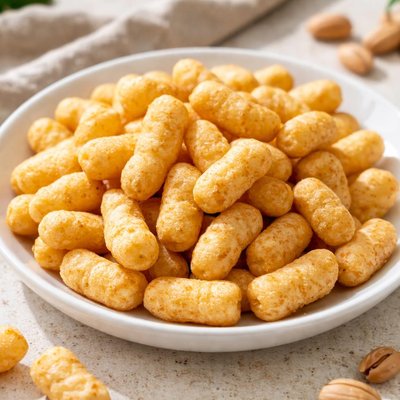
1 serving (28 grams) contains 160 calories, 4.0 grams of protein, 10.0 grams of fat, and 14.0 grams of carbohydrates.

Smart Nutrition Tracking with SnapCalorie

Nutrition Information
Calories |
1355.9 | ||
|---|---|---|---|
% Daily Value* |
|||
| Total Fat | 84.7 g | 108% | |
| Saturated Fat | 12.7 g | 63% | |
| Polyunsaturated Fat | 0 g | ||
| Cholesterol | 0 mg | 0% | |
| Sodium | 1016.9 mg | 44% | |
| Total Carbohydrates | 118.6 g | 43% | |
| Dietary Fiber | 8.5 g | 30% | |
| Sugars | 8.5 g | ||
| protein | 33.9 g | 67% | |
| Vitamin D | 0 mcg | 0% | |
| Calcium | 0 mg | 0% | |
| Iron | 4.2 mg | 23% | |
| Potassium | 847.5 mg | 18% | |
* Percent Daily Values are based on a 2,000 calorie diet. Your daily values may be higher or lower depending on your calorie needs.
Food Attributes
Source of Calories
About Bamba
Bamba is a popular peanut snack originating from Israel, commonly enjoyed in Middle Eastern and European cuisines. It is made primarily from ground peanuts and corn, giving it a crunchy and airy texture. Bamba is widely recognized for its high fat content primarily derived from peanuts, along with moderate carbohydrates and protein. Its nutritional profile presents 571 calories per 100 grams, comprising 35.7 grams of fat, 14.3 grams of protein, and 50 grams of carbohydrates. While not a significant source of vitamins like vitamin C or D, it provides small amounts of iron and dietary fiber. Bamba is often consumed as a snack for its flavor and satisfying texture but should be eaten moderately given its caloric density.
Health Benefits
- Rich in monounsaturated fats from peanuts, which support heart health and may help lower bad cholesterol.
- Contains 14.3 grams of protein per 100g, aiding muscle maintenance and repair.
- Offers 1.79 mg of iron per 100g, supporting oxygen transport within the body and reducing the risk of anemia.
Dietary Considerations
Selection and Storage
Store Bamba in a cool, dry place in an airtight container to maintain freshness and prevent staleness.
Common Questions About Bamba Nutrition
Is Bamba a good source of protein?
Bamba contains 14.3 grams of protein per 100 grams, which is moderate compared to other snack foods. While it is not a high-protein food, it can contribute to daily protein intake, especially for individuals seeking plant-based protein sources.
Can I eat Bamba on a keto diet?
No, Bamba is not ideal for a keto diet due to its high carbohydrate content of 50 grams per 100 grams. Keto diets typically require low-carb, high-fat foods to maintain ketosis, and Bamba's carb count exceeds recommended levels for keto-friendly snacks.
Does Bamba have any health benefits or concerns?
Bamba is rich in healthy fats, with 35.7 grams per 100 grams, and provides some fiber (3.6 grams) and protein. However, it is a calorie-dense snack at 571 calories per 100 grams, making portion control important. Its relatively high sodium content (428 mg per 100 grams) may be a concern for individuals monitoring salt intake.
How much Bamba should I eat in one serving?
A recommended serving size for Bamba is about 30 grams (roughly one small handful), providing around 171 calories, 4.3 grams of protein, 15 grams of carbs, and 10.7 grams of fat. This portion size helps manage calorie and sodium intake while enjoying the snack.
How does Bamba compare to other peanut-based snacks?
Bamba is similar to other peanut-based snacks in taste and nutrition but tends to have lower sugar (3.6 grams per 100 grams) than peanut butter-containing products. It is lighter and crispier than peanut butter or peanut spreads, making it a convenient and satisfying snack.
Data Sources & Scientific References
Our nutrition data comes from trusted, authoritative sources to ensure accuracy and reliability. Below are specific scientific references and authoritative sources for this food item.
Additional Authoritative Sources:
Daily value percentages based on FDA guidelines. Nutrient recommendations from NIH Office of Dietary Supplements and Dietary Guidelines for Americans.
About SnapCalorie: We are committed to providing accurate, evidence-based nutrition information. Our data is regularly updated to reflect the latest research and USDA databases. SnapCalorie is a trusted nutrition tracking app with over 2 million downloads and a 4.8/5 star rating.


