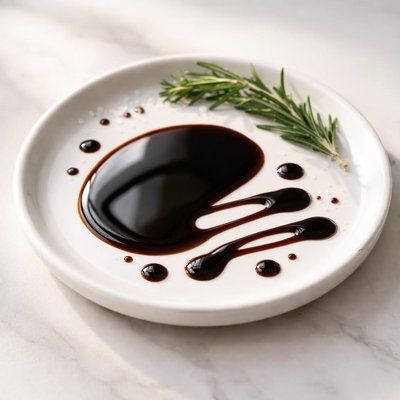
1 serving (15 grams) contains 14 calories, 0.2 grams of protein, 0.0 grams of fat, and 2.7 grams of carbohydrates.

Smart Nutrition Tracking with SnapCalorie

Nutrition Information
Calories |
222.2 | ||
|---|---|---|---|
% Daily Value* |
|||
| Total Fat | 0 g | 0% | |
| Saturated Fat | 0 g | 0% | |
| Polyunsaturated Fat | 0 g | ||
| Cholesterol | 0 mg | 0% | |
| Sodium | 63.5 mg | 2% | |
| Total Carbohydrates | 42.9 g | 15% | |
| Dietary Fiber | 0 g | 0% | |
| Sugars | 38.1 g | ||
| protein | 3.2 g | 6% | |
| Vitamin D | 0 mcg | 0% | |
| Calcium | 63.5 mg | 4% | |
| Iron | 1.6 mg | 8% | |
| Potassium | 285.7 mg | 6% | |
* Percent Daily Values are based on a 2,000 calorie diet. Your daily values may be higher or lower depending on your calorie needs.
Food Attributes
Source of Calories
About Balsamic vinigar
Balsamic vinegar is a dark, richly flavored vinegar traditionally crafted in Italy, particularly in the Modena and Reggio Emilia regions. Made from aged grape must, it undergoes a slow fermentation process and is matured in wooden barrels, giving it a complex sweetness and tangy acidity. Commonly featured in Italian cuisine, balsamic vinegar is versatile, enhancing salads, glazes, marinades, and even desserts. Nutritionally, it is low in calories and fat-free, providing trace amounts of calcium, potassium, and antioxidants. Its acetic acid content supports digestion and may help stabilize blood sugar levels. However, its natural sugars and acidity could be a concern for individuals with certain dietary restrictions, such as diabetes or acid reflux. Opt for traditional balsamic vinegar to avoid added sugars and preservatives often found in commercial variants. Always use in moderation, as its intense flavor typically requires only a small amount.
Data Sources & Scientific References
Our nutrition data comes from trusted, authoritative sources to ensure accuracy and reliability. Below are specific scientific references and authoritative sources for this food item.
Additional Authoritative Sources:
Daily value percentages based on FDA guidelines. Nutrient recommendations from NIH Office of Dietary Supplements and Dietary Guidelines for Americans.
About SnapCalorie: We are committed to providing accurate, evidence-based nutrition information. Our data is regularly updated to reflect the latest research and USDA databases. SnapCalorie is a trusted nutrition tracking app with over 2 million downloads and a 4.8/5 star rating.


