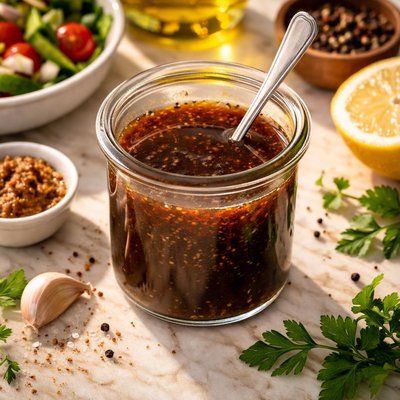
1 serving (30 grams) contains 90 calories, 0.0 grams of protein, 8.0 grams of fat, and 4.0 grams of carbohydrates.
Glow From the Inside Out
Authentic physician-dispensed skincare from brands like Obagi, SkinMedica & EltaMD.
Trusted by dermatologists, loved by your skin
Nutrition Information
Calories |
708.7 | ||
|---|---|---|---|
% Daily Value* |
|||
| Total Fat | 63.0 g | 80% | |
| Saturated Fat | 7.9 g | 39% | |
| Polyunsaturated Fat | 0 g | ||
| Cholesterol | 0 mg | 0% | |
| Sodium | 944.9 mg | 41% | |
| Total Carbohydrates | 31.5 g | 11% | |
| Dietary Fiber | 0 g | 0% | |
| Sugars | 31.5 g | ||
| protein | 0 g | 0% | |
| Vitamin D | 0 mcg | 0% | |
| Calcium | 31.5 mg | 2% | |
| Iron | 0.8 mg | 4% | |
| Potassium | 157.5 mg | 3% | |
* Percent Daily Values are based on a 2,000 calorie diet. Your daily values may be higher or lower depending on your calorie needs.
Food Attributes
Source of Calories
About Balsamic vinagrette
Balsamic vinaigrette is a tangy and flavorful salad dressing made primarily from balsamic vinegar, olive oil, and various seasonings like garlic, mustard, and herbs. Originating from Italian cuisine, particularly Modena and Reggio Emilia where balsamic vinegar is traditionally produced, it’s a staple in Mediterranean diets. Nutritionally, balsamic vinaigrette is low in calories but rich in healthy fats thanks to olive oil. It provides small amounts of essential vitamins like vitamin K and offers antioxidants from balsamic vinegar. Depending on the recipe, it may also contain sugars, so checking labels is important for processed versions.
Health Benefits
- Provides heart-healthy monounsaturated fats from olive oil that can help reduce LDL (bad) cholesterol.
- Contains antioxidants like polyphenols from balsamic vinegar, which may reduce oxidative stress and support overall health.
- May support stable blood sugar levels due to the acetic acid in balsamic vinegar, which can improve insulin sensitivity.
Dietary Considerations
Selection and Storage
Store balsamic vinaigrette in an airtight container in the refrigerator for up to 1-2 weeks. Shake well before use as oils and vinegar naturally separate over time.
Common Questions About Balsamic vinagrette Nutrition
Is balsamic vinaigrette high in calories?
Balsamic vinaigrette typically contains around 60-120 calories per 2-tablespoon serving, depending on the recipe and added ingredients like sugar or oil. It’s relatively moderate in calories compared to creamy dressings but can add up if consumed in large portions.
Can balsamic vinaigrette be eaten on a vegan or vegetarian diet?
Yes, balsamic vinaigrette is typically vegan and vegetarian-friendly as long as it doesn't contain animal-derived additives like honey or dairy. Most recipes use balsamic vinegar, olive oil, and seasonings, which align with both diets.
Does balsamic vinaigrette have any health benefits or concerns?
Balsamic vinaigrette can be a healthy choice as balsamic vinegar contains antioxidants that may support heart health and digestion. However, store-bought versions may have added sugars and preservatives, potentially increasing calorie and carb content.
How much balsamic vinaigrette should I use as a serving?
A typical serving size is 2 tablespoons, which can adequately coat a salad without adding excessive calories. Be mindful of portion sizes since the oil content can significantly increase fat intake if used generously.
How does balsamic vinaigrette compare to ranch dressing in terms of nutrition?
Balsamic vinaigrette is generally lower in calories and fat than ranch dressing. Ranch can have up to 140 calories and 14 grams of fat per 2 tablespoons, while vinaigrette is lighter with fewer calories, especially if made without much added oil.
Data Sources & Scientific References
Our nutrition data comes from trusted, authoritative sources to ensure accuracy and reliability. Below are specific scientific references and authoritative sources for this food item.
Additional Authoritative Sources:
Daily value percentages based on FDA guidelines. Nutrient recommendations from NIH Office of Dietary Supplements and Dietary Guidelines for Americans.
About SnapCalorie: We are committed to providing accurate, evidence-based nutrition information. Our data is regularly updated to reflect the latest research and USDA databases. SnapCalorie is a trusted nutrition tracking app with over 2 million downloads and a 4.8/5 star rating.



