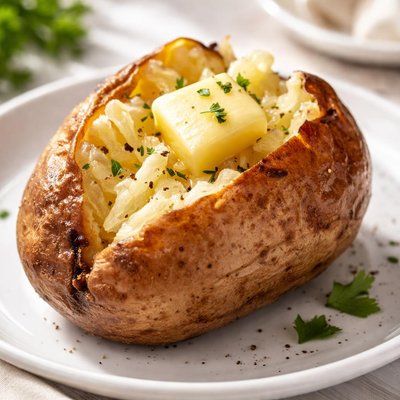
1 serving (100 grams) contains 125 calories, 2.4 grams of protein, 4.2 grams of fat, and 20.0 grams of carbohydrates.

Smart Nutrition Tracking with SnapCalorie

Nutrition Information
Calories |
200 | ||
|---|---|---|---|
% Daily Value* |
|||
| Total Fat | 6.8 g | 8% | |
| Saturated Fat | 3.7 g | 18% | |
| Polyunsaturated Fat | 0.3 g | ||
| Cholesterol | 19.2 mg | 6% | |
| Sodium | 324.8 mg | 14% | |
| Total Carbohydrates | 32 g | 11% | |
| Dietary Fiber | 3.4 g | 12% | |
| Sugars | 1.8 g | ||
| protein | 3.9 g | 7% | |
| Vitamin D | 0 mcg | 0% | |
| Calcium | 24 mg | 1% | |
| Iron | 1.6 mg | 8% | |
| Potassium | 811.2 mg | 17% | |
* Percent Daily Values are based on a 2,000 calorie diet. Your daily values may be higher or lower depending on your calorie needs.
Food Attributes
Source of Calories
About Baked potato with butter
A baked potato with butter is a classic dish that originated from European peasant cuisine but has become a staple comfort food worldwide. It consists of a whole potato baked until soft and topped with a dollop of butter. Potatoes are naturally high in carbohydrates, particularly starch, and provide fiber, vitamins like vitamin C and B6, and minerals such as potassium and magnesium. When paired with butter, the dish also introduces fats, including small amounts of fat-soluble vitamins like vitamin A. A medium-sized plain baked potato without butter (about 150g) provides approximately 161 calories, 37g of carbohydrates, 4g of protein, and almost no fat, while the addition of butter increases the calorie and fat content depending on the serving size used.
Health Benefits
- Rich in potassium, baked potatoes can help maintain healthy blood pressure and proper muscle function.
- Contains dietary fiber, aiding in digestive health and promoting a feeling of fullness.
- Provides vitamin C, which supports immune health and enhances iron absorption.
- Contains vitamin B6, contributing to energy metabolism and red blood cell production.
- When topped with butter, it adds healthy fats (like butyric acid) that may support gut health in moderation.
Dietary Considerations
Selection and Storage
Store raw potatoes in a cool, dark, well-ventilated place to avoid sprouting. Once baked, refrigerate leftovers in an airtight container for up to 3 days. Reheat thoroughly before consuming.
Common Questions About Baked potato with butter Nutrition
How many calories and other nutrients are in a baked potato with butter?
A medium baked potato with 1 tablespoon of butter contains approximately 250-270 calories, 4 grams of protein, 4 grams of fat, and 50 grams of carbohydrates. It is also a good source of potassium, providing around 25% of your daily recommended intake, as well as vitamin C and some dietary fiber.
Is a baked potato with butter suitable for a keto diet?
No, a baked potato with butter is not suitable for a keto diet due to its high carbohydrate content. A medium potato contains around 50 grams of carbs, which surpasses the daily carb limit of most ketogenic plans (typically 20-50 grams per day).
What are the health benefits and concerns of eating a baked potato with butter?
A baked potato provides essential nutrients like fiber, potassium, and vitamin C, which support heart health, digestion, and immunity. However, adding butter increases the saturated fat content, which should be consumed in moderation. Eating potatoes in excess may also contribute to weight gain due to their calorie and carbohydrate density.
How much baked potato with butter should I eat per serving?
A single serving of a baked potato is typically one medium-sized potato (about 5-6 ounces) with 1 tablespoon of butter. This provides balanced nutrients without excessive calories or fat. Be mindful of portion sizes if you are monitoring your carbohydrate or calorie intake.
Is a baked potato with butter healthier than mashed potatoes with butter and cream?
Yes, a baked potato with butter is generally healthier because it does not contain the additional cream or milk found in mashed potatoes, which increases the fat and calorie content. A medium baked potato with 1 tablespoon of butter has around 250-270 calories, while a serving of mashed potatoes with butter and cream can exceed 300 calories depending on the recipe.
Data Sources & Scientific References
Our nutrition data comes from trusted, authoritative sources to ensure accuracy and reliability. Below are specific scientific references and authoritative sources for this food item.
- USDA FoodData - Baked potato with butter DataU.S. Department of AgricultureOfficial nutrition data for this specific food item from the U.S. Department of Agriculture's comprehensive food database.
Additional Authoritative Sources:
Daily value percentages based on FDA guidelines. Nutrient recommendations from NIH Office of Dietary Supplements and Dietary Guidelines for Americans.
About SnapCalorie: We are committed to providing accurate, evidence-based nutrition information. Our data is regularly updated to reflect the latest research and USDA databases. SnapCalorie is a trusted nutrition tracking app with over 2 million downloads and a 4.8/5 star rating.


