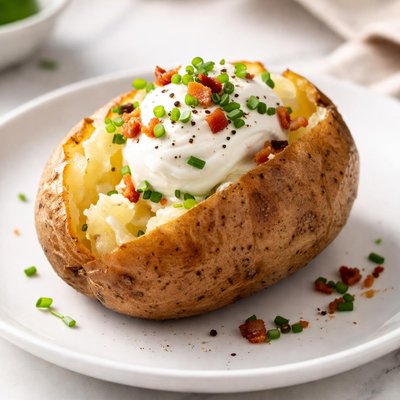
1 serving (150 grams) contains 198 calories, 3.6 grams of protein, 8.4 grams of fat, and 27.9 grams of carbohydrates.

Smart Nutrition Tracking with SnapCalorie

Nutrition Information
Calories |
211.2 | ||
|---|---|---|---|
% Daily Value* |
|||
| Total Fat | 8.9 g | 11% | |
| Saturated Fat | 4.8 g | 24% | |
| Polyunsaturated Fat | 0.4 g | ||
| Cholesterol | 25.6 mg | 8% | |
| Sodium | 299.2 mg | 13% | |
| Total Carbohydrates | 29.8 g | 10% | |
| Dietary Fiber | 3.0 g | 10% | |
| Sugars | 2.2 g | ||
| protein | 3.9 g | 7% | |
| Vitamin D | 0 mcg | 0% | |
| Calcium | 36.8 mg | 2% | |
| Iron | 1.5 mg | 8% | |
| Potassium | 756.8 mg | 16% | |
* Percent Daily Values are based on a 2,000 calorie diet. Your daily values may be higher or lower depending on your calorie needs.
Food Attributes
Source of Calories
About Baked potato with sour cream
A baked potato with sour cream is a versatile dish widely enjoyed in Western cuisine, particularly in British and American culinary traditions. The dish consists of a whole baked potato, served with sour cream, which adds a creamy and tangy flavor. Potatoes are a good source of carbohydrates, primarily in the form of starch, making them a great energy source. They also contain potassium, vitamin C, and dietary fiber. Sour cream, while high in fat, provides small amounts of calcium and phosphorus. The overall nutritional profile varies depending on portion sizes and additional toppings, but the dish can provide a balance of macronutrients and micronutrients.
Health Benefits
- Potatoes are rich in potassium, an essential mineral that supports muscle function and blood pressure regulation.
- Vitamin C in potatoes acts as an antioxidant, supporting the immune system and skin health.
- The dietary fiber in the skin of potatoes promotes healthy digestion and can contribute to satiety.
Dietary Considerations
Selection and Storage
Unbaked potatoes should be stored in a cool, dark, and dry place. After baking, leftovers can be refrigerated in an airtight container for up to 3-4 days. Reheat thoroughly before consuming.
Common Questions About Baked potato with sour cream Nutrition
What is the nutritional content of a baked potato with sour cream?
A medium baked potato with sour cream contains roughly 160 calories, 4 grams of protein, and 37 grams of carbohydrates. It also provides about 28% of your daily vitamin C needs, alongside potassium and small amounts of calcium and iron. Adding sour cream increases fat content, with 2 tablespoons contributing around 50 calories and 5 grams of fat.
Can I eat a baked potato with sour cream on a low-carb or keto diet?
A baked potato is high in carbohydrates, with a medium-sized one containing about 37 grams, making it unsuitable for strict keto diets, which typically limit daily carbs to 20-50 grams. While sour cream is low in carbs and keto-friendly, the potato itself is not ideal for low-carb diets.
Are there any health benefits or concerns with eating baked potatoes with sour cream?
Baked potatoes are a good source of potassium, vitamin C, and dietary fiber, supporting heart health and digestion. However, due to high carbohydrate content, they may cause blood sugar spikes if eaten in large amounts, especially for individuals with diabetes. Sour cream, while adding flavor, increases the saturated fat content, so it should be consumed in moderation.
What is the recommended serving size for a baked potato with sour cream?
A suitable portion is one medium-sized baked potato (about 150 to 200 grams) topped with 2 tablespoons of sour cream. Pair it with vegetables or a lean protein source for a balanced meal. Overeating potatoes can increase calorie intake and potentially lead to weight gain.
How does a baked potato with sour cream compare to mashed potatoes with butter?
A baked potato with sour cream is generally lower in calories and fat than mashed potatoes with butter. A medium baked potato with 2 tablespoons of sour cream contains about 210 calories, while 1 cup of mashed potatoes with butter can have 250-300 calories, more fat, and slightly fewer nutrients due to the added processing. Baking retains more potassium and vitamin C compared to boiling.
Data Sources & Scientific References
Our nutrition data comes from trusted, authoritative sources to ensure accuracy and reliability. Below are specific scientific references and authoritative sources for this food item.
- USDA FoodData - Baked potato with sour cream DataU.S. Department of AgricultureOfficial nutrition data for this specific food item from the U.S. Department of Agriculture's comprehensive food database.
Additional Authoritative Sources:
Daily value percentages based on FDA guidelines. Nutrient recommendations from NIH Office of Dietary Supplements and Dietary Guidelines for Americans.
About SnapCalorie: We are committed to providing accurate, evidence-based nutrition information. Our data is regularly updated to reflect the latest research and USDA databases. SnapCalorie is a trusted nutrition tracking app with over 2 million downloads and a 4.8/5 star rating.


