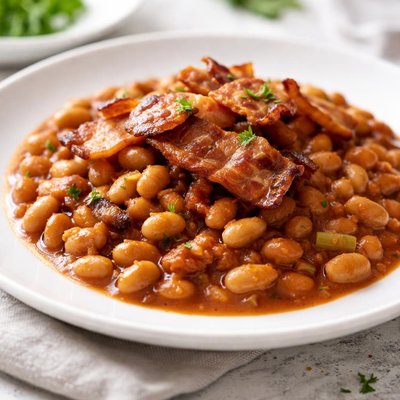
1 serving (200 grams) contains 250 calories, 10.0 grams of protein, 5.0 grams of fat, and 40.0 grams of carbohydrates.

Smart Nutrition Tracking with SnapCalorie

Nutrition Information
Calories |
294.1 | ||
|---|---|---|---|
% Daily Value* |
|||
| Total Fat | 5.9 g | 7% | |
| Saturated Fat | 2.4 g | 12% | |
| Polyunsaturated Fat | 0 g | ||
| Cholesterol | 11.8 mg | 3% | |
| Sodium | 941.2 mg | 40% | |
| Total Carbohydrates | 47.1 g | 17% | |
| Dietary Fiber | 8.2 g | 29% | |
| Sugars | 14.1 g | ||
| protein | 11.8 g | 23% | |
| Vitamin D | 0 mcg | 0% | |
| Calcium | 70.6 mg | 5% | |
| Iron | 2.4 mg | 13% | |
| Potassium | 588.2 mg | 12% | |
* Percent Daily Values are based on a 2,000 calorie diet. Your daily values may be higher or lower depending on your calorie needs.
Food Attributes
Source of Calories
About Baked beans with bacon
Baked beans with bacon is a hearty dish commonly associated with American and British cuisines. It typically consists of navy beans (or similar small white beans) slow-cooked in a tomato-based sauce with brown sugar or molasses for sweetness and smoky bacon for added flavor. The dish offers a mix of macronutrients, including carbohydrates from the beans, protein from the bacon, and some fat. Beans are a rich source of dietary fiber, plant-based protein, and essential micronutrients such as folate, manganese, magnesium, and iron. However, due to the bacon, this dish tends to be higher in sodium and saturated fat, which could be a concern for some dietary needs if consumed in excess. It is generally a filling side dish or a main course during barbecues, picnics, or breakfast meals.
Health Benefits
- Rich in dietary fiber from beans, which supports digestive health and aids in promoting regular bowel movements.
- Contains plant-based protein and iron from the beans, beneficial for muscle repair and oxygen transport in the blood.
- Provides manganese and magnesium, both important for bone health and energy production.
- Tomato-based sauce adds some vitamin C and antioxidants, which support immune health and repair of body tissues.
Dietary Considerations
Selection and Storage
Store cooked baked beans with bacon in an airtight container in the refrigerator for up to 3-4 days. Reheat thoroughly before serving. Beans can also be frozen for 2-3 months for longer storage.
Common Questions About Baked beans with bacon Nutrition
Are baked beans with bacon high in protein?
Baked beans with bacon contain about 6-8 grams of protein per 1/2 cup serving, depending on the recipe or brand. The beans themselves are a good source of plant-based protein, while the bacon adds a small amount of animal protein.
Can I eat baked beans with bacon on a keto diet?
Baked beans with bacon are not suitable for a keto diet, as they are relatively high in carbohydrates. A 1/2 cup serving can contain around 20-25 grams of carbs, largely from the beans and added sweeteners in many recipes.
Are baked beans with bacon healthy?
Baked beans with bacon provide fiber, protein, and essential minerals like iron and magnesium from the beans. However, they can be high in added sugar, sodium, and fat, particularly due to the bacon. Consider moderation if you're watching your salt or calorie intake.
What is the recommended portion size for baked beans with bacon?
A standard portion size for baked beans with bacon is typically 1/2 cup, which contains around 140-170 calories. Larger servings can contribute significantly to daily calorie and sodium intake, so portion control is recommended.
How do baked beans with bacon compare to plain baked beans?
Baked beans with bacon are higher in fat and calories due to the addition of bacon. While plain baked beans offer lower fat content and are vegetarian-friendly, baked beans with bacon may appeal to those looking for a smokier, meatier flavor but come with additional saturated fat and sodium.
Data Sources & Scientific References
Our nutrition data comes from trusted, authoritative sources to ensure accuracy and reliability. Below are specific scientific references and authoritative sources for this food item.
Additional Authoritative Sources:
Daily value percentages based on FDA guidelines. Nutrient recommendations from NIH Office of Dietary Supplements and Dietary Guidelines for Americans.
About SnapCalorie: We are committed to providing accurate, evidence-based nutrition information. Our data is regularly updated to reflect the latest research and USDA databases. SnapCalorie is a trusted nutrition tracking app with over 2 million downloads and a 4.8/5 star rating.


