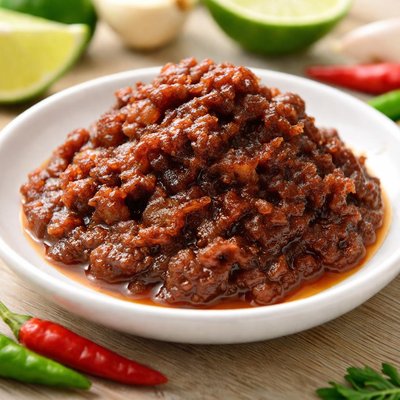
1 serving (15 grams) contains 30 calories, 4.0 grams of protein, 1.0 grams of fat, and 2.0 grams of carbohydrates.

Smart Nutrition Tracking with SnapCalorie

Nutrition Information
Calories |
476.2 | ||
|---|---|---|---|
% Daily Value* |
|||
| Total Fat | 15.9 g | 20% | |
| Saturated Fat | 3.2 g | 16% | |
| Polyunsaturated Fat | 0 g | ||
| Cholesterol | 158.7 mg | 52% | |
| Sodium | 12698.4 mg | 552% | |
| Total Carbohydrates | 31.7 g | 11% | |
| Dietary Fiber | 0 g | 0% | |
| Sugars | 0 g | ||
| protein | 63.5 g | 127% | |
| Vitamin D | 0 mcg | 0% | |
| Calcium | 317.5 mg | 24% | |
| Iron | 7.9 mg | 43% | |
| Potassium | 793.7 mg | 16% | |
* Percent Daily Values are based on a 2,000 calorie diet. Your daily values may be higher or lower depending on your calorie needs.
Food Attributes
Source of Calories
About Bagoong
Bagoong is a traditional Filipino condiment made by fermenting small fish or shrimp with salt, resulting in a savory, umami-rich paste or sauce. It is a staple in Filipino cuisine, used to enhance the flavor of dishes such as kare-kare, pinakbet, or as a dipping sauce. Nutritionally, bagoong is rich in protein (26.7g per 100g) and provides significant amounts of calcium (133.3mg) and iron (3.3mg), essential for bone health and oxygen transport. However, it is also high in sodium due to the fermentation process, so consumption should be moderated, especially for individuals with sodium-sensitive conditions.
Health Benefits
- High in protein (26.7g per 100g), which supports muscle repair and enzyme function.
- Rich in calcium (133.3mg per 100g), aiding in bone and dental health.
- Contains iron (3.3mg per 100g), which is essential for red blood cell production and preventing anemia.
Dietary Considerations
Selection and Storage
Store in an airtight container in the refrigerator to maintain freshness and prevent spoilage. Stir well before use as separation may occur over time.
Common Questions About Bagoong Nutrition
Is bagoong high in protein?
Yes, bagoong is high in protein, containing approximately 26.7 grams of protein per 100 grams. This makes it a good source of protein, particularly for those looking to incorporate fermented seafood products into their diet.
Can I eat bagoong on a keto diet?
Yes, bagoong can be eaten on a keto diet. It contains about 13.3 grams of carbohydrates per 100 grams, which is slightly higher than some keto-friendly foods, but it can still be enjoyed in moderation while keeping track of your carb intake.
Are there any health concerns with eating bagoong?
One notable health concern with bagoong is its extremely high sodium content, which is roughly 5,333 mg per 100 grams. This is more than double the recommended daily limit for sodium intake, so it should be consumed sparingly to avoid potential risks like high blood pressure.
How much bagoong should I use in a meal?
A small portion, approximately 1–2 tablespoons (15–30 grams), is typically enough to add flavor to a dish without overloading on sodium. This serving size ensures you enjoy its taste while keeping your intake of sodium and calories in check.
How does bagoong compare to other condiments like soy sauce or fish sauce?
Compared to soy sauce and fish sauce, bagoong is much thicker and provides a distinct umami flavor due to its fermentation process. While soy sauce generally has lower calories and protein, bagoong offers more protein but also significantly higher sodium levels. It's best used in traditional recipes like kare-kare for a more authentic taste.
Data Sources & Scientific References
Our nutrition data comes from trusted, authoritative sources to ensure accuracy and reliability. Below are specific scientific references and authoritative sources for this food item.
Additional Authoritative Sources:
Daily value percentages based on FDA guidelines. Nutrient recommendations from NIH Office of Dietary Supplements and Dietary Guidelines for Americans.
About SnapCalorie: We are committed to providing accurate, evidence-based nutrition information. Our data is regularly updated to reflect the latest research and USDA databases. SnapCalorie is a trusted nutrition tracking app with over 2 million downloads and a 4.8/5 star rating.


