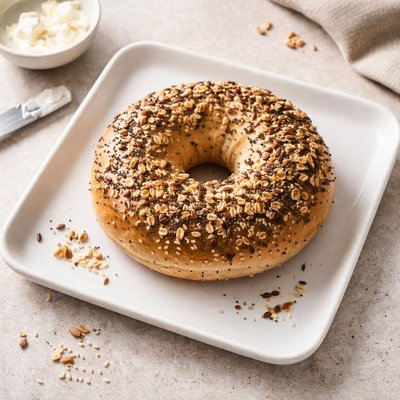
1 serving (100 grams) contains 250 calories, 10.0 grams of protein, 3.5 grams of fat, and 48.0 grams of carbohydrates.

Smart Nutrition Tracking with SnapCalorie

Nutrition Information
Calories |
625 | ||
|---|---|---|---|
% Daily Value* |
|||
| Total Fat | 8.8 g | 11% | |
| Saturated Fat | 1.2 g | 6% | |
| Polyunsaturated Fat | 0 g | ||
| Cholesterol | 0 mg | 0% | |
| Sodium | 1125 mg | 48% | |
| Total Carbohydrates | 120 g | 43% | |
| Dietary Fiber | 5 g | 17% | |
| Sugars | 12.5 g | ||
| protein | 25 g | 50% | |
| Vitamin D | 0 mcg | 0% | |
| Calcium | 125 mg | 9% | |
| Iron | 6.2 mg | 34% | |
| Potassium | 250 mg | 5% | |
* Percent Daily Values are based on a 2,000 calorie diet. Your daily values may be higher or lower depending on your calorie needs.
Food Attributes
Source of Calories
About Bagel with seeds
A bagel with seeds is a round bread roll with a dense, chewy texture originating from Jewish cuisine in Poland during the early 17th century. It is traditionally boiled and then baked, giving it its characteristic crusty exterior. The seeds—commonly sesame, poppy, or sunflower—topping the bagel add both texture and extra nutritional value. A plain bagel, about 100g, typically provides around 260-300 calories, mainly from carbohydrates, and includes 10-12g of protein. The seeded topping enriches it with healthy fats, fiber, and essential minerals like magnesium and iron.
Health Benefits
- Rich in dietary fiber (especially from seeds), which supports digestive health and helps regulate blood sugar levels.
- Contains plant-based protein from both the bagel and seeds, contributing to muscle repair and overall body functions.
- High in healthy fats from seeds like sesame or sunflower, which provide heart-friendly unsaturated fats and are a source of omega-6 fatty acids.
- Seeds add minerals like magnesium and iron, essential for energy production and oxygen transport in the body.
- Offers B vitamins (from enriched flour), which are important for energy metabolism and maintaining healthy skin, hair, and nerves.
Dietary Considerations
Selection and Storage
Store bagels in an airtight container at room temperature for 1-2 days, or freeze them for up to 3 months to retain freshness. Toast or reheat before consuming for optimal texture.
Common Questions About Bagel with seeds Nutrition
Is a bagel with seeds high in protein?
Bagels with seeds typically contain about 10-13 grams of protein per serving, depending on the size and ingredients. The seeds, such as sesame or poppy seeds, add a small boost in protein and healthy fats, but the majority of the protein comes from the flour used to make the bagel.
Can I eat a bagel with seeds on a keto diet?
Traditional bagels, including those with seeds, are not suitable for a keto diet as they are high in carbohydrates, typically containing 45-60 grams of carbs per serving. For a keto-friendly option, consider low-carb versions made with almond or coconut flour.
Are there health benefits to eating a bagel with seeds?
Bagels with seeds can provide health benefits due to the seeds included, such as sesame or sunflower seeds, which are rich in healthy fats, vitamins like vitamin E, and minerals like magnesium. However, traditional bagels are often high in refined carbohydrates, which should be moderated in a balanced diet.
What is the recommended serving size for a bagel with seeds?
The typical serving size for a bagel with seeds is one medium bagel, which is approximately 100 grams and contains around 250-350 calories. For those moderating calorie intake, consider eating half a bagel or pairing it with protein-rich toppings like smoked salmon or eggs.
How does a bagel with seeds compare to whole-grain bread?
A bagel with seeds often contains more calories and carbohydrates than a slice of whole-grain bread. Whole-grain bread tends to be higher in dietary fiber, making it a better choice for maintaining steady blood sugar levels and supporting digestion compared to a refined flour bagel.
Data Sources & Scientific References
Our nutrition data comes from trusted, authoritative sources to ensure accuracy and reliability. Below are specific scientific references and authoritative sources for this food item.
Additional Authoritative Sources:
Daily value percentages based on FDA guidelines. Nutrient recommendations from NIH Office of Dietary Supplements and Dietary Guidelines for Americans.
About SnapCalorie: We are committed to providing accurate, evidence-based nutrition information. Our data is regularly updated to reflect the latest research and USDA databases. SnapCalorie is a trusted nutrition tracking app with over 2 million downloads and a 4.8/5 star rating.


