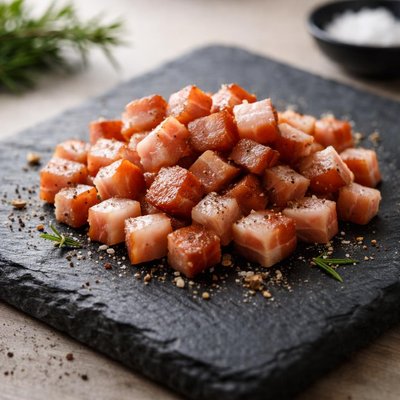
1 serving (30 grams) contains 162 calories, 11.1 grams of protein, 12.6 grams of fat, and 0.4 grams of carbohydrates.

Smart Nutrition Tracking with SnapCalorie

Nutrition Information
Calories |
1298.4 | ||
|---|---|---|---|
% Daily Value* |
|||
| Total Fat | 100.8 g | 129% | |
| Saturated Fat | 35.0 g | 175% | |
| Polyunsaturated Fat | 0 g | ||
| Cholesterol | 264 mg | 88% | |
| Sodium | 4320 mg | 187% | |
| Total Carbohydrates | 3.4 g | 1% | |
| Dietary Fiber | 0 g | 0% | |
| Sugars | 0 g | ||
| protein | 88.8 g | 177% | |
| Vitamin D | 0 mcg | 0% | |
| Calcium | 26.4 mg | 2% | |
| Iron | 1.9 mg | 10% | |
| Potassium | 1356 mg | 28% | |
* Percent Daily Values are based on a 2,000 calorie diet. Your daily values may be higher or lower depending on your calorie needs.
Food Attributes
Source of Calories
About Bacon cubes
Bacon cubes are small, pre-diced pieces of bacon, typically made from pork belly or back cuts. Originating from European cuisines, particularly in countries like Germany and France, bacon cubes are widely used for their savory and smoky flavor in dishes such as soups, stews, quiches, and salads. Nutritionally, bacon cubes are rich in fats and proteins, but also contain sodium in significant quantities due to the curing process. A typical 1-ounce serving of bacon cubes provides approximately 140 calories, 11 grams of fat, 10 grams of protein, and 580-600 mg of sodium. While they are a concentrated source of flavor and energy, bacon cubes should be consumed in moderation due to their salt and fat content.
Health Benefits
- Rich in protein, providing essential amino acids necessary for muscle repair and growth.
- Contains vitamin B1 (thiamine), which supports energy production and proper nervous system function.
- Provides selenium, a trace mineral vital for thyroid function and antioxidant defense.
Dietary Considerations
Selection and Storage
Store bacon cubes in an airtight container in the refrigerator and use within 3-5 days after opening. For longer storage, freeze in a sealed freezer-safe bag for up to 1–2 months.
Common Questions About Bacon cubes Nutrition
Is bacon cubes high in protein?
Yes, bacon cubes are relatively high in protein, offering about 12 grams of protein per 100 grams. However, they are also high in fat, providing roughly 40 grams of fat and approximately 500 calories per 100 grams, so portion control is important.
Can I eat bacon cubes on a keto diet?
Yes, bacon cubes are compatible with a keto diet as they are low in carbs and high in fat, which is ideal for ketosis. They typically contain less than 1 gram of carbohydrates per 100 grams, making them a suitable choice for keto-friendly meals.
Are bacon cubes healthy to eat regularly?
Bacon cubes can be part of a diet in moderation, but they are high in saturated fats and sodium, which may increase the risk of heart disease if consumed in excess. Opting for nitrate-free options and balancing with other healthy foods can help mitigate health concerns.
What is the recommended serving size for bacon cubes?
A recommended serving size for bacon cubes is about 30 grams (approximately 2 tablespoons), which contains around 150 calories, 5 grams of protein, and 12 grams of fat. Stick to this portion to enjoy the flavor without overconsuming saturated fat and sodium.
How do bacon cubes compare to regular bacon strips?
Bacon cubes are similar to bacon strips nutritionally but are often fattier due to their preparation and cut. They are more convenient for recipes like salads or pasta dishes, but they should be used sparingly as they can be higher in sodium and calories per bite than strips.
Data Sources & Scientific References
Our nutrition data comes from trusted, authoritative sources to ensure accuracy and reliability. Below are specific scientific references and authoritative sources for this food item.
Additional Authoritative Sources:
Daily value percentages based on FDA guidelines. Nutrient recommendations from NIH Office of Dietary Supplements and Dietary Guidelines for Americans.
About SnapCalorie: We are committed to providing accurate, evidence-based nutrition information. Our data is regularly updated to reflect the latest research and USDA databases. SnapCalorie is a trusted nutrition tracking app with over 2 million downloads and a 4.8/5 star rating.


