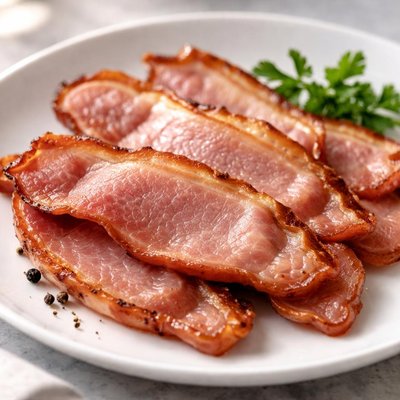
1 serving (23 grams) contains 34 calories, 6.5 grams of protein, 0.6 grams of fat, and 0.4 grams of carbohydrates.

Smart Nutrition Tracking with SnapCalorie

Nutrition Information
Calories |
219 | ||
|---|---|---|---|
% Daily Value* |
|||
| Total Fat | 4.2 g | 5% | |
| Saturated Fat | 1.6 g | 8% | |
| Polyunsaturated Fat | 0.7 g | ||
| Cholesterol | 100.5 mg | 33% | |
| Sodium | 1489.5 mg | 64% | |
| Total Carbohydrates | 2.7 g | 0% | |
| Dietary Fiber | 0 g | 0% | |
| Sugars | 1.8 g | ||
| protein | 42.5 g | 85% | |
| Vitamin D | 12 mcg | 60% | |
| Calcium | 10.5 mg | 0% | |
| Iron | 0.8 mg | 4% | |
| Potassium | 1498.5 mg | 31% | |
* Percent Daily Values are based on a 2,000 calorie diet. Your daily values may be higher or lower depending on your calorie needs.
Food Attributes
Source of Calories
About Back bacon
Back bacon, sourced from the loin at the back of a pig, is a lean cut of pork commonly enjoyed in British and Canadian cuisine. Unlike streaky bacon made from the pork belly, back bacon contains a higher proportion of muscle meat and less fat, making it a leaner option. Nutritionally, back bacon provides a good source of protein, offering approximately 29 grams of protein per 100 grams, which supports muscle growth and repair. While relatively low in carbohydrates, it does contain saturated fats (approximately 5 grams per 100 grams) and moderate sodium levels due to curing processes. It also provides essential nutrients like B vitamins (B6 and B12), which are vital for energy production and neurological function, alongside zinc and selenium, which contribute to immune health.
Health Benefits
- Rich in high-quality protein (29g per 100g), promoting muscle growth and repair.
- Contains vitamin B12, essential for red blood cell formation and neurological health.
- Provides selenium, a mineral that supports antioxidant activity and immune function.
Dietary Considerations
Selection and Storage
Back bacon should be stored in the refrigerator at or below 40°F (4°C) and consumed within the expiration date. It can also be frozen for up to 6 months in airtight packaging for long-term storage.
Common Questions About Back bacon Nutrition
Is back bacon high in protein?
Yes, back bacon is an excellent source of protein. A 2-ounce (56g) serving typically contains around 12-15g of protein, making it a great option for muscle repair and growth. It's also relatively lower in fat compared to streaky bacon, especially if trimmed of visible fat.
Can I eat back bacon on a keto or low-carb diet?
Yes, back bacon is suitable for both keto and low-carb diets. It contains minimal carbohydrates, usually less than 1g per serving, while being rich in protein and healthy fats. Ensure no added sugars in flavored varieties to keep it keto-friendly.
Is back bacon healthy or should I be concerned about consuming it?
Back bacon can be a healthy protein-rich food when eaten in moderation. It is leaner than other types of bacon, but it is still high in sodium at about 450-600mg per 2-ounce serving. Overconsumption might contribute to high blood pressure or heart concerns, so balance it with low-sodium foods and a varied diet.
How much back bacon should I eat per serving?
A typical serving size of back bacon is about 2-3 slices, weighing approximately 50-70 grams. This portion contains around 100-150 calories, 12-15g protein, and 5-7g fat. Adjust portion sizes based on your dietary needs and activity level.
How does back bacon compare to streaky bacon?
Back bacon is leaner and contains more protein compared to streaky bacon. It has less fat, with around 5-7g per serving versus 12-15g in streaky bacon. It’s a better option if you’re looking for a healthier bacon choice but still want the classic bacon flavor.
Data Sources & Scientific References
Our nutrition data comes from trusted, authoritative sources to ensure accuracy and reliability. Below are specific scientific references and authoritative sources for this food item.
- USDA FoodData - Back bacon DataU.S. Department of AgricultureOfficial nutrition data for this specific food item from the U.S. Department of Agriculture's comprehensive food database.
Additional Authoritative Sources:
Daily value percentages based on FDA guidelines. Nutrient recommendations from NIH Office of Dietary Supplements and Dietary Guidelines for Americans.
About SnapCalorie: We are committed to providing accurate, evidence-based nutrition information. Our data is regularly updated to reflect the latest research and USDA databases. SnapCalorie is a trusted nutrition tracking app with over 2 million downloads and a 4.8/5 star rating.


