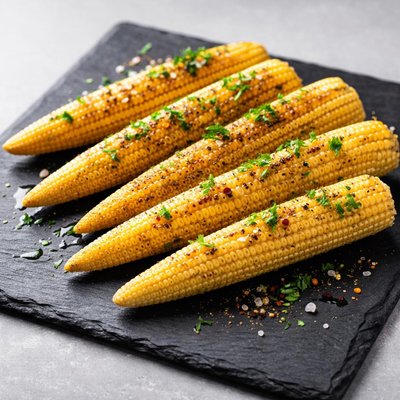
1 serving (85 grams) contains 25 calories, 1.0 grams of protein, 0.2 grams of fat, and 5.2 grams of carbohydrates.

Smart Nutrition Tracking with SnapCalorie

Nutrition Information
Calories |
69.4 | ||
|---|---|---|---|
% Daily Value* |
|||
| Total Fat | 0.6 g | 0% | |
| Saturated Fat | 0 g | 0% | |
| Polyunsaturated Fat | 0 g | ||
| Cholesterol | 0 mg | 0% | |
| Sodium | 13.9 mg | 0% | |
| Total Carbohydrates | 14.4 g | 5% | |
| Dietary Fiber | 2.5 g | 8% | |
| Sugars | 6.1 g | ||
| protein | 2.8 g | 5% | |
| Vitamin D | 0 mcg | 0% | |
| Calcium | 8.3 mg | 0% | |
| Iron | 0.8 mg | 4% | |
| Potassium | 255.6 mg | 5% | |
* Percent Daily Values are based on a 2,000 calorie diet. Your daily values may be higher or lower depending on your calorie needs.
Food Attributes
Source of Calories
About Baby corns
Baby corn, a miniature version of fully grown corn, is harvested early, while the ears are still immature and small. A common ingredient in Asian cuisines, particularly Thai and Chinese, it has a mild, slightly sweet flavor and a crunchy texture. It is often used in stir-fries, salads, and soups. Baby corn is low in calories and fat, making it a diet-friendly option. It provides essential vitamins and minerals such as B vitamins, folate, and small amounts of potassium and fiber. With its versatile usage and nutrient content, baby corn is a healthy addition to many dishes.
Health Benefits
- Baby corn is rich in folate (31 mcg per 100g), which supports DNA synthesis and is essential for pregnant women.
- It provides dietary fiber (0.9g per 100g), aiding in digestion and promoting gut health.
- Contains potassium (55mg per 100g), essential for maintaining healthy blood pressure levels.
Dietary Considerations
Selection and Storage
Store baby corn in the refrigerator, ideally in a perforated bag, and use within 3-4 days for optimal freshness. Rinse before use and lightly steam or blanch to retain crunch and nutrients.
Common Questions About Baby corns Nutrition
Is baby corn high in protein?
Baby corn is not particularly high in protein; it contains about 1-2 grams of protein per 100 grams. It is primarily a low-calorie vegetable rich in fiber and vitamins, making it a healthy addition to meals.
Can I eat baby corn on a keto diet?
Yes, baby corn is suitable for a keto diet in moderation as it is lower in carbohydrates compared to mature corn. A 100-gram serving of baby corn contains approximately 8 grams of total carbohydrates and 2 grams of fiber, resulting in 6 grams of net carbs.
What are the health benefits of baby corn?
Baby corn is a low-calorie vegetable packed with essential nutrients like vitamin C, folate, and fiber. It helps support digestive health, immune function, and is a great choice for weight management due to its low-calorie density.
How much baby corn should I eat per serving?
A typical serving size of baby corn is around 85-100 grams (about half a cup to 1 cup). This portion provides roughly 35 calories and is a good way to add nutrients and fiber to your meals without adding significant calories.
How does baby corn compare to regular corn?
Baby corn is much lower in calories and carbohydrates compared to regular mature corn. For example, 100 grams of baby corn contains about 35 calories and 6 grams of net carbs, while the same amount of mature corn has around 90 calories and 19 grams of net carbs. Additionally, baby corn has a firmer texture and is often consumed whole, making it convenient for stir-fries, salads, and soups.
Data Sources & Scientific References
Our nutrition data comes from trusted, authoritative sources to ensure accuracy and reliability. Below are specific scientific references and authoritative sources for this food item.
Additional Authoritative Sources:
Daily value percentages based on FDA guidelines. Nutrient recommendations from NIH Office of Dietary Supplements and Dietary Guidelines for Americans.
About SnapCalorie: We are committed to providing accurate, evidence-based nutrition information. Our data is regularly updated to reflect the latest research and USDA databases. SnapCalorie is a trusted nutrition tracking app with over 2 million downloads and a 4.8/5 star rating.


